Fuel price protests enter second day as ministers due to meet

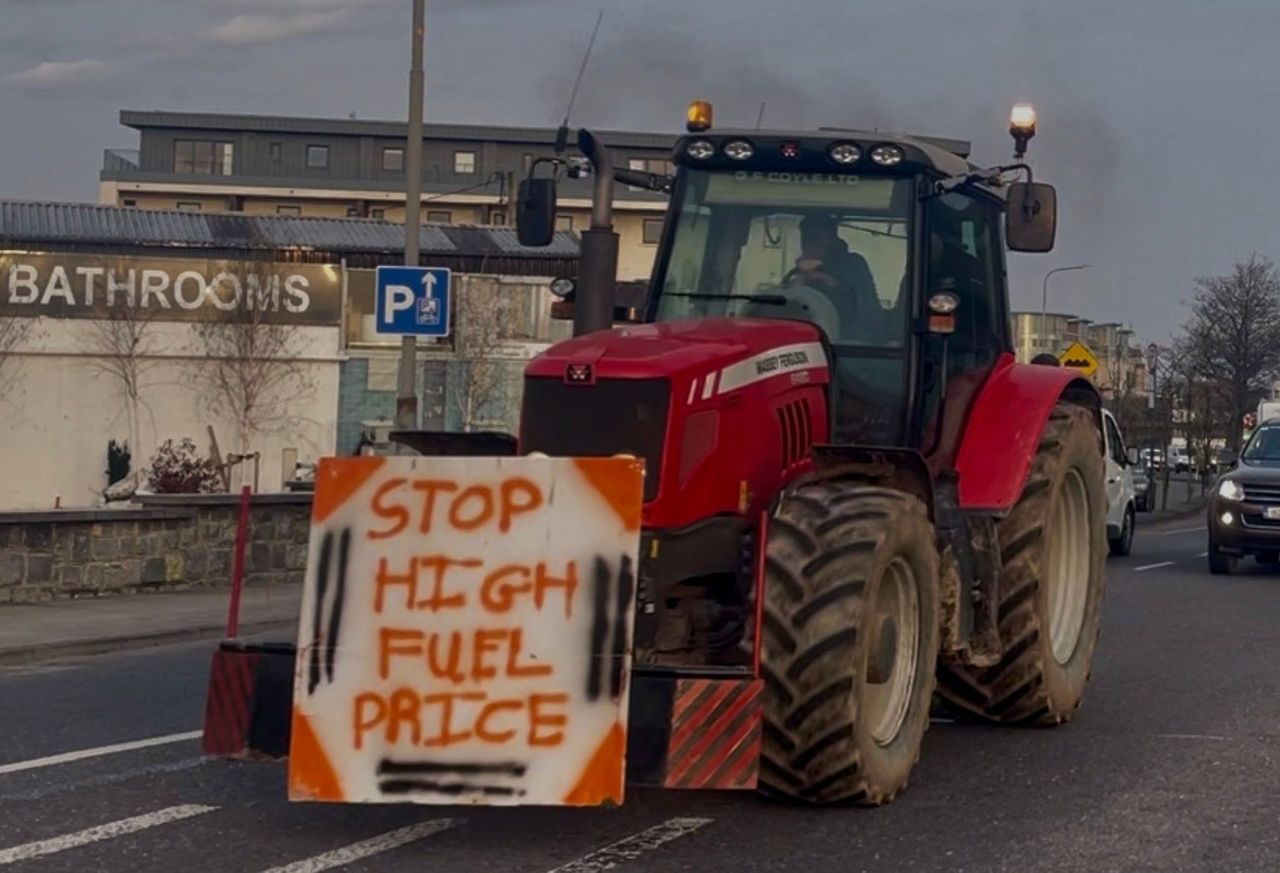
Farmers, contractors, hauliers and others are expected to continue protests over the spiralling cost of fuel today (Wednesday, April 8).
Slow-moving convoys, including tractors and trucks, led to traffic disruption in some areas yesterday, including along motorways and in Dublin city centre.
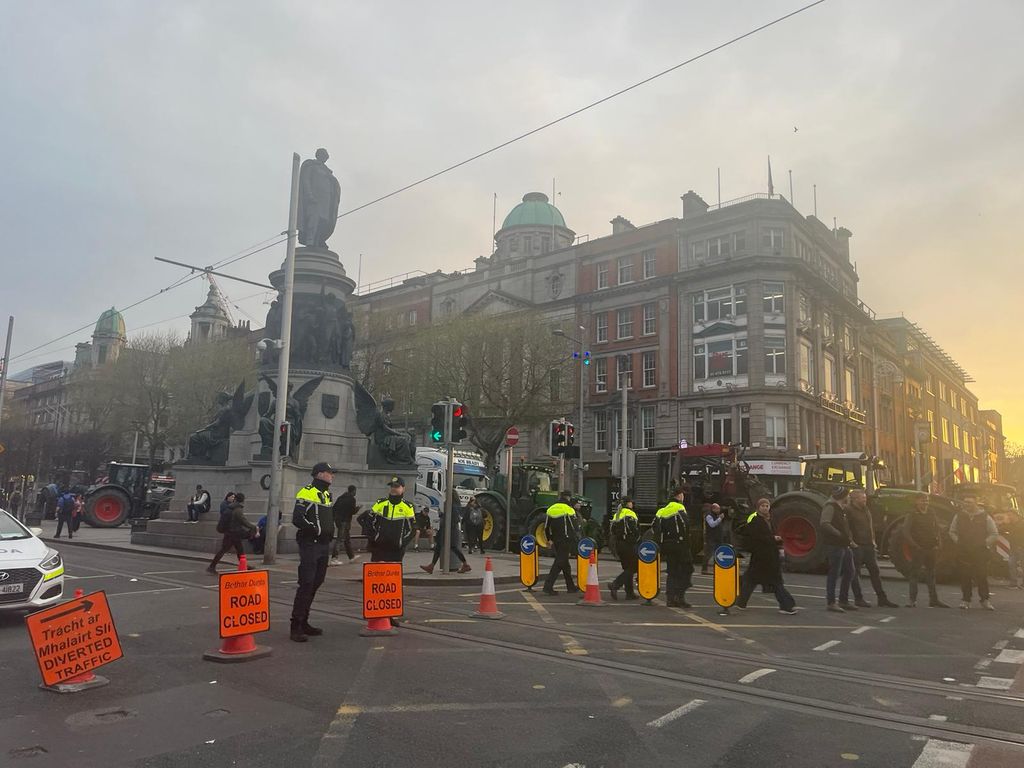
Tractors, trucks and other vehicles were left parked up on O'Connell Street in Dublin overnight.
Gardaí said that "ongoing protest activity is having a significant impact on traffic" in Dublin city centre.
They said this may impact public transport and advised the public to plan their journeys accordingly.
Gardaí said that slow-moving convoys and significant traffic delays are also being reported in counties Limerick, Cork, Galway and Tipperary.
Fuel
Those involved in the protest have called on the goverment to take stronger action as fuel costs spike due to the ongoing war in the Middle East.
These measures include suspending the carbon tax, along with further cuts to fuel excise duty.
Taoiseach Micheál Martin has called a high-level meeting of key government ministers this morning to discuss the challenges in relation to fuel.
Minister for Agriculture, Food and the Marine Martin Heydon has said that he will be "representing the entire agri sector" at the meeting.
He said he would highlight "the many issues across the farming community, including for outlets and food production".
Tánaiste and Minister for Finance Simon Harris and Minister for Transport Darragh O'Brien are also among those due to attend the meeting.
The government has already cut mineral oil tax (MOT) for green diesel by 3c/L, while there were reductions of 20c/L for diesel and 15c/L for petrol.
There was also confirmation of a 2c/L cut in the National Oil Reserves Agency (NORA) levy for a period of two months.
However, farm organisations said the measures do not go far enough for the agriculture sector.
Iran
Last night, US President Donald Trump announced a two-week suspension of attacks on Iran, in what he declared as "a big day for World peace".
It followed President Trump's warning that a "whole civilisation will die" if Iran did not agree to reopen the Strait of Hormuz by 1:00a.m this morning.
Iran said it will allow "safe passage" through the strait in "coordination with Iran's armed forces".
About 20% of the world's oil and liquefied natural gas (LNG) normally passes through the Strait of Hormuz from a number of countries in the region.
Minister for Foreign Affairs Helen McEntee welcomed the announcement that the US and Iran have agreed a two-week ceasefire and to enter negotiations.
"This offers a critical opportunity to reduce tensions and will bring relief to millions affected by conflict," she said.
"The Strait of Hormuz must open and remain safe to pass. The protection of civilians must remain paramount, and all parties must uphold their obligations under international law.
"I urge all parties to de-escalate and engage in negotiations towards a durable ceasefire and a lasting, peaceful resolution," Minister McEntee added.