Breeding the ideal dairy-beef calf this season


Considering the way calf prices are this spring, dairy farmers must be aware of what buyers are looking for in dairy-beef calves.
With breeding only around the corner and calf sales keeping farmers afloat this spring, the importance of breeding high-quality dairy-beef calves cannot be understated.
Farmers should be using tools such as the Dairy Beef Index (DBI) and commercial beef value (CBV) when breeding this spring, as that is what a lot of buyers are looking at now.
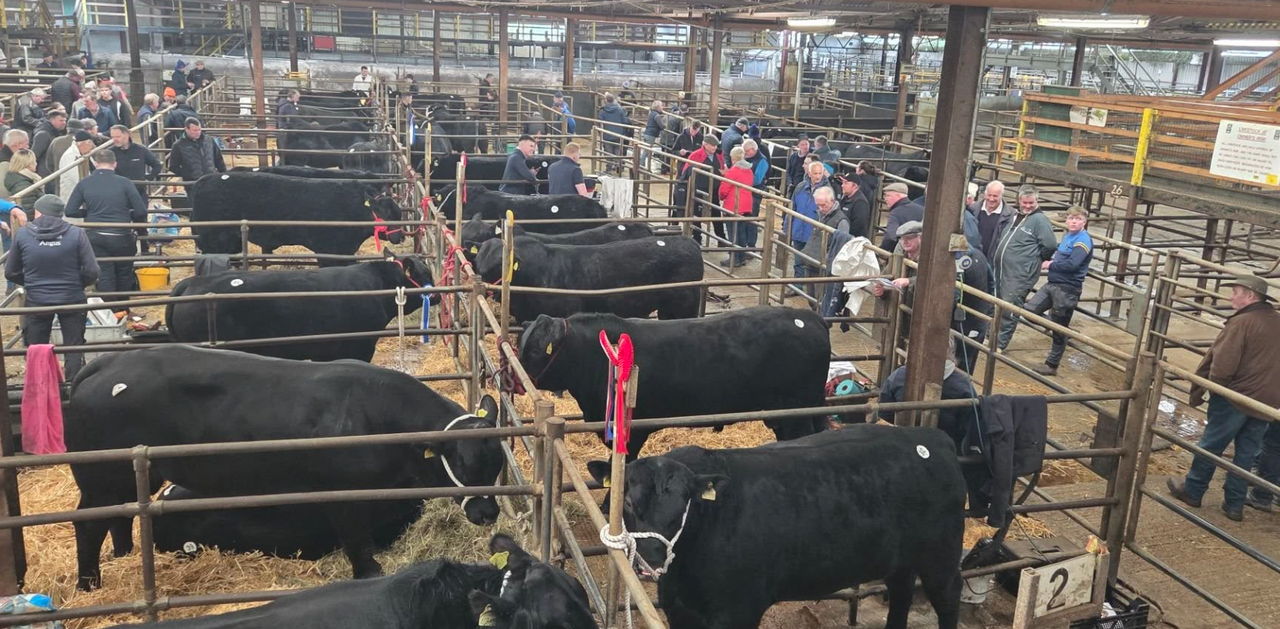
The majority of calves look much the same inside in the ring when they are only three weeks-of-age - however, high CBV calves are making stronger prices than those on the low end, as they will out-perform the lower CBV calves in the months after.
Farmers that do use these tools and breed good strong healthy calve that are delivering in terms of performance end up building return relationships with buyers, removing the hassle of travelling to the mart weekly during the hectic spring.
Dairy-beef
It is important to look at the breeding season in context: yes, we need to put the time and effort into breeding replacements, but that does not mean the rest of the herd should be bred carelessly.
Considering how sexed semen usage has soared in the last number of years, the average 100-cow herd may only be breeding 25-30 replacement heifers.
That means there are 70-odd calves that can be bred as high value dairy-beef calves, which will have the ability to boost margins in the spring.
The bit of time it takes to sit down and carefully consider the selection of dairy-beef bulls for these calves is more than worth it.
Your bull choices will have a huge impact on the dairy-beef finishers in terms of performance, grade and weight.
That is why the DBI can be such a handy tool for choosing good beef traits, as it is made up of three essential elements: calving; beef; and carbon.
The DBI will help you strike a balance in terms of achieving strong carcass weights while minimising calving difficulty.
We have seen the importance of carcass weight this spring, with three-week-old calves in or around the 70kg mark making great money, while the same age calf weighing 10kg less were making significantly less in the ring.
However, striking that fine balance shows its importance, as there is no point in having big carcass calves if the calving difficulty is too high, especially if calf mortality and even cow mortality are rising.
Another factor to consider is how young cows/heifers are usually put forward for replacement breeding, leaving the older cows to be mated to beef bulls.
This highlights the importance of matching the calving difficulty to the cow age and lactation number before breeding begins.
The majority of farms aim for a calving difficulty of 3-4%, but that probably can be pushed out to 5-6% for some cows with selective breeding, leaving you with more leeway for selecting better beef merit bulls.
Remember, at the end of the day, breeding dairy-beef calves with the DBI is much the same as breeding replacements with the Economic Breeding Index (EBI) - by focusing on one of these traits alone you will create the risk of leaving another behind.
If dairy-beef breeding has improved on the farm, it may be worth applying to the Dairy Beef Welfare Scheme, as eligible farms can receive a payment of €20 per calf (up to a maximum of 50 calves per applicant herd).