Does your herd have adequate access to water troughs?

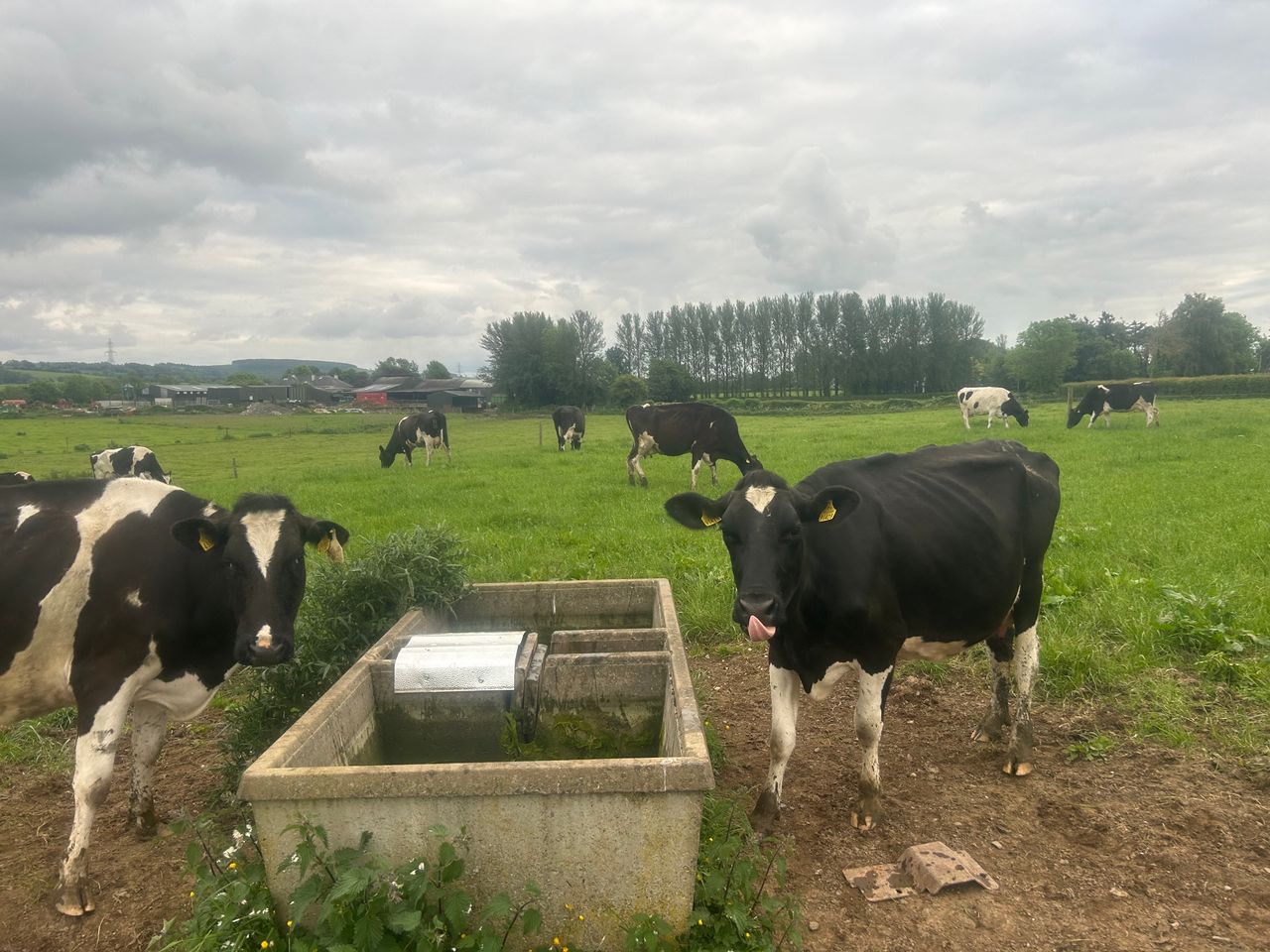
With the weather warming up and cows mowing through grass, it is important to check paddocks for water availability.
There are plenty of jobs to do at this time of the year, between breeding, fertilising, silage, and more.
That often leads to little things such as issues with water availability going unnoticed, but it may actually be impacting your milk cheque.
It could be something simple, such as the tap not being turned on, or other quick fixes such as a burst hose or a stuck ballcock.
However, there may be other underlying issues such as water troughs and pressure not increasing with growing herd sizes.
Either way, we need to remember how crucial water is in the diet, especially as the dry matter (DM) of the grass rises.
Remember, peak water demands occur after evening milking, and to a lesser extent after morning milking, meaning troughs should have enough space for each round of cows to be drinking off as they return to the paddock, ideally 450mm/cow.
Ensuring access to water
Milk is almost 90% water and cows drink 4-4.5L of water/kg of milk produced – daily drinking requirements vary but can be 60-140L/cow.
On an average day, a 150-cow herd could drink up to 10,000L (65L/cow).
That is why we need sufficient and strategic water systems in place to ensure that this quantity of water is delivered to the paddock.
Firstly, it is worth looking at paddock placement. Quite often, water troughs are set up on roadways in order to provide for two or three paddocks, but this can restrict the herd's access to water as it results in queuing.
In an ideal situation, the water trough should be located in the middle of the paddock in order for the cows to access water from all angles, although additional troughs on roadways to the parlour are no harm.
If you are doing this, install it in a highly trafficked area, as long as it does not disrupt cow flow. If the trough is creating a pinch point it will only lead to lameness issues.
Then for your trough size, there should also be a reserve of water in your paddocks of about 9L/cow, which is the equivalent of 1,350L (300gal) for a 150-cow herd.
An appropriate size pipe will allow for a good flow rate. If a trough is empty after cows use it, it is likely that the flow of water is lower than the demand and so troughs should be inspected before and after each milking.
A wider pipe is often required to increase the amount of water that can flow through the system. For the main waterline, a 38-42mm internal diameter is required for a 150-cow herd.
When inspecting a water trough after a grazing or during a grazing, the following should be quite noticeable:
- No queuing at water trough;
- Trough always filled after milking;
- No leakage;
- No cow tracks to trough, as this indicates a long walk to troughs.
Troughs should be regularly cleaned out – remove any algae or objects present in the water trough, as they can potentially reduce a cow’s water intake.
As the saying goes, if you would not drink out of it - why should the cow?