Carlow's 'guardians of the grasslands' go on duty

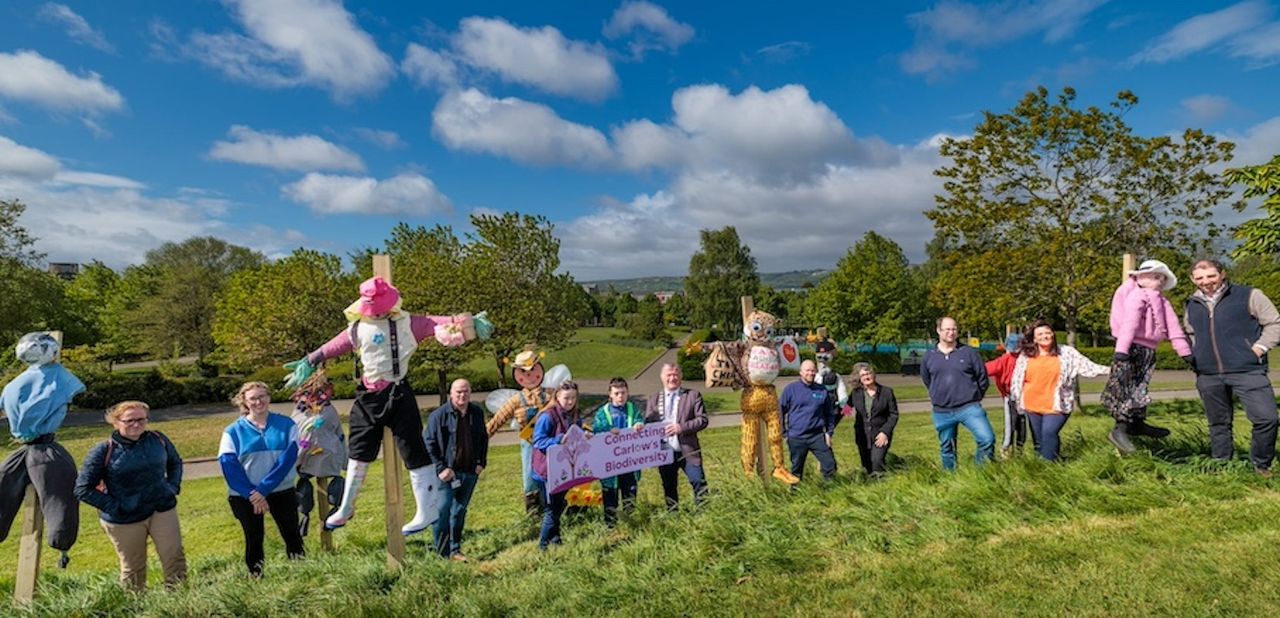
Several 6ft scarecrows - dubbed 'guardians of the grasslands' - have appeared in multiple locations across Carlow town.
They are watching over a selection of green spaces that the local authority is letting grow wild for the rest of the summer in a bid to promote its 'urban pollinator' foraging network.
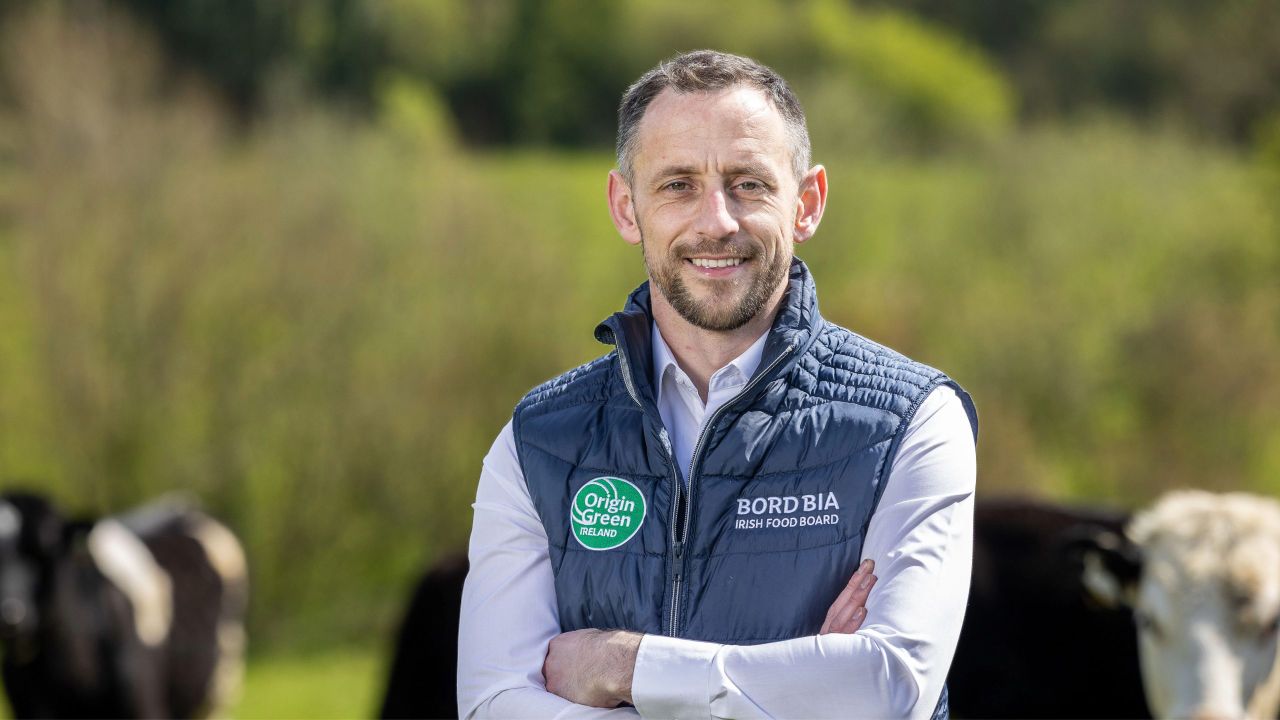
Shane Casey, Carlow Council's biodiversity officer, said: "We’re always keen to bridge the disconnect between farmers and their non-farming neighbours.
"We had an Old Irish Goat initiative last year, and a 'landscapes that connect our farming and non-farming communities' conference the year before."
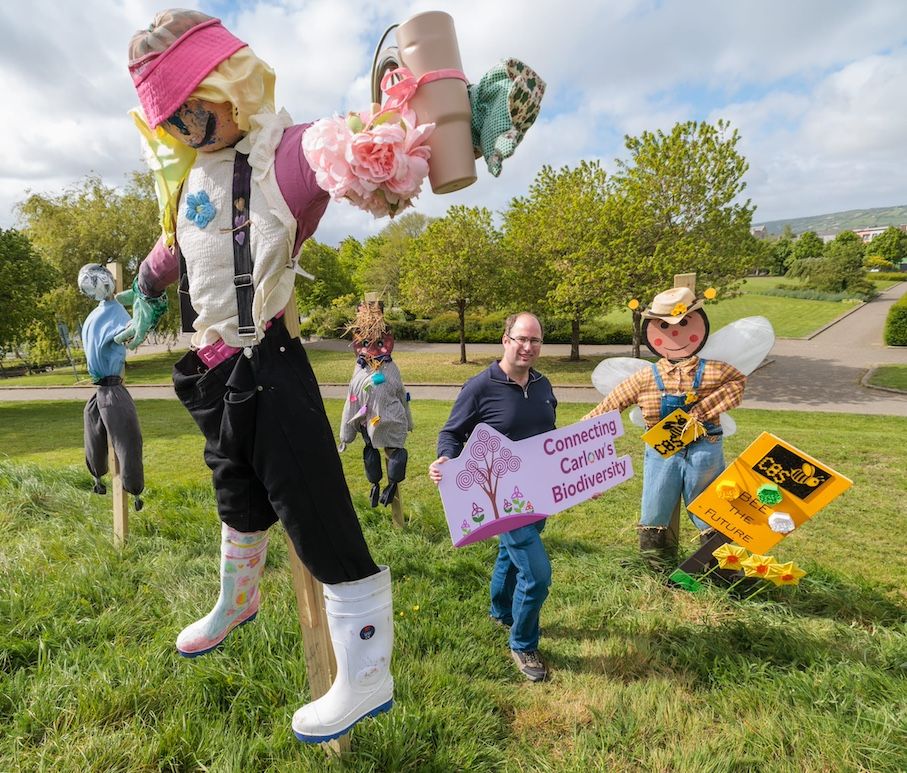
According to Casey, the 'guardians of the grasslands' builds on these efforts.
"They are very much a farming feature, and played an important role in protecting the harvest in times past, particularly in the tillage county that is Carlow," he explained.
The biodiversity officer described the initiative as a "gentle reminder" to people living in rural towns and villages of the customs, traditions, and importance of farming in their hinterland.
"More importantly perhaps, in the context of nature conservation and restoration, is that it can’t be the sole responsibility of rural dwellers.
"There are ample green areas in almost every town and village across the country that are routinely manicured, and could instead provide for pollinators and biodiversity, safe places for young children to experience what many of us grew up with, playing in hay meadows, and save on petrol for the lawnmower.
"Based on our urban pollinator foraging network, Carlow’s urban communities are taking this message on board, and hopefully our guardians will give it an extra push," he said.
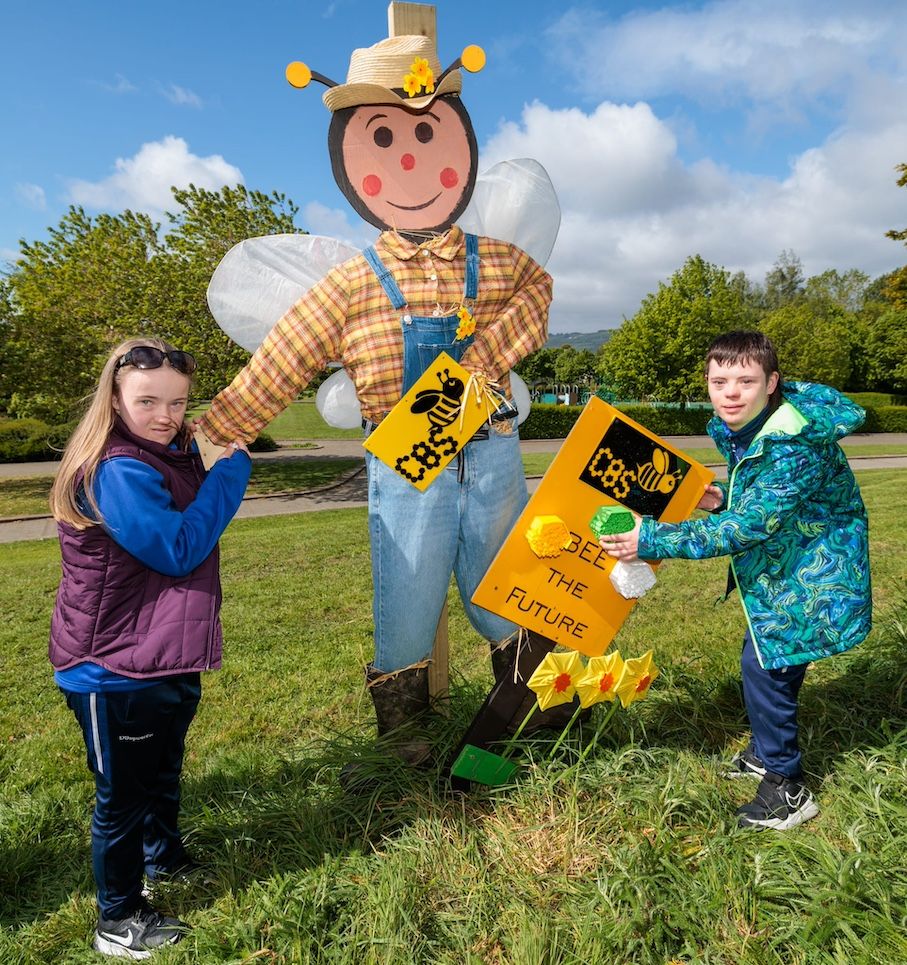
The job of the imposing 6ft tall scarecrows is to ‘scare away’ lawnmowers and strimmers.
The council’s biodiversity office launched a competition to create the grasslands protectors to remind people that the green spaces have been intentionally grown as a food source for pollinators such as bumblebees, solitary bees, hoverflies, butterflies, moths and beetles.
Visitors to the town can look out for selected creations by Tyndall College, St Mary's CBS, Old Leighlin National School and Ballon National School, which will be on display until September.
The schools were tasked with designing scarecrows that tackle fast fashion in their themes.
Hannah Murphy, a resource centre teacher in the Tyndall College, said: “The kids said it was so much fun to make the scarecrow and they loved seeing it in the grass scaring away the lawnmowers.
“They made a cheetah for their design – inspired by fast fashion - because cheetahs are fast.
“The cheetah is wearing clothes from fast fashion brand Shein and they painted the scarecrow as well and got creative with it. We’re very proud of their work," the resource teacher said.
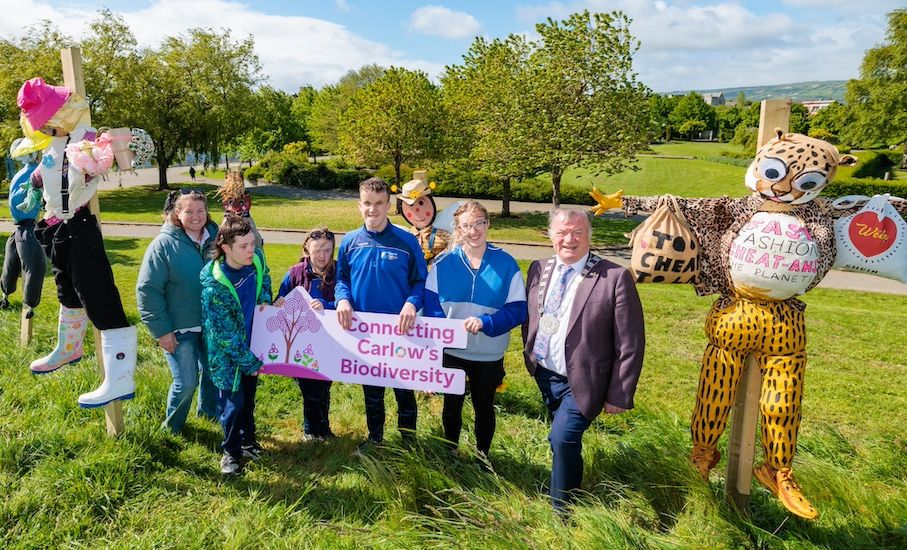
The scarecrows were required to be a maximum size of 6ft tall and 6ft wide and attached to a 4ft timber post.
They had to be able to stand up to Carlow weather conditions, with a strong frame, with no loose materials that could blow away.
Cathaoirleach of Carlow County Council, Cllr Ken Murnane, said: “We have set out a vision to connect, conserve and restore our biodiversity, in our towns and villages, as well as our beautiful countryside.
“Creative projects such as this are a fantastic way to promote these efforts and to get the next generation interested and involved.”
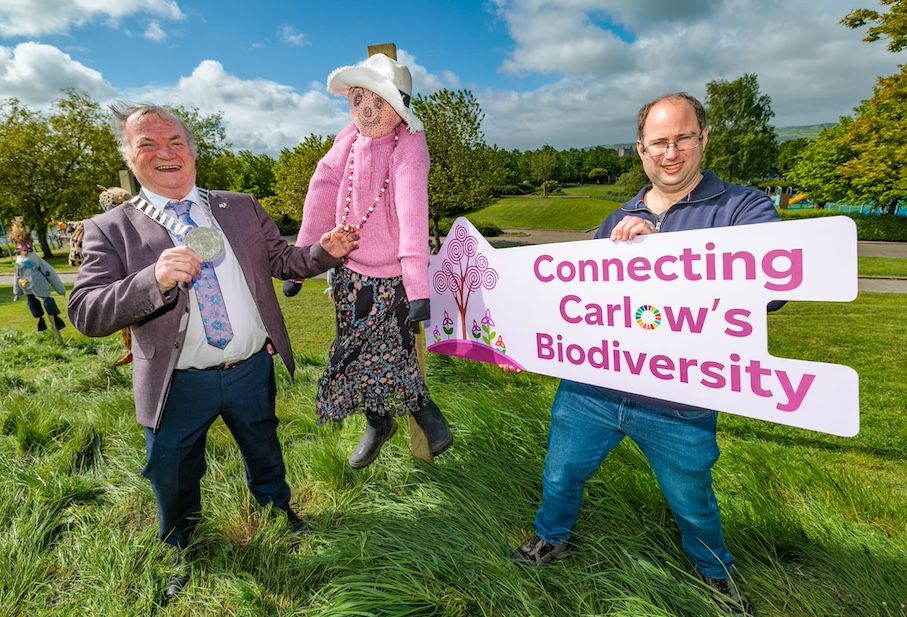
The winning designs have been selected and installed in public green spaces in Carlow town, where grass is managed through its low mow/no mow regime.
Shane Casey said: “Not only does this help to provide a food source for urban pollinators, but it strengthens ecological connectivity throughout the town.
“This initiative follows our a 'Turning lawns into lunch' initiative, which saw a herd of Old Irish Goats visit towns and villages around Carlow last year.
“We also issued schools with copies of the children’s book, The Three Billy Goats Gruff of Carlow, created entirely in-house by Carlow County Council.”
Co-ordinated by the National Biodiversity Data Centre, the All-Ireland Pollinator Plan is a framework that brings together different sectors across Ireland to create a landscape where pollinators can survive and thrive.