Are your vaccinations up to date ahead of breeding?

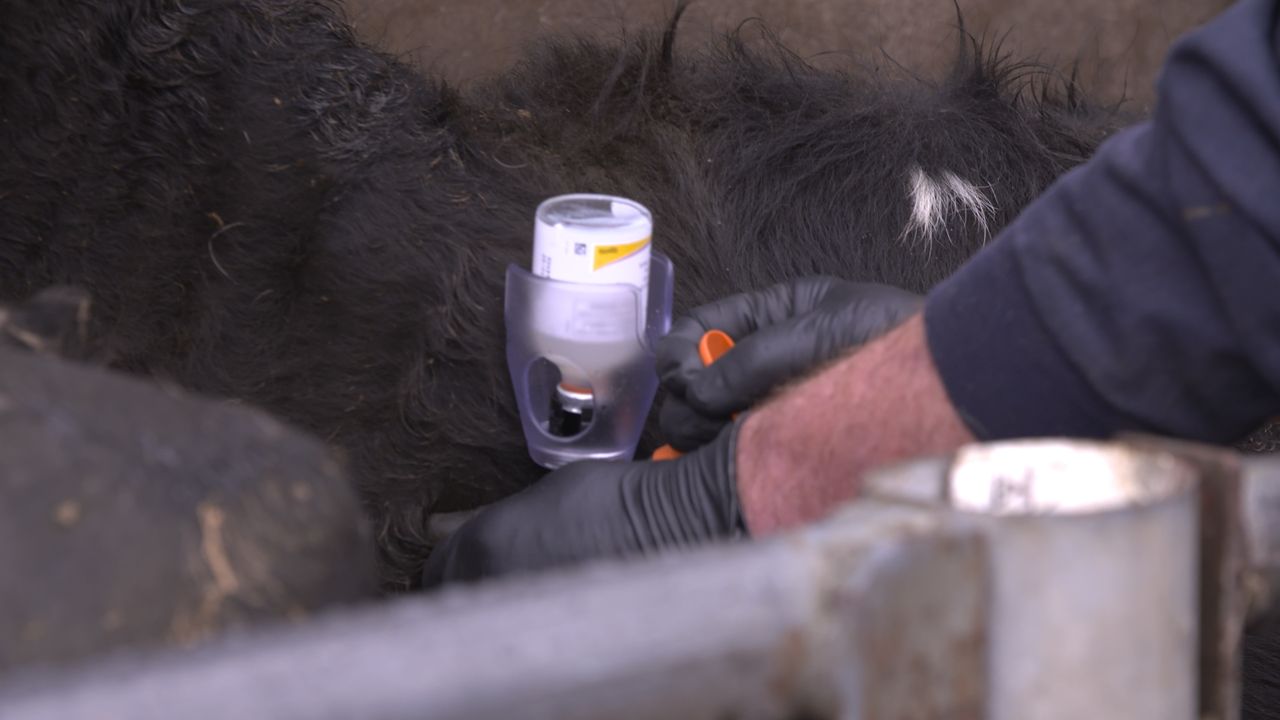
A number of boosters may be required ahead of breeding, as vaccinations play an important role on dairy farms.
Booster vaccination for leptospirosis (lepto) and bovine viral diarrhoea (BVD) are crucial for many herds.
As well as that, all the advice at the minute is still pointing towards vaccinating for bluetongue, which ideally also needs to be done now ahead of breeding.
If the timing of some vaccinations does slip into breeding, there may be a possibility of poor conception rates or even early abortion rates.
That is why it is important to set up a farm-specific vaccination programme with your local vet, and stick to the timelines for vaccines and boosters.
Vaccinations
Vaccinations work by stimulating an animal’s immune system without actually infecting them with the disease.
That means, if the vaccinated animal comes into contact with the disease after a vaccination, their immune system should recognise it and immediately produce the antibodies needed to fight it off.
However, just because an animal has been vaccinated does not mean that they can always avoid the disease.
Instead, the vaccination works to reduce the impact of an infection and prevent the animal from getting as sick.
That is why a vaccination programme should never replace good management practices, biosecurity standards, and other disease control measures.
It should be viewed as an additional on-farm measure instead.
Pre-breeding
At this time of the year, the most common boosters being given are for lepto and BVD.
Vaccinating for lepto is not only just important in terms of animal welfare, but it is also important for the farmer and the food chain, as lepto is zoonotic disease, meaning it can be transmitted from humans to animals and vice versa.
Clinical signs in humans start as flu-like symptoms. If left untreated, lepto can lead to kidney damage, meningitis, liver failure, respiratory distress, and even, death.
Generally, this happens after humans come in contact with infected urine, afterbirth, or an aborted foetus.
Often the first potential sign of a lepto infection within the herd is a drop in milk yield, which can be easy to miss especially during a poor spring like this year.
However, even on a good year where milk production is flying, we often associate a drop in milk yields with lungworm, BVD, infectious bovine rhinotracheitis (IBR), or even just a change in feed.
However, once lepto is in the herd, it will start to silently affect fertility, and even end up leading to abortions.
If the herd is experiencing abortions, it is important that any aborted foetus' are sent to the lab for testing to determine the cause, while also carrying out screening on the herd.
Below is a common list of diseases which are vaccinated for at different stages of the season:
| Lepto | IBR | BVD | Salmonella | BRSV, Pi-3V, M.haemolvtica | Rotavirus, coronavirus, E.Coli | |
|---|---|---|---|---|---|---|
| Clinical signs | Abortion, infertility and weak calves | Respiratory, milk drop and infertility | Abortion, diarrhoea and respiratory | Abortion and diarrhoea | Respiratory (calves + young stock) | Diarrhoea (calves) |
| Vaccine timing | Before breeding | Housing | Before breeding | Mid-pregnancy | Housing | Before calving |
Bluetongue
The majority of farms are well used to vaccinating for all of the above diseases; however, we now have bluetongue to think about too.
It is a hard decision for a lot of farms due to the financial impact, as the bluetongue vaccination is the original shot with a ballpark figure of €4.50, followed by a booster also priced at €4.50.
With a total of €9/animal, that is €900 just to cover the average 100-cow milking herd before we ever consider heifers, bulls, etc.
That has left a lot of farmers on the fence, trying to weigh up the pros and cons.
But all the advice coming from vets and researchers is pointing the same way, and that's to vaccinate.
If the herd does contract the virus, issues such as reduced milk production, infertility, dummy calves, congenital defects, lameness, and more, will quickly out-cost the initial investment of vaccinating.
Ideally, the first shot should have been given in March so the booster could be given before breeding.
However, vets are still recommending to get the herd vaccinated this week, with the second shot falling the week of mating start date.