51% of 1926 workforce involved in agri-sector vs 4% in 2022 - CSO

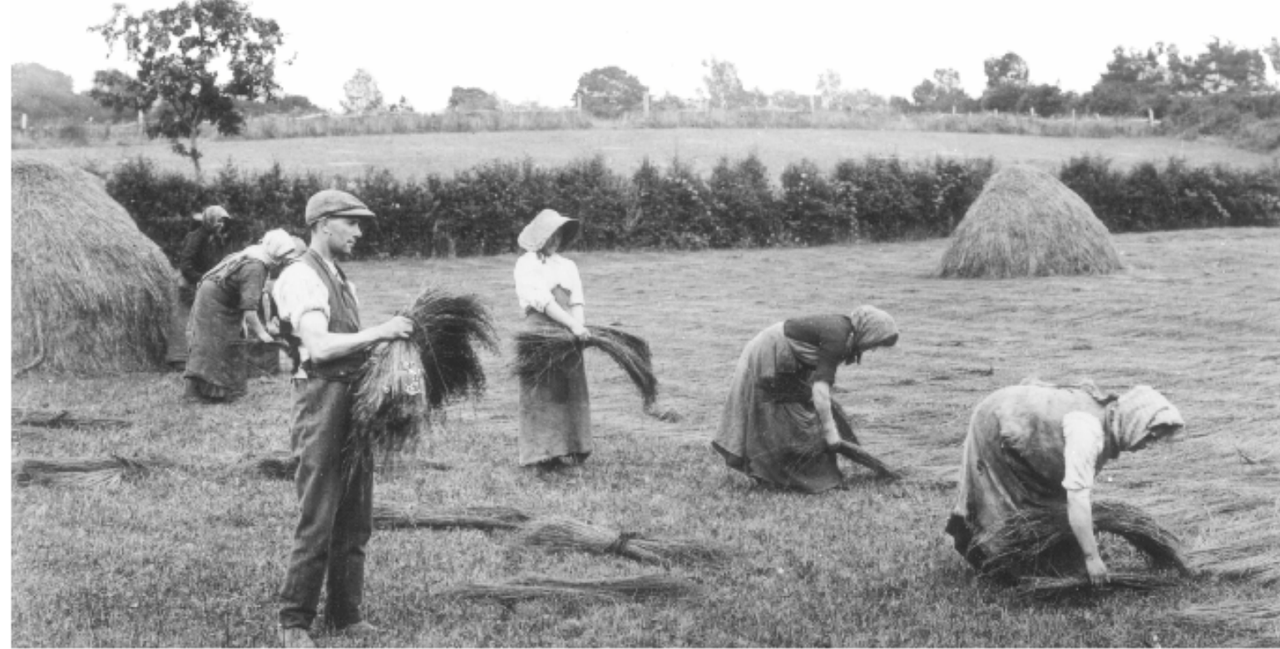
In 1926 more than half of the country's total workforce were employed in the agri-sector according to the Central Statistics Office (CSO).
Fast forward 96 years and this had fallen to almost 4% of the workforce according to statistics.
To complement the release of the 1926 census forms by the National Archives, the CSO has published a comparison of the results with those of the 2022 census.
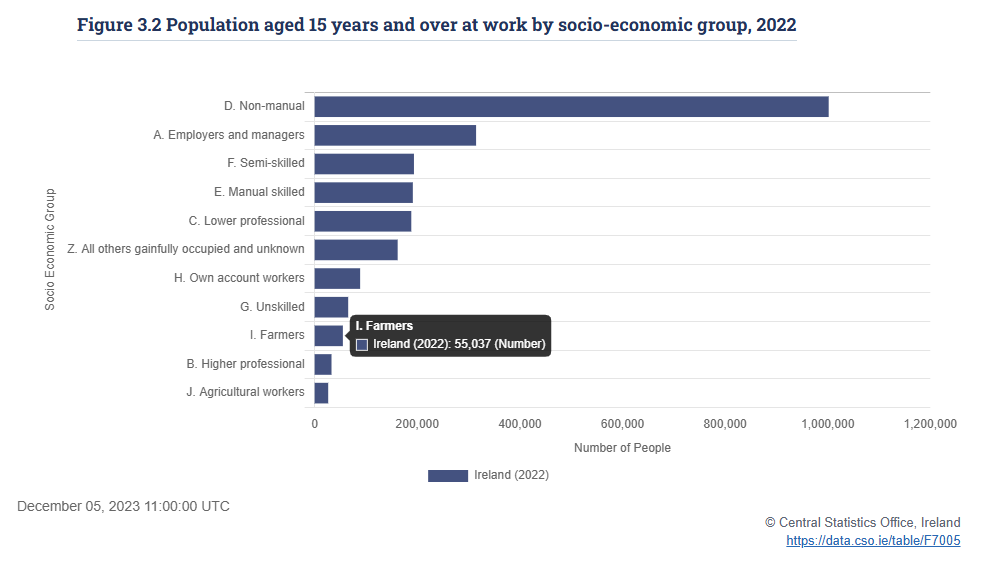
The CSO report highlights how the structure of employment in Ireland has shifted over time, moving from a workforce dominated by agriculture and manual labour in 1926 to one centred on non-manual, managerial, and professional roles in 2022.
Titled Then and Now: Life in Ireland in 1926 and 2022, the CSO said the report provides "new and unique insights on how life in Ireland has changed over the course of almost 100 years in terms of our population, where they live, religion, language, and occupations".
Commenting on the release, Maria Yasin, statistician in the Census Division of the CSO, said: “Census 1926 provides a statistical overview of Ireland at an important point in its history.
"As the first census carried out by the Irish Free State, it records the demographic and social conditions of the time."
The CSO has said it is "uniquely placed to compare 1926 data with our most recent census which took place in 2022, and this analysis informs our understanding of long-term trends that shape Ireland today."
"By bringing these statistics together, this release allows us to see not only how Ireland once was, but how profoundly it has changed," the CSO noted.
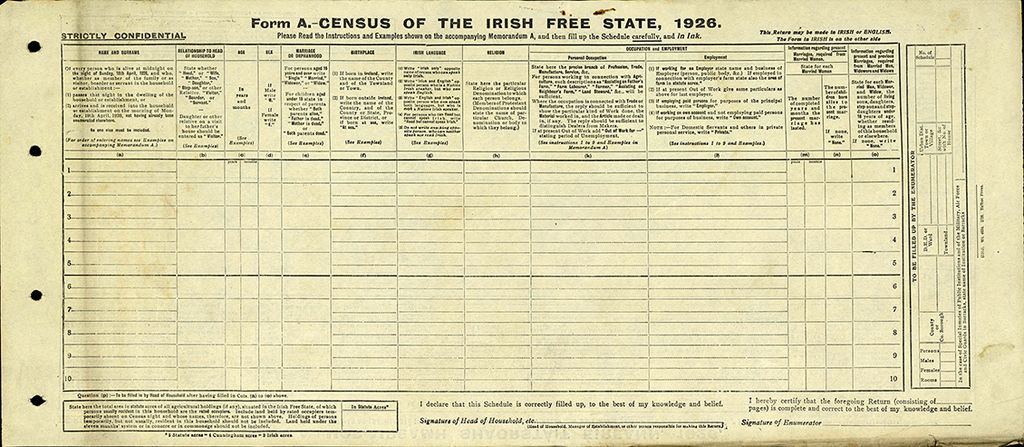
The census conducted on 18 April 1926 was the first census after the establishment of the Irish Free State in 1922.
At the time, the population was 2.97 million, having fallen by over 5% since the 1911 census, continuing the decline that began after the Great Famine.
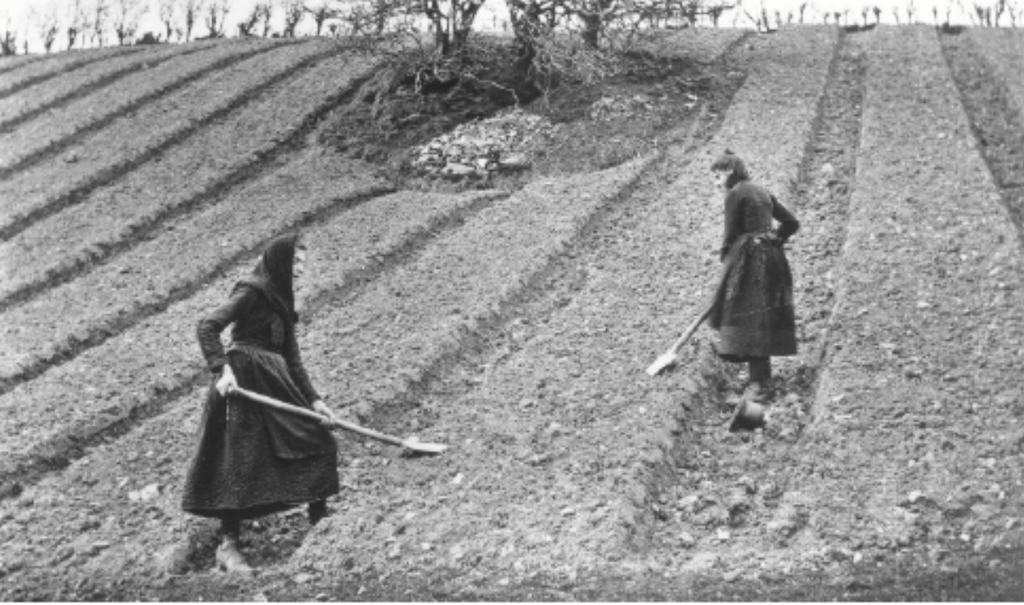
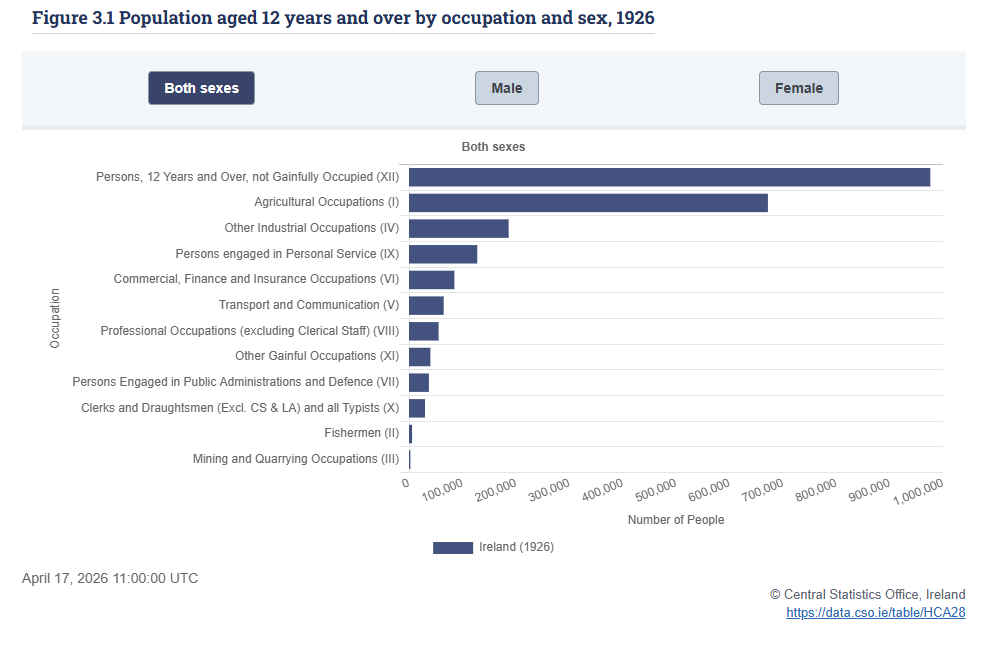
Census 1926 portrays Ireland as a primary agrarian society, with just over half of the working population - 51% of the 1,307,662 recorded in gainful occupations - working on the land.
Agriculture dominated the labour force in 1926, employing 672,129 workers, or 51% of the entire workforce at the time.
The state relied on the next generation with 206,382 sons and daughters assisting farmers and 57,713 other relatives recorded working on family land.
By 2022, the number of workers in the agricultural sector was 81,470, i.e. almost 4% of the total workforce, which reflects a much larger and more diversified work pool than existed a century earlier.
This figure of agricultural workers was made up of 55,037 farmers and 26,433 agricultural workers.
This marks the most significant structural shift in employment between the two census years.
Geographic concentration
In 1926, particularly in the west of Ireland, agriculture was the overwhelming driver of the economy.
The county with the highest agricultural dependency was Leitrim (at 81%), followed closely by Mayo (80%), and Roscommon (80%), while Dublin City recorded just 1%.
There were also 89,963 paid agricultural labourers not living on the farm and 36,446 considered to be 'living in'.
Noted as being "vital to coastal life" by the CSO, there were 5,753 fishermen recorded nationally, with Co. Waterford having the highest concentration relative to its workforce at 2%.
In 2022, 2,569 people were recorded as working in fishing‑related elementary occupations, representing a substantial decline in the number of people directly engaged in fishing over the century.
'Vanished' occupations
As the CSO states, "Census 1926 provides a window into trades that have since largely disappeared."
At that time, there were 1,012 coopers, i.e master craftsmen making the wooden barrels essential for the stout trade and butter exports, all of them men.
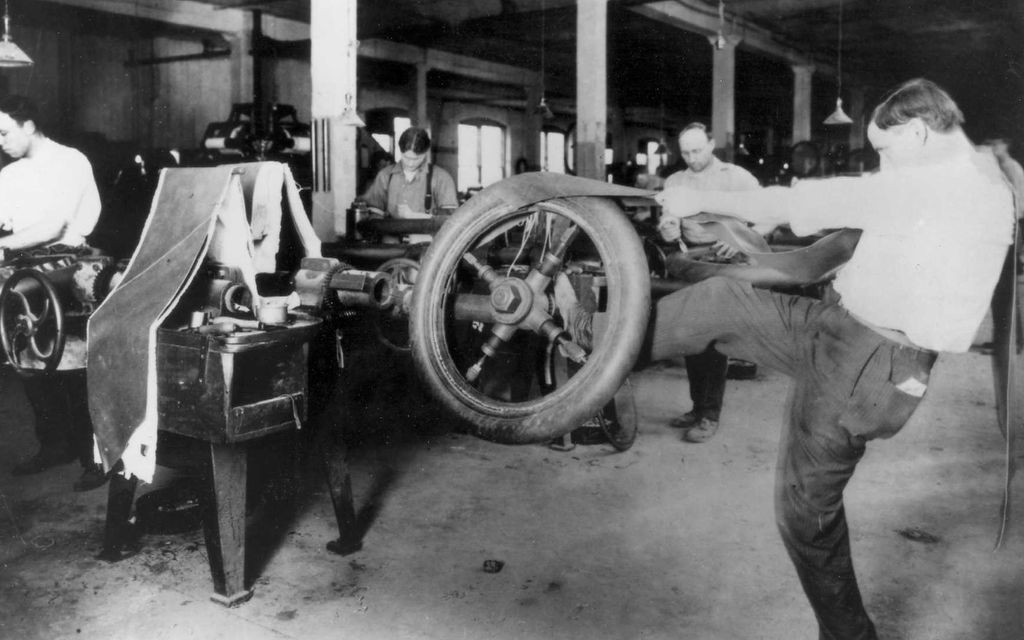
Before the motor car took over, the state relied on 1,441 saddlers, 10,852 horse vehicle drivers, and 1,399 grooms to keep the country moving.
Chimney sweeps were essential for every home reliant on coal and peat - in a trade of 211, the census recorded just one female chimney sweep.
There were 1,385 milliners, 826 embroiderers, and 336 hand lace workers - a skilled cottage industry that supported many women across the country.
Gender roles
The gender profile of the workforce changed substantially between the two census years.
In 1926, out of a population of 2.97 million, there were 1,307,662 people at work, with a recorded figure of 963,768 men (74%) and 343,894 women (26%).
By 2022, out of a population of 5,149,139, there were 2,320,297 people at work with the workforce consisting of 1,241,353 men (53%) and 1,078,944 women (47%).
These figures show both a much larger workforce and a far more even gender balance.
Modern day
The occupational landscape recorded in Census 2022 reflects a workforce shaped by technological change, professional specialisation, the growth of the services sector and creative occupations.
Many of the roles that feature prominently in today's society had no equivalent in 1926, while others that were only emerging at that time have since developed into large, advanced fields.