Teagasc meets EU stakeholders on plant-based protein

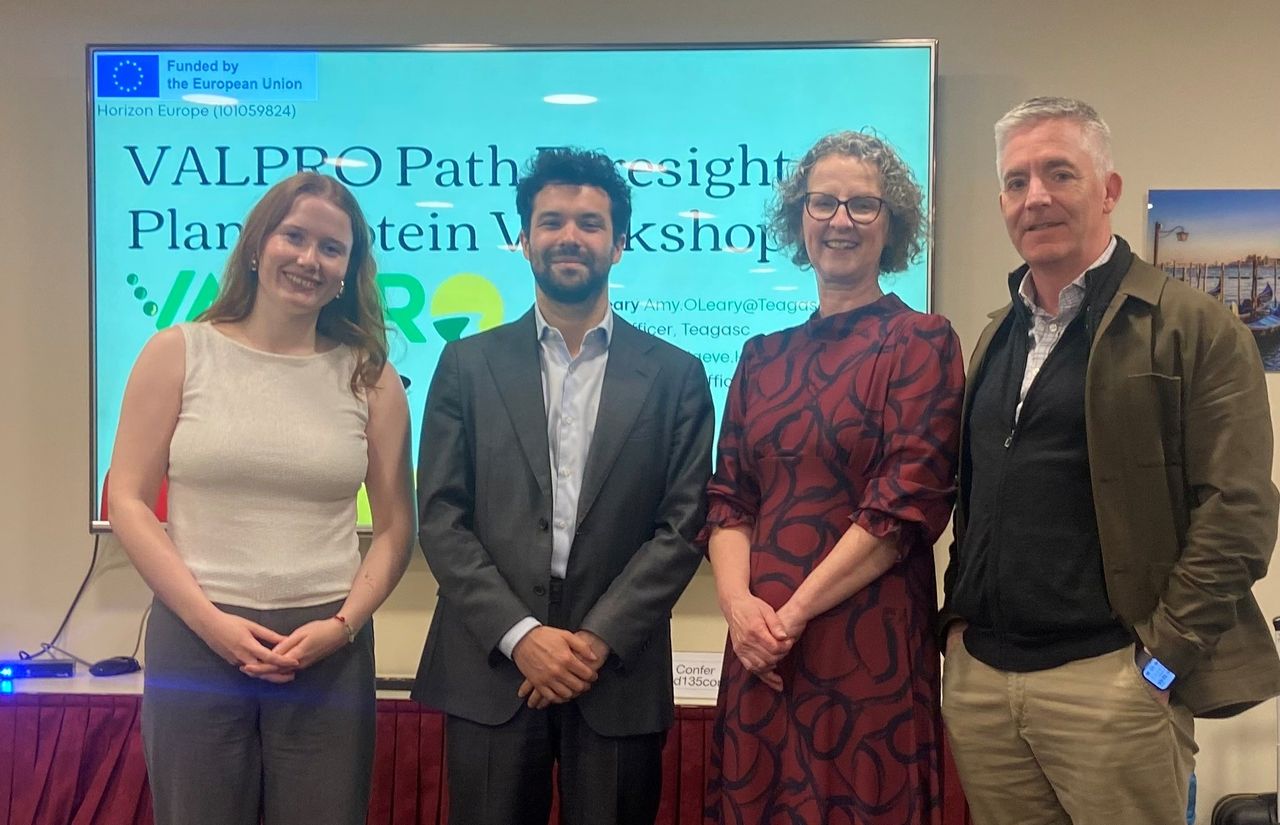
Teagasc has taken part in a meeting with stakeholders in the EU on increasing self-sufficiency in protein, which discussed the increased share of plant-based protein in diets.
Teagasc said it brought together stakeholders in the areas of policy, regulation, research, business and civil society for a "high-level roundtable" in Brussels.
The aim of the meeting was to identify pathways to increase EU self-sufficiency in protein and a "future whereby plant-based protein accounts for an increased share of food production and consumption".
The event was part of 'VALPRO Path', a four-year EU-funded project that is conducting research and undertaking pilot initiatives to "build knowledge and evidence" that support the exploitation of added value opportunities by farmers.
Teagasc said that Ireland' agri-food sector is globally recognised for its dairy and meat production, and that the "protein transition is about diversification, not replacement".
According to Teagasc, 25% to 30% of all food produced globally is either lost, or wasted, while food systems also account for roughly one third of global greenhouse gas emissions.
Around 2 billion adults in the world are overweight or obese, while nearly one billion people remain undernourished, Teagasc added.
The roundtable discussion in Brussels focussed on an "ambitious scenario" where plant-based protein is well established and integrated with other agri-food systems.
Recommendations that came out of the meeting included the establishment of public private partnerships to support breeding initiatives; examining the role of of short food supply chains regionally; and delivering dietary guidelines that address affordability as well as health and nutrition.
VALPRO Path
The VALPRO Path project has identified gaps in Europe's plant protein value chain, and has carried out pilot on-farm experiments demonstrating ways to increase plant protein production by returning added value back to the farmer.
This work will inform a policy brief aimed at EU institutions and national governments.
Commenting on the project, VALPRO Path project co-ordinator, Dr. Ewan Mullins from Teagasc, said: "This is not about turning away from animal-based protein. It's about diversification and expanding options available to farmers and processors.
"Climate change is opening the door to new crop opportunities, while global markets are shifting rapidly. We want Irish and European farmers to be positioned to benefit from those changes, not to to be left to react to them," Dr. Mullins said.
The final VALPRO Path conference is set to take place in Brussels on June 25, where project partners will present results and recommendations for "strengthening European protein resilience".