Why is Associated British Foods set to diverge from Penneys?


Penneys' parent company, Associated British Foods (ABF), is set to release a structural review to separate its retail and food businesses.
ABF is a British-listed multinational, headquartered in London and controlled by the Weston family through their Wittington Investment company, holding a controlling 58.8% of the company's shares.
The company finds itself at one of the most turbulent junctures in its 90-year history.
With the outcome of a structural review next Tuesday 21 April, the implications will stretch well beyond the high street.
Background
ABF operates across five divisions: retail, grocery, ingredients, sugar and agriculture.
With its retail arm Primark, trading as Penneys in Ireland, being its highest grossing operation, turning over £9.4 billion in 2025.
Its agricultural division, AB Agri, had recorded revenues of over £1.6 billion for 2025.
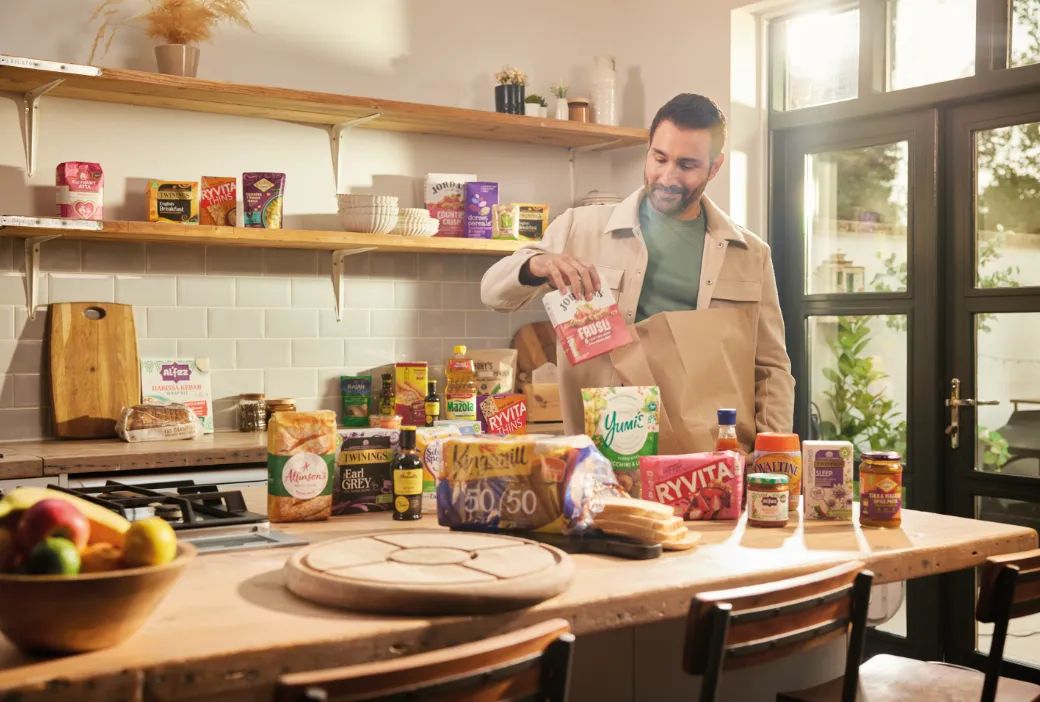
The food division owns household names such as Twinnings, Ovaltine, Ryvita, Jordans, and Kingsmill.
The ingredients arm of ABF is the second largest producer of baker's yeast in the world.
ABF's sugar operations span across the UK, Spain and Africa.
AB Agri produces and markets animal feed, nutrition products and technology-based agri-services across 100 countries and employs over 3,000 people globally.
Premier Nutrition is AB Agri’s specialist premix and nutrition business, "supplying tailored nutritional solutions to livestock producers and feed manufacturers in the UK and internationally."
AB Agri controls 28 feed production sites across the UK, Europe and China and runs an agricultural technology services firm, Intellync, in Kilkenny.
The separation
Primark contributes to around half of the group’s profit and is the most widely known subsidiary under the group, with their food and agriculture businesses largely less known.
In November 2025, ABF chief executive, George Weston, announced a structural review of the company's divisions was set to take place.
Weston stated that the food business had been “historically less well understood” by financial markets despite having “a highly attractive portfolio, deep global expertise and much potential.”
Chair of ABF, Michael McLintock said the review of the future shape of ABF was taking place "to assess whether a separation of the Primark and [the] food businesses would be a better structure in the years ahead."
McLintock also stated there was a "need for better understanding of [ABF's] food businesses".
Financial pressure
According to its 2025 financial report, ABF’s full-year results for the year to September 2025 showed group profit down 13% to £1.73 billion, with revenue falling 3% to £19.46 billion.
The report stated that the agriculture division saw adjusted operating profit decline 38% to £25m due to "one-off costs and a lower contribution from its joint venture" with Frontier.
ABF has a 50% ownership in Frontier, the UK’s "leading provider of grain marketing and crop production services".
It supplies seed, crop protection products and fertiliser to farmers, as well as providing specialist agronomy advice.
However, Frontier suffered from "exceptional weather conditions disrupting farms" in 2025.
As for Primark, the company said that even though "like-for-like sales" in the UK and Ireland fell by 6% in 2025, its overall profit increased by 2% to £1.13 billion.
Analysis
AB Foods recently appointed former finance chief Eoin Tonge as the permanent chief executive of Primark after he held the role on an interim basis since March 2025.
The appointment comes as Filip Ekvall has also been appointed chief commercial officer (CCO) of the company.
Gary Martin, director and equity research analyst at Davy told Agriland: "We view the recent permanent CEO appointment, alongside the creation of a new CCO role as clear signals of intent to formalise and structurally separate Primark’s operating model.
"Against this backdrop, we believe the most likely outcome is a Primark demerger."
"In terms of execution, this could take the form of (a) a full demerger into a separately listed, fully independent entity or (b) a partial spin or carve-out with ABF retaining a controlling stake" Martin added.
"While a separation would improve peer benchmarking, there is limited clarity that this alone would drive a structural re-rating."
He said "the central question is what structurally changes post separation to drive a better underlying outcome".
While standalone status may also provide greater strategy, he said "it remains unclear what Primark would do differently to address its current challenges around like-for-like growth, competition and margin pressure."