What is the target date for cutting silage this year?

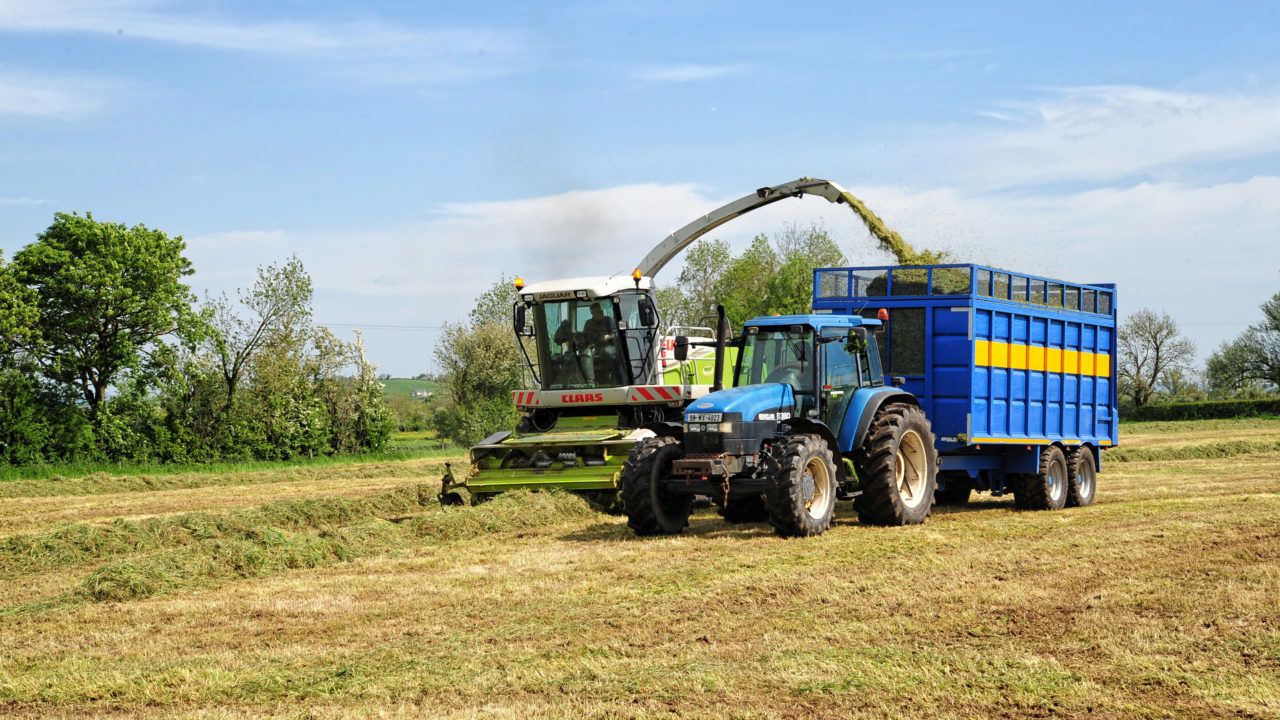
With May just around the corner and the weather finally starting to take a turn for the better, it's time to start looking ahead to the silage season.
A lot of farms will have struggled to travel land with chemical fertiliser and/or slurry this spring, given the ground conditions.
And considering silage swards may have been closed since last year, slurry applications are more than likely ruled out on a lot of farms before first cut by now.
This leaves farmers spreading expensive chemical nitrogen, and scrambling to get phosphorus (P) and potassium (K) out.
Farms that are only getting out with fertiliser now may have to consider spreading less to try and pull the cutting date up as close as possible, moving from 100 units of nitrogen per acre to 60 units per acre.
So in the midst of this mess and with cutting dates ultimately pushed back, what dates should farms be targeting now to get a quality crop?
Target dates
Cutting silage in early May leads to a more digestible crop with less fibre present.
As well as that, it allows the second cut of silage to bulk up and deliver stronger yields, which is crucially important for longer winters like the one just gone.
That is why we typically see a lot of farms aim for a first cut in or around the week of May 5, especially following a good spring like last year.
A cutting date within those first two weeks of May gives you the best chance of reducing the amount of stem and fibrous content in the silage, while achieving a desirable 75-80% dry matter digestibility (DMD).
But unfortunately, that will not be possible on the vast majority of farms this year.
Dry farms that got slurry piped on silage ground should still be able to target a cutting day of approximately May 18-20, which could be an optimistic target for us all.
But realistically, a lot of silage could be pushed out into June this year, which will help with yields but affect quality.
The following table is a guideline on grass silage DMD for different classes of dairy stock:
| Dry cows | Spring cows in milk | Growing heifers | Winter cows in milk | |
|---|---|---|---|---|
| DMD % | 68-70 | 72 | 72 | 75 |
| Typical first cut date | Early June | Late May | Late May | Mid May |
| First cut yield (t DM/ha) | 5.5-6 | 5-5.5 | 5-5.5 | 5 |
According to Teagasc, DMD is likely to decline by about 0.5 units for every day cutting is delayed after heading out.
That is why the first cut is always about quality over quantity, leaving the second and possibly a third cut for bulking up supplies that will be fed to non-breeding stock.
At the end of the day, decisions regarding cutting dates for silage will have to be made at an individual farm level, as there is no 'one size fits all' guide in years like this.
But farmers do need to be ready to pull the trigger as soon as possible, as sacrificing quality for quantity will be felt in the winter through supplementation, as well as lost milk production and body condition.
In the worst case scenario, feeding poor silage to pregnant heifers this winter may also lead to issues such as abortions.
The same goes for farmers considering bulking up first cut silage in exchange for quality as a result of the rocketing fuel prices, but this will also just cost you in the winter.