Watch: Cork biomethane plant to produce 70,000t of biofertiliser


A new biomethane plant in Co. Cork is set to produce 70,000t of biofertilisers annually, which will be made available to local farmers.
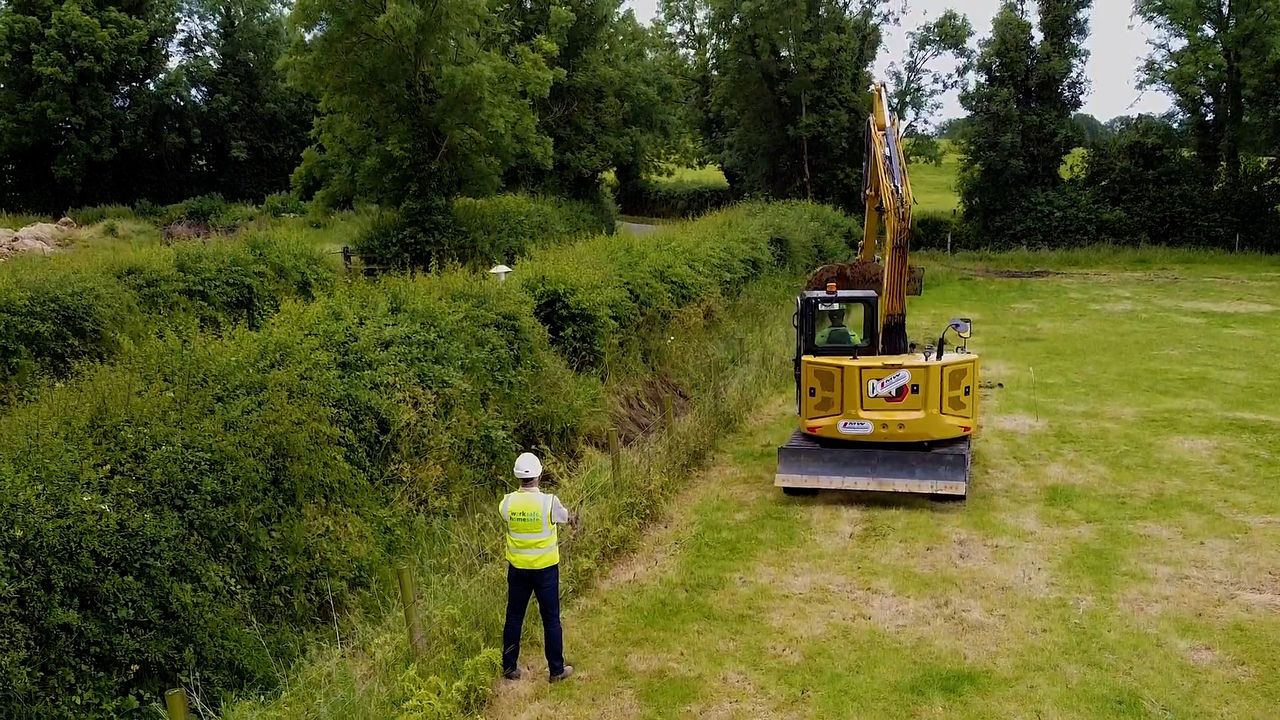
Stream BioEnergy, which develops and operates renewable biogas facilities in Ireland and the UK, is currently constructing the €80 million plant at Little Island.
The company recently reached a milestone of 12 months of construction on the project.
The plant, expected to be fully operational by June 2027, will process domestic and commercial food and garden waste.
"We'll be taking in 90,000t of organic waste into this facility [annually] and out of that we will be generate 70,000t of liquid digestate that will be available to landbanks and farmers in the local area," Morgan Burke, chief operating officer with Stream BioEnergy, told Agriland.
Digestate is a by-product of anaerobic digestion (AD) processes, which can be used as a fertiliser.
"It will be nutrient rich and importantly it will be pasturised so it will be very safe to use from a sustainability and biosecurity point of view," he added.
The plant's anaerobic digesters will also produce biogas which will be upgraded into biomethane and biogenic carbon dioxide (CO2).
"We'll inject the biomethane into the gas network where it will replace fossil fuel natural gas and the biogenic CO2 will be available for use in local industry," Burke said.
The Little Island plant is expected to deliver more than 80GWh of renewable biomethane annually to the national grid, which is enough to heat 6,000 homes.
The facility will reduce greenhouse gas (GHG) emissions by 40,000t carbon dioxide equivalent (CO2e) per year, the same as taking 17,000 cars off the road each year.
Biomethane
Stream BioEnergy has been seeking to develop the biomethane plant on the 5ac site at Little Island for over a decade.
"We've met various commercial, regulatory and policy challenges along the way, it's been a long, hard journey. So we're really delighted to get it underway," Burke said.
The company currently operates a specialised biomethane plant in Northern Ireland which uses poultry manure as a single feedstock.
"It is the only plant in the world that is successfully achieving that. Our plan is to develop a similar plant in Monaghan in the near future, as well as developing more of those types of plants internationally," Burke said.
RHO
The government's proposed Renewable Heat Obligation (RHO) scheme had been expected to be introduced in the Dáil in the coming months.
However, concerns have been raised that a new opinion from the European Commission could put the development of the biomethane and anaerobic digestion sector in Ireland at risk.
It is understood that the commission has now deemed the proposed 'multiplier' for indigenous biomethane contained in the RHO as incompatible with EU internal market rules.
While recognising the government's efforts on the RHO, Burke said it is "very important that they do introduce a mechanism to protect indigenously produced biomethane from cheaper sources of biomethane that can come in from abroad".
Renewables
Rupert Shaw, managing director of Pioneer Point Partners, which is a majority shareholder in Stream BioEnergy, said that "Ireland is a very promising market for biomethane".
He does not view the EU Commission's opinion on the RHO as "negative in its entirety".
"Within the opinion, the EU gave a very clear indication as to what path Ireland could take on the RHO to make it work," he said.
Shaw said they would urge the government to implement the RHO "as quickly as possible".
He suggested the government remove the multiplier from the RHO, but tighten the definition around subsidised biomethane in the scheme.
"If we can do that, get the scheme in place and tighten the definition, you're going to have a framework in Ireland that will really stimulate the sector," he said.