'Risky environment' for dairy influences farmers’ decisions on land

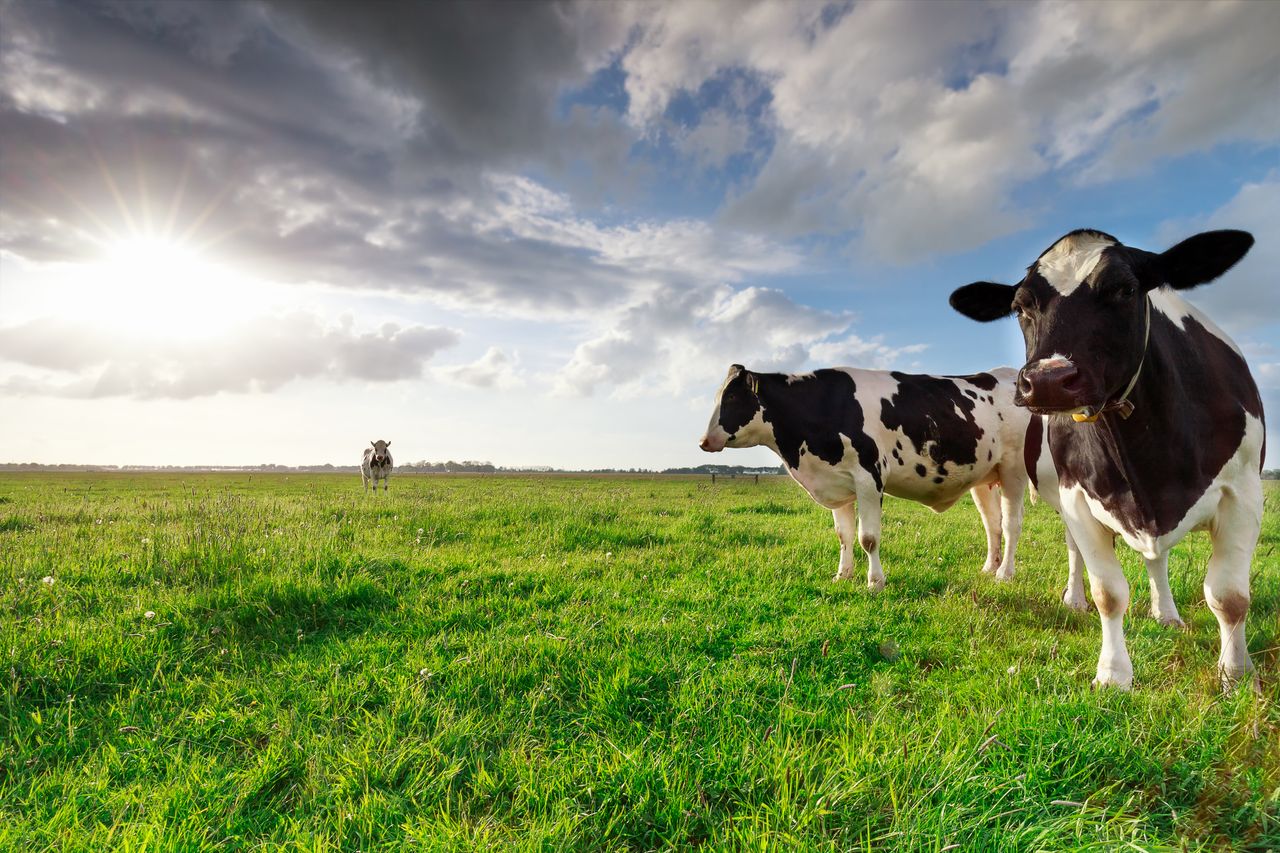
Dairy farmers are "facing an increasingly risky" environment and this can influence their decision-making when considering participation in land markets, according to a new report.
The Annual Agricultural Land Market Review Outlook 2026 report, produced by Teagasc and the Society of Chartered Surveyors Ireland (SCSI), has been published today (Tuesday, April 28).
The outlook for both farmland sales and rental prices is "more cautious" this year compared to previous years, the report said.
There is likely to be "modest growth" in land prices and rental rates this year.
Driving the more muted outlook this year for both farmland sales and rental prices is the fact that dairy margins are expected "to decline substantially in 2026" while beef sector incomes "are expected to moderate".
The report said that as dairy farmers continue to represent a key driver of activity in both land sales and rental markets, "evolving risk dynamics will remain an important influence on land demand and land price determination in 2026 and beyond".
Risks in dairy
The new report has spotlighted how dairy farmers are "facing an increasingly risky and uncertain environment".
"Farmers in Ireland are affected by this environment, with volatility observed in prices for milk, grain, livestock and key inputs," the authors said in the report.
"Furthermore, farmers are challenged by risks associated with animal disease, climate change, and adverse weather conditions.
"This risky environment can influence farmers’ decision-making when considering their participation in land markets."
The report said that a sharp reduction in milk price, for example, may "delay the plans" of dairy farmers to bid for additional land in either land sales or land rental markets.
At the same time, dairy farmers will "continue to seek the rollover of existing land lease agreements, as this provides stability to the farmer".
Milk prices
The SCSI/Teagasc land report highlighted a recent study conducted for the European Parliament by economists in Teagasc and Wageningen University, which analysed farm incomes in the EU and found relatively high volatility for some farm types, including specialist milk producers.
Dairy farmers in Ireland face volatility in milk prices and input prices, according to the findings.
The SCSI/Teagasc land report explained: "However, the effects of this price volatility can differ between farms.
"Differences in the costs of production and the volume of milk solids (fat and protein content) per litre of milk produced can influence the extent to which price volatility impacts the viabilityof a given farm."
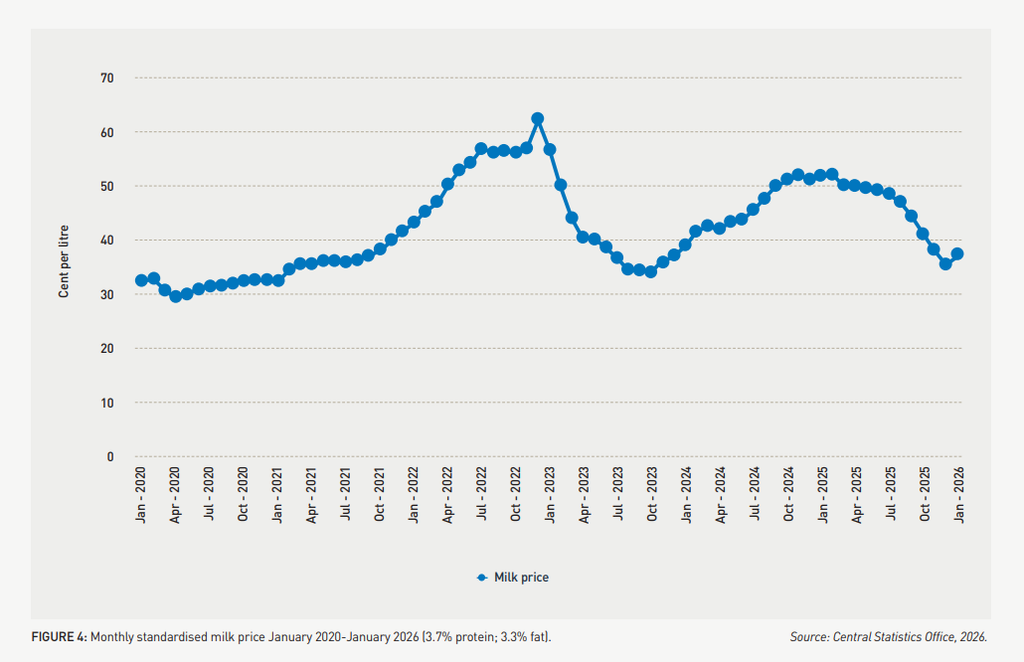
When milk prices fall sharply, farms operating with relatively high costs of production are less likely to remain viable in the short term, the report said.
"This problem emerges as the margin between the milk price per litre and the cost per litre declines," it continued.
"Dairy farms producing milk with relatively higher solids per litre are better shielded from large fluctuations in milk price volatility.
"This is because milk price is calculated based mainly on the price and quantity of fat and protein content in the milk."
CAP changes
The report also addressed other risk areas and their impacts on dairy farmers' decision-making on land.
It said "perceived increase" in institutional risk, such as change in the Common Agricultural Policy (CAP) support payments or environmental standards, can also influence decision-making.
It can "lead to either an increase or decrease in the demand for additional land, with the direction dependent on the exact policy change".
However: "Ultimately, the high price volatility of recent years has not deterred thousands of dairy farmers from expanding their land base, particularly through land rental agreements".
Teagasc National Farm Survey (NFS) data shows that the average area rented by dairy farmers was 20.9ha in 2024, an increase from 13.4ha in 2015.
An increase in owned land is also apparent, with the average owned area increasing from 47.1ha in 2015 to 51.8ha in 2024, according to calculations using Teagasc NFS data.
"Relative to land sales markets, land rental markets appear to have contributed relatively more towards the recent expansion of dairy farming in Ireland," the report said.
Personal risks
The report also highlighted previous research that showed a heightened perception of personal risks is likely to be associated with a "reduced appetite for farm expansion and a reduced participation in land markets, in the short-term at least".
Personal risks may relate to health, accidents, lifestyle, employee retention, and successors.
"Relative to the farms perceiving institutional or market risks as most important, these farms tend to be less likely to have a nitrates derogation status," the SCSI/Teagasc report said, looking at previous research.
"In contrast, those farmers perceiving market risk as most important may not be as deterred from expanding their land base.
"A majority of these farms have a derogation status and recent policy reforms to the nitrates directive may influence a stronger demand for land from this cohort of farmers.
"Financial risk management tools are likely important for this cohort of farmers, but options appear limited."
2026 outlook
The SCSI/Teagasc report gave an update on the outlook for dairy in 2026.
It noted that farm gate milk prices are notably lower in the first quarter of 2026 relative to the first quarter of 2025.
This is due to price declines in the second half of 2025, which were linked to declining commodity prices for butter, in particular.
"Higher fuel and fertiliser prices are expected to contribute to higher costs of production in 2026," the report said.
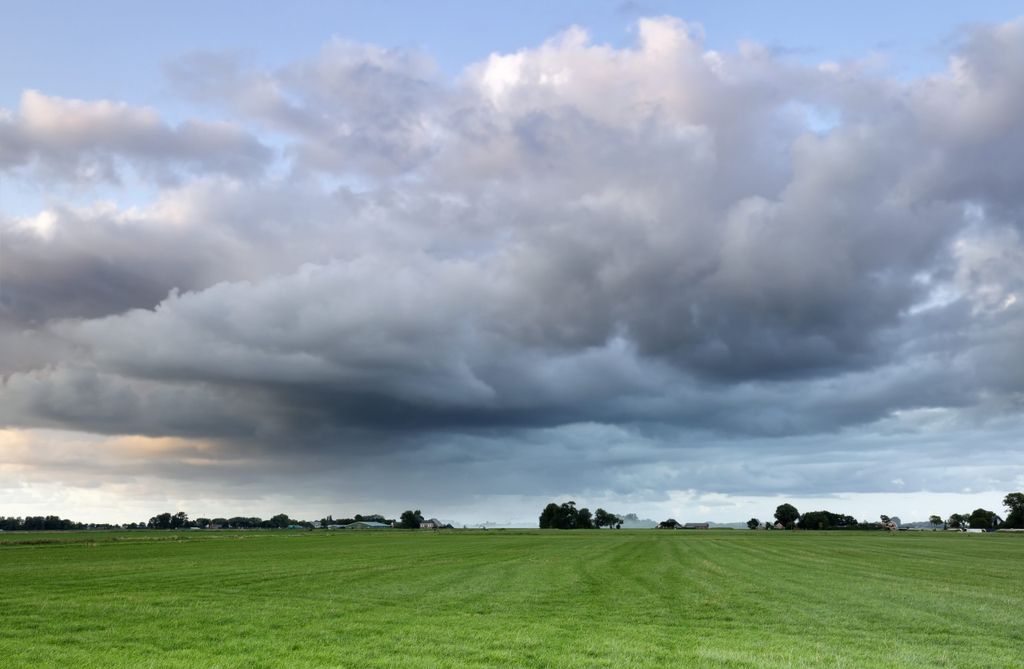
"Weather conditions in the first quarter of 2026 were generally unfavourable, particularly in eastern regions, which experienced rainfall levels that were much higher than normal.
"This is likely to contribute to an increase in concentrate feed use."
However, the main source of increased expenditure is likely to be higher fertiliser and fuel prices.
"Overall, Irish dairy net margins could be in excess of 50% lower in 2026 relative to 2025 as a result of lower milk prices and higher input costs," the report added.