Trace element deficiencies now evident in many spring cereal crops


Teagasc is confirming that trace element deficiencies are impacting severely on spring cereal crop performance with the issue particularly of note in the midlands and north Leinster.
This is a direct consequence of the continuing cold weather and the fact that so many recently drilled crops are coming under severe moisture stress.
Teagasc tillage specialist, Shay Phelan, further explained: “We are talking about magnesium and manganese deficiencies.
"Farmers should take the required steps to address this issue.
“But what we really need is to a return to mild conditions and sufficient rain to reduce the moisture stress on newly sown crops.”
Meanwhile, yellow rust has been identified in some wheat crops located close to the east coast.
Phelan said: “What we do know is that the application of a yellow rust active fungicide at the T0 stage has worked well.
“Flag leaves are starting to emerge in most wheat crops. Growers should apply an appropriate mix within the next five to seven days.
“It’s important that growers should alternate the chemistries used at flag leaf relative to those applied at the leaf three stage.
“An ear wash will be the final fungicide spray applied to winter wheat crops.”
Where winter barley is concerned, Teagasc has confirmed that all field work has now been completed in the vast majority of cases.
Crops have reached full ear emergence stage with many growers confirming high yield potentials this year.
Final spring crop walk
Teagasc will host its final spring crop walk of the season on Donegal on Monday evening next: May 18. Events get underway at 7:00p.m.
Weather permitting, a sprayer utilisation demonstration will be included within the itinerary for the event.
The issue of applying sprays in the most effective way possible has been identified as a key priority for Irish tillage farmers during the 2025/2026 growing season.
A case in point is the fact poor application technique accounts for almost 50% of the problems relating to the build-up of herbicide resistance in weed populations.
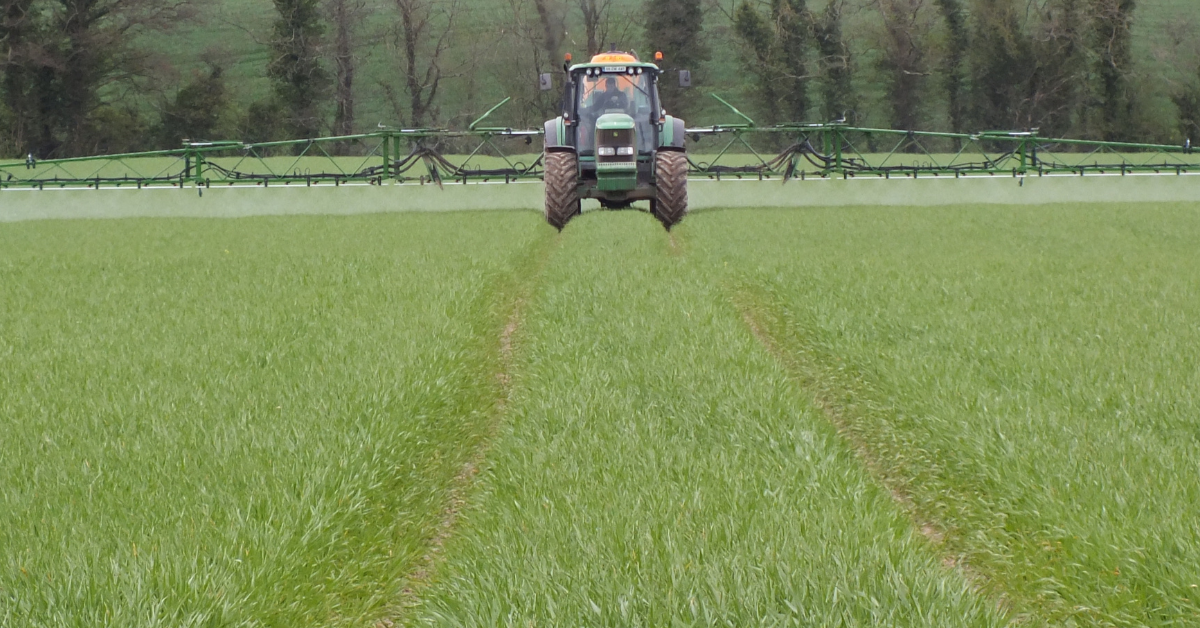
Accurate sprayer calibration is one of the first steps in avoiding problems.
A properly calibrated sprayer should finish the field with little or no spray solution remaining in the tank.
Any small quantity left over can then be safely applied back onto the target crop at a low rate, provided the maximum approved product rate per hectare is not exceeded.
More generally, delivering effective weed control is recognised as one of the biggest challenges now confronting Irish cereal growers.
The upcoming farm walk will take place at Drumbarnett Middle, Manorcunningham, Co. Donegal. Eircode: F92 X786.