Tillage: Recent rains will have eased nutrient stress levels in crops

According to Teagasc, the recent rains that have fallen across all tillage areas will have acted to reduce nutrient stress levels in crops.
But growers must continue to actively monitor the state of their fields.
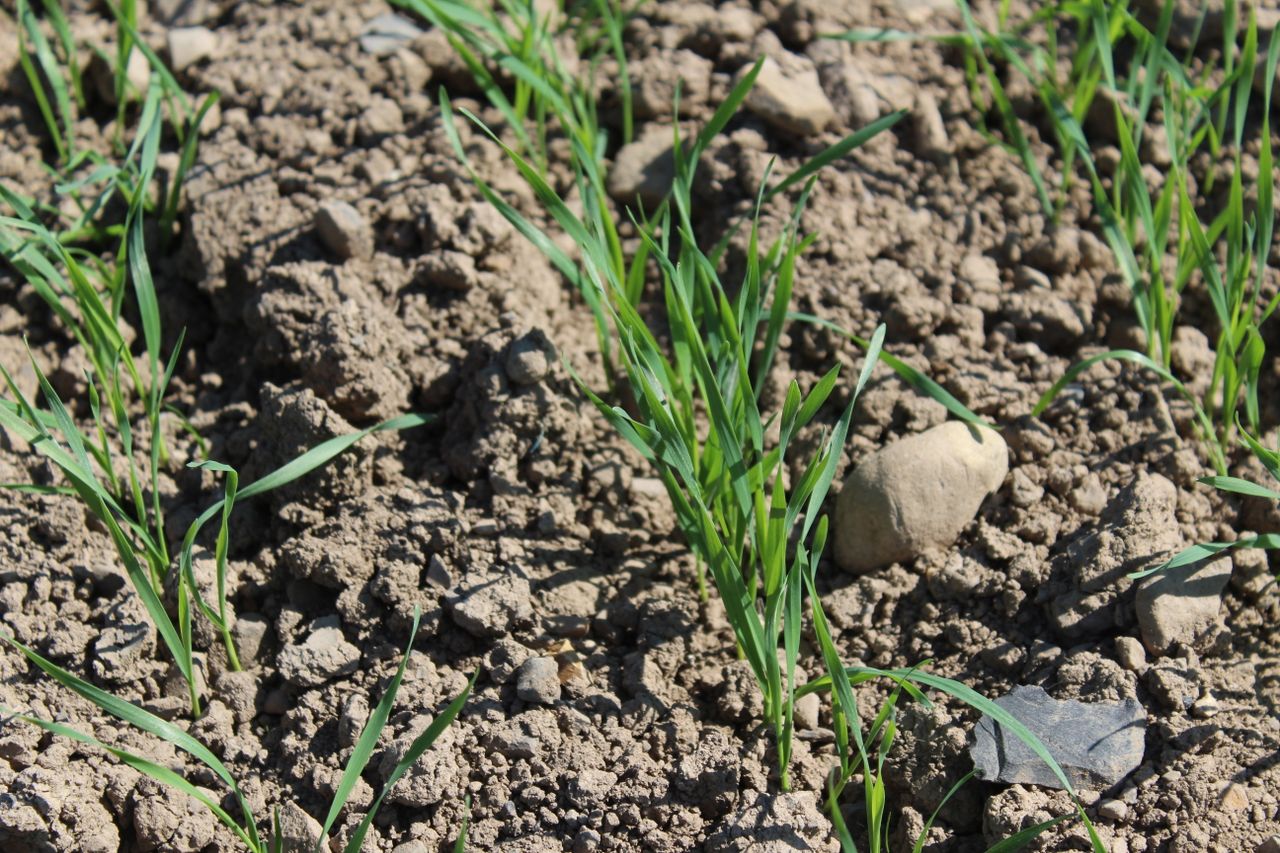
Spring crops with their shallower rooting systems will have been most affected by the dry, cool conditions that characterised all of April and the first half of May.
The lack of available moisture will act to restrict nutrient uptake and crop growth.
In parts of the east, soil moisture deficits had reached 30-50mm, limiting nutrient movement towards plant roots and increasing the appearance of transient nutrient deficiency symptoms in spring barley.
Manganese
Manganese (Mn) deficiency has been one of the more common issues observed in recent weeks.
Under cold, dry conditions, manganese availability declines rapidly, while reduced root activity further limits uptake.
Agrochemical applications during periods of cold weather may also have added to crop stress, making symptoms more visible in some fields.
One of the first signs of Mn deficiency, commonly known as ‘grey speck’, is pale striping or interveinal yellowing on older leaves.
At field level, Mn deficiency often appears as pale, patchy growth with greener wheelings or tramlines standing out across the field.
Where deficiency symptoms were primarily driven by dry conditions, recent rainfall should help improve nutrient movement and root activity.
In many situations, crops are likely to begin recovering naturally over the coming days.
However, growers should continue to monitor crops carefully over the next 7–10 days.
If symptoms persist despite improving soil moisture conditions, corrective action may still be required, particularly in fields with known risk factors such as high pH soils, peaty or high organic matter ‘black’ soils or loose unconsolidated seedbeds.
Foliar Mn applications
Where manganese deficiency remains active, foliar Mn applications can provide an effective correction.
Chelated manganese products generally offer better compatibility with agrochemicals and lower scorch risk, while manganese sulphate formulations typically supply higher levels of Mn.
Split applications are often most effective in spring cereals, with applications timed from early tillering through to stem extension.
Applications should target actively growing crops and be applied during cooler parts of the day to maximise uptake and reduce scorch risk.
Meanwhile Met Éireann is forecasting that temperatures will continue to trend upwards with warm or very warm conditions.
High pressure will bring mostly dry and settled weather too across the country.