Reminder: Testing grass for nitrates and sugars before cutting

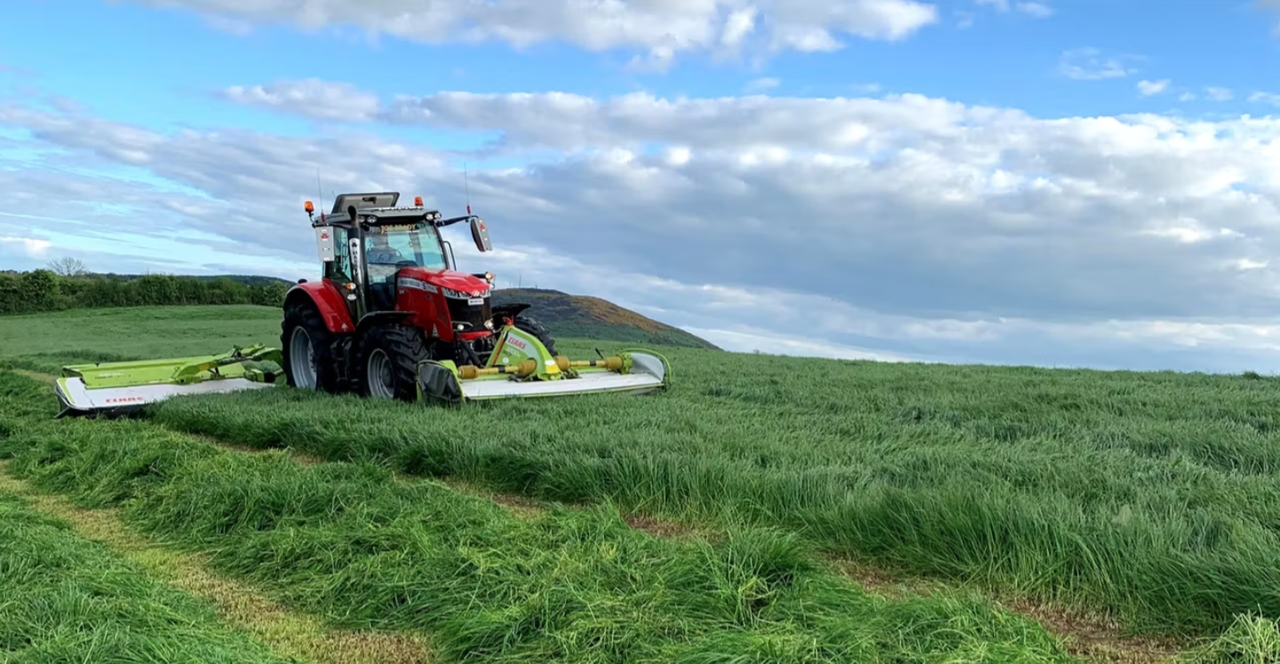
The arrival of the current spell of warm, dry weather has farmers across the country anxious to take advantage of the conditions to secure a cut of silage.
However, the late spring this year means that many farmers were delayed in applying fertiliser on silage ground and may not have fertiliser on long enough to cut their grass silage at the moment.
According to Teagasc, a useful guide for fertiliser nitrogen (N) is that grass uses 2.5kg N/Ha (2.0 units/ac) per day on average.
When determining an approximate cutting date, farmers should first identify the units of N applied to the silage ground and the date applied.
Divide the number of units of N applied/ac by 2 to get the approximate number of days needed for all N fertiliser to be used up.
Testing
If farmers are unsure if a silage crop is fit to be cut from an N fertiliser perspective and weather conditions are suitable for cutting, the best course of action is "to test the grass crop for sugars rather than sticking rigidly to the ‘2-unit rule’," according to Teagasc.
The advisory body said that in certain cases, the crop can be safely harvested sooner - depending on conditions.
Farmers who are anxious to cut their silage but are unsure if it is ready, should take a sample and bring it to their local agri-adviser or Teagasc office to test for sugar content and grass nitrates.
A representative grass sample of the area being cut can be placed in a freezer bag and taken for testing.
The testing only takes a matter of minutes and will give a farmer clarity where they stand on cutting their silage.
Sugar content
According to Teagasc, high sugar content allows the crop to ferment quickly in the pit or bale, reducing pH and preserving the crop correctly.
The following is a guide for the meaning of sugar percentage results at the time of cutting:
- Over 3%: The crop will ensile readily;
- 2-3%: Wilting rapidly for 24-36 hours will be beneficial (target 28-30% DM);
- Below 2%: An additive will be required.
According to Teagasc, the optimum mowing time is in the late afternoon/evening when sugars are highest.
Where this is not possible, farmers should ensure mowing takes place after the dew has risen "as this means that 2.5t water/ha (1t/ac) has been removed".
Silage sugar and nitrate test results will give farmers peace of mind if planning on cutting silage slightly earlier than ususal.
The advice is for farmers to target quality over quantity in first-cut silage but the crop must be ready for harvesting to achieve this and farmers should always remember to think health and safety - particularly around the busy silage season.