New radar technology aims to track key pollinators

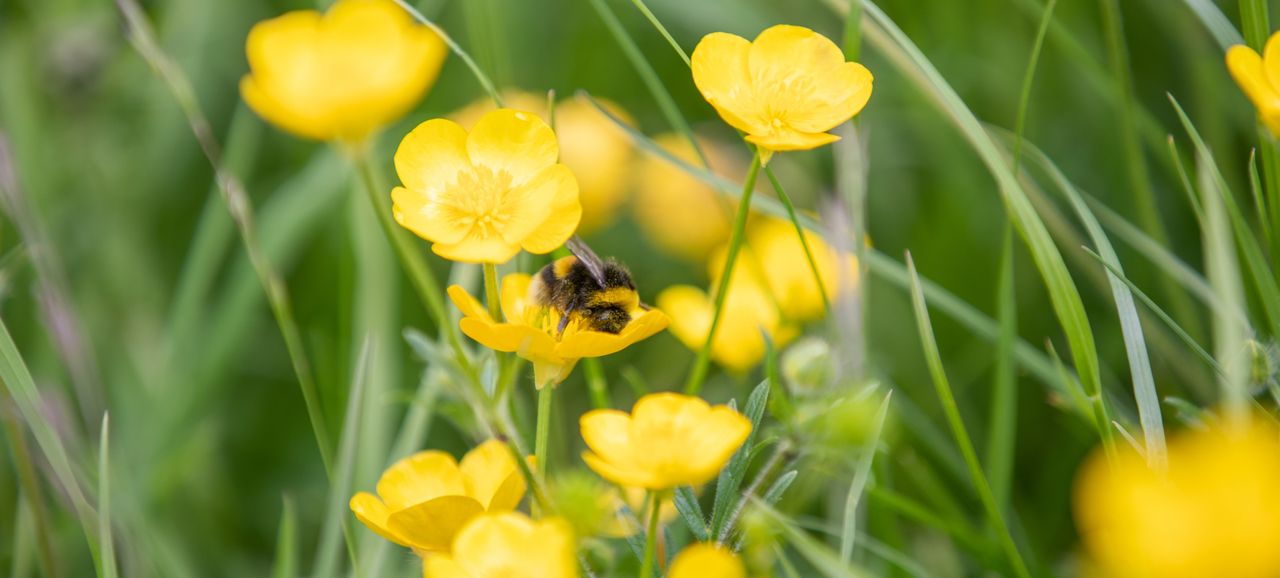
A new radar-based technique could address a critical gap in global conservation efforts for key pollinators.
Scientists from Trinity College Dublin and the Technical University of Denmark have developed the technology which is aiming to transform how we identify and track the insects responsible for pollinating plants.
The decline in pollinators has received widespread attention in recent years.
However, most monitoring efforts focus on counting insect numbers, rather than the diversity of species.
The team involved with developing the new technology believe this distinction is vital.
Pollinators
According to the scientists, not all flower-visiting insects contribute equally to pollination.
Identifying and tracking the variety of species that visit different plants, especially food crops and endangered plants, has remained a major scientific challenge.
The new method was developed under controlled laboratory conditions but is now being trialled in real-world, outdoor environments, where insects can be monitored freely.
It uses a detailed analysis of insect "wingbeat signatures" derived from radar reflections of millimetre-wave electromagnetic waves, which can distinguish species with high precision.
Prof. Ian Donohue, from Trinity, is the senior author of the research article recently published in the international journal, PNAS Nexus.
"Crucially, the approach means we can accurately identify different species, even telling apart very closely related insects.
"That is very hard to do visually, or via other existing technological tools.
"Unlike large-scale monitoring systems, this technique can also operate cheaply and effectively over a small spatial range, making it particularly suited to studying insect activity directly in and around flowers," he said.
This approach enables researchers to pinpoint which insects are genuinely acting as pollinators in real time, rather than simply passing through an area.
The technology offers the potential to then track the numbers of various species across discrete time periods, to provide a far more accurate assessment of how those species are faring.
Conservation
The team believes the implications of this new method for conservation and agriculture are "significant", as policymakers and scientists have long struggled to determine the most important pollinators in different habitat types and at different times of year.
By identifying the variety of species that visit specific plants, this approach could help direct targeted conservation strategies and direct and improve ecosystem restoration efforts.
Prof. Jane Stout, another senior author of the research, and vice-president for biodiversity and climate action at Trinity, said:
"The need for such innovation is urgent as pollinator populations continue to decline across Europe, including in Ireland, where even common species are showing worrying downward trends".
"According to the EU Red List of Bees (2025), 10% of assessed wild bee species are now threatened with extinction, which is more than double the number identified in 2014.
"Meanwhile, Ireland’s National Biodiversity Data Centre reports a 3.5% annual decline in bumblebee populations since 2012," she added.
The team now plans to increase its insect radar signature database to include more species and to detect changes in insect behaviour by analysing unusual alterations in wing-beat patterns, which may be linked to changes in variables such as temperature or humidity.