Steps to Superior Silage

Clamping or baling silage: How will an additive help preserve grass?
Dr. Adrienne Kerley, Volac’s Research and Development Technical Manager for Forage, provides some tips on clamping and baling grass, and when to use additives, in this final instalment of the 'Steps to Superior Silage Series'.
Clamping
How should a grass silage clamp be prepared?
Preparing the clamp properly - to remove contamination from unwanted microorganisms and ensure the clamp can be made airtight - is key for successful silage.
- Remove old silage, pressure washing if necessary;
- Repair clamp walls and base, sealing any cracks;
- Remove anything from walls that could puncture side sheets;
- Cover rough areas of walls with bags to prevent damage to sheeting;
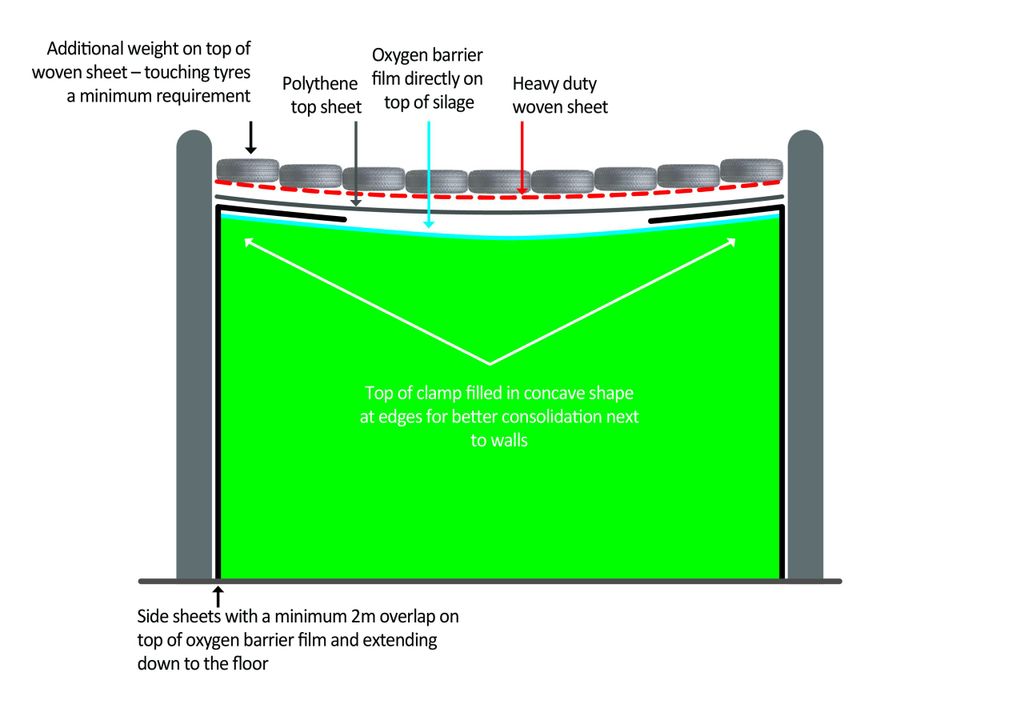
- Line walls with polythene side sheets down to the floor to control air ingress - and allowing a minimum 2m overlap over the top sheet;
- Unblock effluent channels.
How best to fill a silage clamp?
In the traditional wedge method, the clamp is loaded at an angle.
The advantage of this is it minimises the area of forage exposed to air during filling and avoids exposing earlier cuts to air again when the clamp is opened to add the next cut.
More recently, filling in horizontal layers has become used.
Potential benefits of layering:
- Better compaction as the crop is spread over a larger surface area;
- More room for two machines on the clamp - important if forage is coming in fast;
- Easier to roll a flatter surface;
- Less risk of clamp slippage with wet crops or between cuts;
- More consistent silage quality from top to bottom during feed-out.
Potential disadvantages of layering:
- Bigger surface area exposed to air during filling;
- To put in another cut the whole clamp needs un-sheeting;
- It may take longer to fill the clamp if only one machine is on it, as there is a bigger surface area to roll.
Whichever method is used, clamps should be filled in layers no more than 15cm deep.
During filling, keep the sides filled higher than the middle. This ensures forage next to the walls can be rolled properly.
If filling the next day or the clamp is opened to add another cut, put a layer of fresh forage on top before rolling, as running tractor wheels over silage that has already stabilised has the effect of aerating this material, causing aerobic spoilage (heating).
How to consolidate a silage clamp?
Good consolidation minimises air trapped in the clamp, which allows fermentation to begin and means wasteful microbial respiration plus respiration by the plant will cease sooner.
Rolling also bruises the forage a little, helping to release more sugars for fermentation.
In a well-consolidated clamp, yeast numbers should also be lower when the clamp is opened for feeding, reducing the risk of aerobic spoilage (heating).
For grass above 27% dry matter (DM), fill the clamp quickly and in thin layers and roll with plenty of weight.
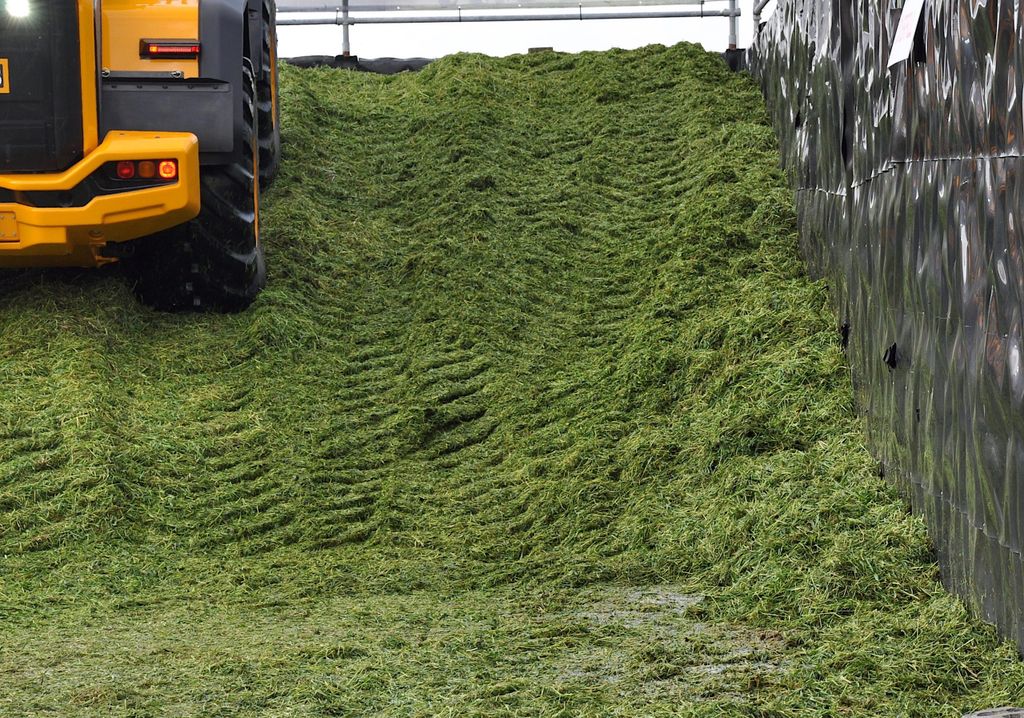
For example, packing tractor weight (tonnes) should equal the forage delivery rate (tonnes fresh weight/hour) x 0.25. Use single wheels inflated to the maximum recommended pressure.
Do not over-roll as the spongy nature of the grass will pump air in and out.
With grass below 20% DM, consider dual-wheel tractors or a crawler, as excess contact pressure and rolling will increase effluent.
Do not load the clamp too high or over-compress near the walls as wet grass exerts a greater pressure on the walls.
How to seal a grass silage clamp?
Once the clamp has been filled, place an oxygen barrier film over the top of the forage. This sucks down onto the surface contours, helping to create a seal.
Next, fold side sheets over this, followed by one or two polythene top sheets.
Check the sheeting periodically for holes and seal if necessary with suitable tape.
Air infiltration during storage as a result of poor compaction and sealing can increase DM losses by as much as 8%.
How to weight down grass silage sheets?
It is best to apply an even pressure over the whole surface of the clamp to prevent the sheet flapping and air getting in.
Touching tyres or lorry sidewalls on top of the woven sheet can be used on unroofed clamps, and either touching tyres/lorry sidewalls or hay/straw bales on top of the woven sheet on roofed clamps.
A few tyres or bales scattered over the top is not sufficient.
Gravel bags on top of the woven sheet can also be used to maintain pressure around the clamp edges.
Baling
Does baled grass silage need an additive?
With baled silage, fermentation is slower and restricted due to the longer chop length and the typically higher %DM of the grass used.
Bales are also more susceptible to aerobic spoilage (heating and moulding) due to their higher %DM and large surface area to volume ratio making air removal more difficult.
They are also less dense compared to clamped silage, although improvements in balers have meant densities have been increased over the years.Bales can therefore benefit greatly from an additive. The specific additive used can be tailored to the % DM of the bales and how long the silage will be exposed to air for once opened before being consumed.
For lower %DM bales (e.g. below 33% DM) that will be eaten within a day (e.g. on dairy farms) and where there is little risk of aerobic spoilage, consider an additive that preserves the bale by improving the initial fermentation, e.g., Ecosyl 100.
If bales are likely to be open for two or three days before being eaten (e.g. on beef and sheep units), then focus on the initial fermentation but also on tackling spoilage and heating risks.
For example, consider Ecocool, which contains two beneficial bacterial strains, one for fermentation and one to target the yeasts and moulds that cause heating and spoilage.
Alternatively, consider Double Action (DA) Ecobale, which includes two bacteria, one of which is effective at fermenting drier material, plus a feed-approved preservative.
This series is a collaboration by Agriland Media Group ahead of the silage season, aimed at bringing farmers and contractors tips on producing superior fodder.