Keeping on top of targets as heifers get to grass

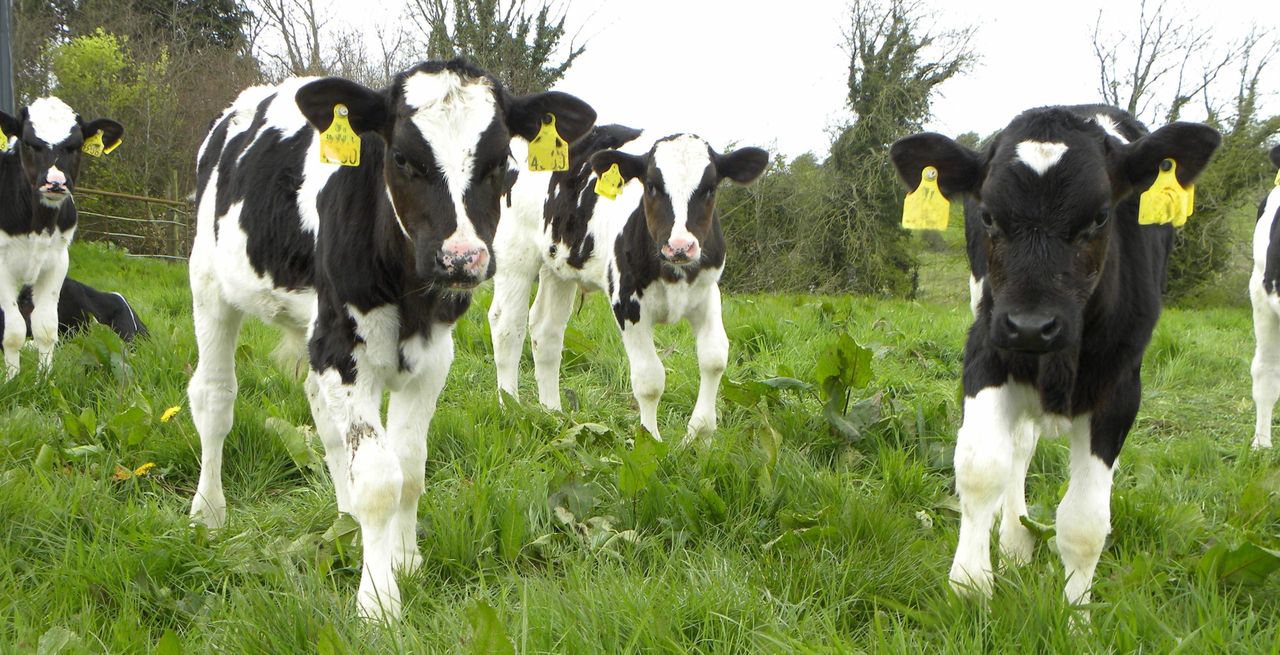
Between breeding and field work, this week was hectic for farmers, but it is critical they do not take their eye of the ball when it comes to calves at grass.
It can be easy to half forget about calves once they are out at grass and grazing away, when in reality they still need strict management as they transition to ruminant animals.
We all know that meal feeding should be maintained post-turnout for at least five to six weeks to help the calves transition to eating grass.
They should be fed pellets at a feeding rate of 1.5-2kg of meal/head/day.
Feeding provides a good opportunity to monitor all calves, looking for any that are scouring or falling behind the rest of the group.
However, they should be checked on more than once a day as the earlier they are identified, the better the chance they have of recovering and catching up to the rest of the group.
These calves should be segregated, given extra meal and hay/straw, as well as any electrolytes or antibiotics that are needed.
Be careful of letting calves out to the same paddock year after year, as altering the paddock will help avoid the build-up of pathogens and diseases.
Try to avoid paddocks that have recently received high levels of nitrogen (N) or are very lush and protein-rich.
If calves are grazing lush pastures with a high crude protein (CP) content (>20%) and a low fibre content (<40%), summer scour syndrome could be an issue.
Ensure they have access to a fibre source in the form of hay or straw to counteract the high CP they eat in the grass, as calves are selective grazer and will only eat the lush stuff first.
Heifer calf targets
It is fair enough to leave heifers in the same paddock for a couple of days once turned out, as it can take some time for them to calm down and settle in.
However, in general they should not be left in the same paddock for long periods of time, instead they should be rotated on a regular basis to ensure there is fresh grass ahead of them.
Calves should be grouped on size, and in the case where a calf falls behind, it should be moved to a more suitable group.
At the end of the day, even if calves are grouped on size, the only true way of making sure your calves are on target is through regular weighing every couple of weeks.
Coordinate your time to do this when calves are in for dosing or vaccinating, or else it will not be done.
A lot of farmers are under the impression that this is a waste of time as it is relatively easy to eyeball them when you are at it long enough.
But in reality, you want to be making sure these calves are on target considering the value of them, and scales are neither brutally expensive to buy or rent.
If you are focusing on the average weight of the group without weighing individually, it may hide a number of calves that have fallen behind.
The main targets for heifers are:
- 30% of their mature body weight by six months-of-age;
- 60% of their mature body weight at bulling (15 months-of-age);
- 90% of their mature bodyweight when they first calf at 24 months-of-age.
The mature weight of a calf can be determined by its maintenance figure within the Economic Breeding Index (EBI).
To get a better understanding, farmers could weigh a couple of their mature cows and work off that figure.
Poor fertility in replacement heifers often occurs when they are underweight at mating start date, but this can be easily avoided if weight and weight gain of the heifers is regularly monitored.
By regularly monitoring weight performance, you will be able to pick up on any calves that are sick or behind.
It is easier to get a calf at three or four months-of-age back up to speed than it is a heifer that is close to bulling.
Keeping on top of weighing is important but, in addition, regular handling and monitoring means you will be able to monitor any health issues and pick up on cases of summer scour or coccidiosis before they turn into a major problem.
A good worming programme should also be considered during the summer months, especially with such variable weather.