Dealing with slurry safely this silage season

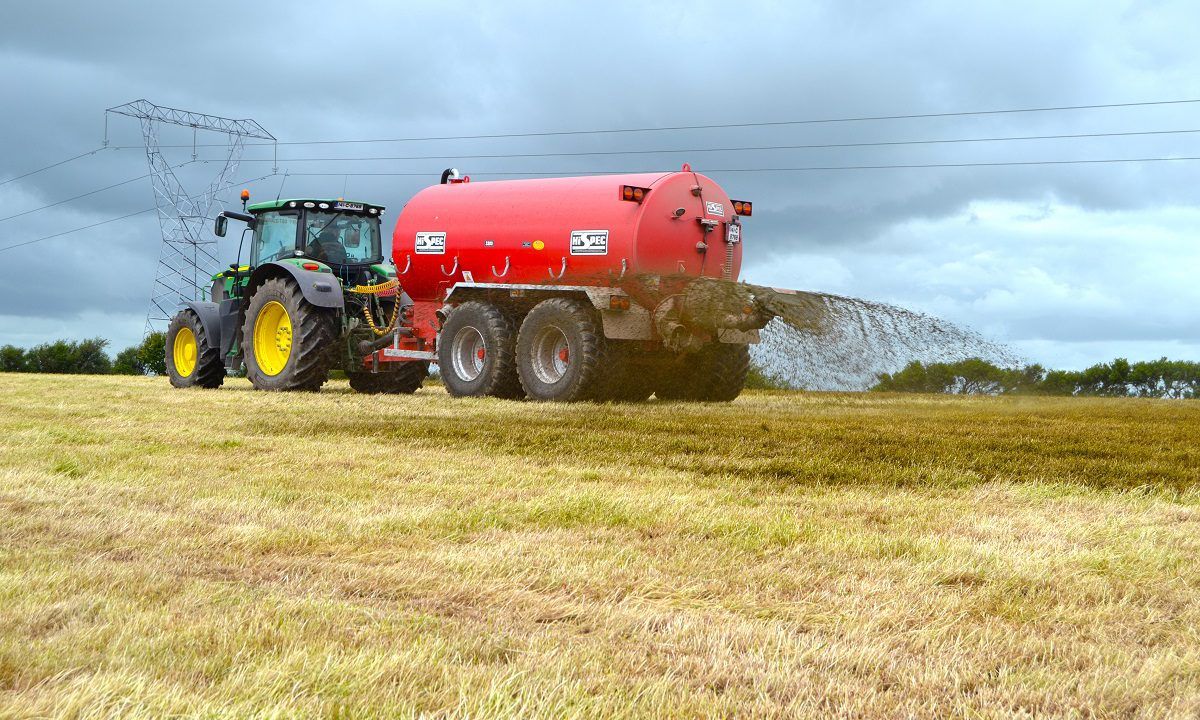
With the silage season now underway and slurry tanks beginning to move, Teagasc has shared advice on the risks associated with agitating.
Handling slurry, according to Teagasc, “is one of the most hazardous activities on a farm”.
It said that the main risk associated with handling slurry is being overcome by slurry gases, which can lead to poisoning, suffocation or drowning.
Teagasc added that machinery risks include impact or crushing when attaching the agitator or tanker, as well as entanglement on the power take-off (PTO).
Slurry produces a range of gases based on the nature of the fermentation which occurs.
Teagasc said: “Poisoning occurs ‘above ground’ due to the release of hydrogen sulphide (H2S).
“H2S can be detected by smelling at 0.1 parts per million (ppm).
“At 150ppm, the olfactory nerve, which detects smell in the nose, is desensitised and then H2S cannot be detected by smell.”
The gas produces adverse health effects at increasing concentration and is rapidly fatal above 700ppm.
Agitation
Teagasc measurements have indicated that fatal levels of gas can occur in the period after agitation commences.
The authority raised the following key points when it comes to agitating:
- Remember the rule – evacuate, ventilate, agitate;
- Only agitate on a breezy day when there is considerable air movement, as one lung full of hydrogen sulphide gas released during agitation can kill;
- Ensure that all livestock, people, and pets are kept clear of the slatted shed when agitating;
- Make sure that buildings are well ventilated with all doors and outlets open;
- Stay away from the agitation point and of out the slatted shed for at least 30 minutes after starting agitation.
Additional time must be given where there are linked tanks and buildings, as slurry gas, which is heavier than air, may travel into poorly-ventilated locations within these sheds, Teagasc noted.
Slurry gas can also travel through linked tanks and pipes to locations away from the tank, so it is important to check for, and stay out of, blind ends where slurry gas may build up.
"Never enter a slurry tank – even if empty – as gases may linger," Teagasc said.
Additionally, indoor agitation points are very dangerous and should be avoided.
Teagasc noted that there are a number of options available to farmers to avoid the need to use indoor agitation points.
These include: extending tanks and the installation of outdoor agitation points; fitting a slurry circulation pipe; pumping slurry to an outdoor large capacity tank; installing a slurry aeration system; and/or the use of slurry additives.