How will farming fit into Ireland's Nature Restoration Plan?

A major new report on Ireland’s Nature Restoration Plan was released this week, but what did it say about farming and funding for agriculture?
The Independent Advisory Committee’s (IAC's) report sets out 94 recommendations to guide how Ireland will meet its obligations under the EU Nature Restoration Law.
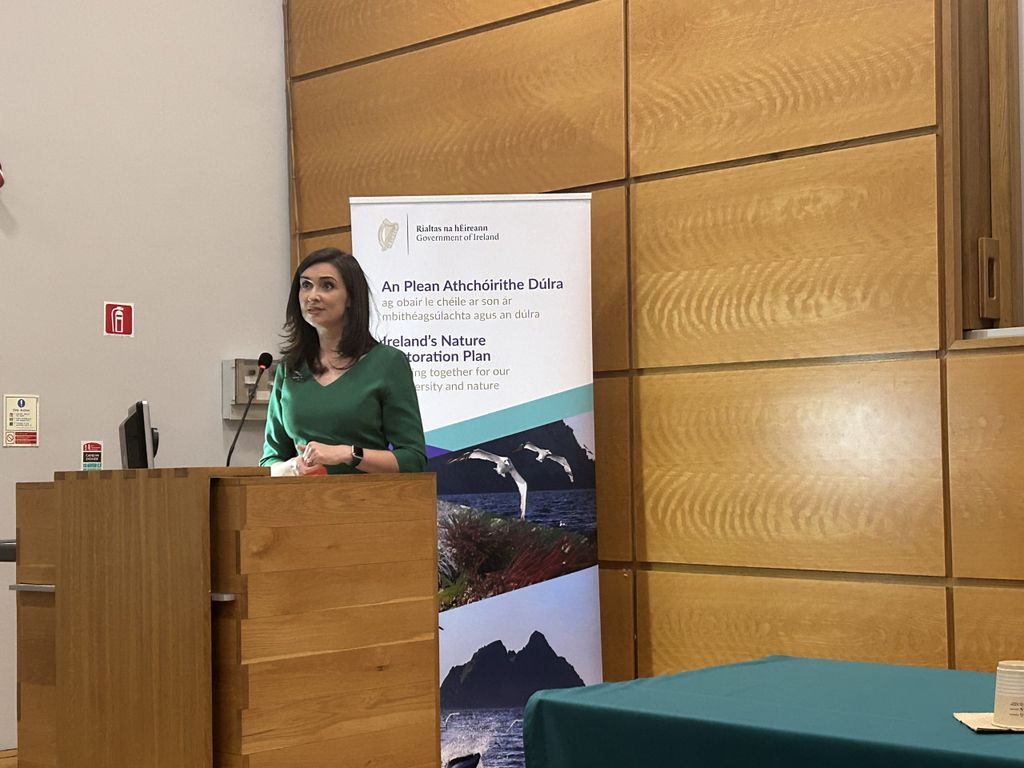
The recommendations drew on the expertise of a multi-disciplinary group of independent experts who made up the 13-person committee, chaired by Dr. Aoibhinn Ní Shúilleabháin.
It is understood that it could cost between €450-€700 million per year to implement the EU regulation in Ireland.
Some farming groups, including the Irish Natura and Hill Farmers' Association (INHFA) and the Irish Creamery Milk Suppliers' Association (ICMSA) have shared concerns about funding and land use under Ireland's Nature Restoration Plan.
Here’s what the report had to say about agriculture, existing schemes, and how the recommendations will be financed.
ACRES and CAP
The report repeatedly referenced the Agri-Climate Rural Environment Scheme (ACRES) and the Common Agricultural Policy (CAP), emphasising that nature restoration will not depend on funds from either scheme.
It said: “Agricultural lands currently defined under CAP regulation should continue to be considered agricultural and maintain eligibility for CAP and other payments."
It noted that ACRES "now covers almost 25% of agricultural land and has almost 54,000 farmers (approximately 40% of all farmers) participating in nature restoration on their land".
“This, however, does not include all farmers willing to participate in it," the report said.
“In the context of the EU Nature Restoration Regulation, ambition for new agri-environmental schemes needs to be increased to include all farmers who voluntarily utilise their lands for the benefit of the public through ecosystem services.”
The report outlined that Ireland's Nature Restoration Plan is intended to exist in addition to current supports
It said: “The committee recommends that further financial support for farmers, fishermen, foresters and other landowners be provided to ensure the state can meet its nature restoration obligations.”
In a separate entry, it said: “CAP funding must be secure and sufficient adequate CAP funding must remain in place to support agricultural activities across the farm, even when parcels of land have been committed to nature restoration.”
Incentives
Financial rewards and incentives were mentioned several times in the report, including for landowners and farmers.
On ecosystems, it said: “The government must ensure there is an attractive financial reward for the provision of ecosystem services, particularly with regards to flood management, water quality, and the protection and restoration of nature through action and results based payment systems.
“This will require a tailored, locally-based approach across sectors and must include engagement with farmers, fishermen, and foresters to ensure they can realise sustainable livelihoods and derive income from quality food production, fishing, sustainable forestry, and the provision of ecosystem services.”
New payments
The report did discuss funding for farmers, but again, did so while emphasising the need for new and separate payments.
It said: “A step change in ambition will be required to devise new, accessible and funded schemes to adequately reward farmers, foresters and other land owners and land trusts who wish to participate in nature restoration schemes.
“Current agri-environmental and forestry schemes must be reviewed to ensure they are not in conflict with the national Nature Restoration Plan, with additional measures required to be funded through new schemes separate to the CAP.”
It added that “the state must put in place a robust system of financial incentives and regulatory protections that support all farmers as essential partners in restoring ecosystems”.
Funding
So where will this money come from?
According to the plan, it will be “fully and fairly resourced with sustainable, scalable and long-term funding in order to deliver nature restoration measures”.
It added: “While the exchequer will be ultimately responsible for funding the achievement of the state's legal obligations, the plan will outline a range of potential revenue streams, including EU funds, private finance, innovative community-led models, and opportunities within the wider public sector”.
Expanding on the private sector point, it said: “In acknowledging that the economy is reliant on healthy and productive ecosystems, and that the drivers of biodiversity loss are inherent outputs of our economic system, the plan will call on the private sector to engage positively and constructively.”
Public land
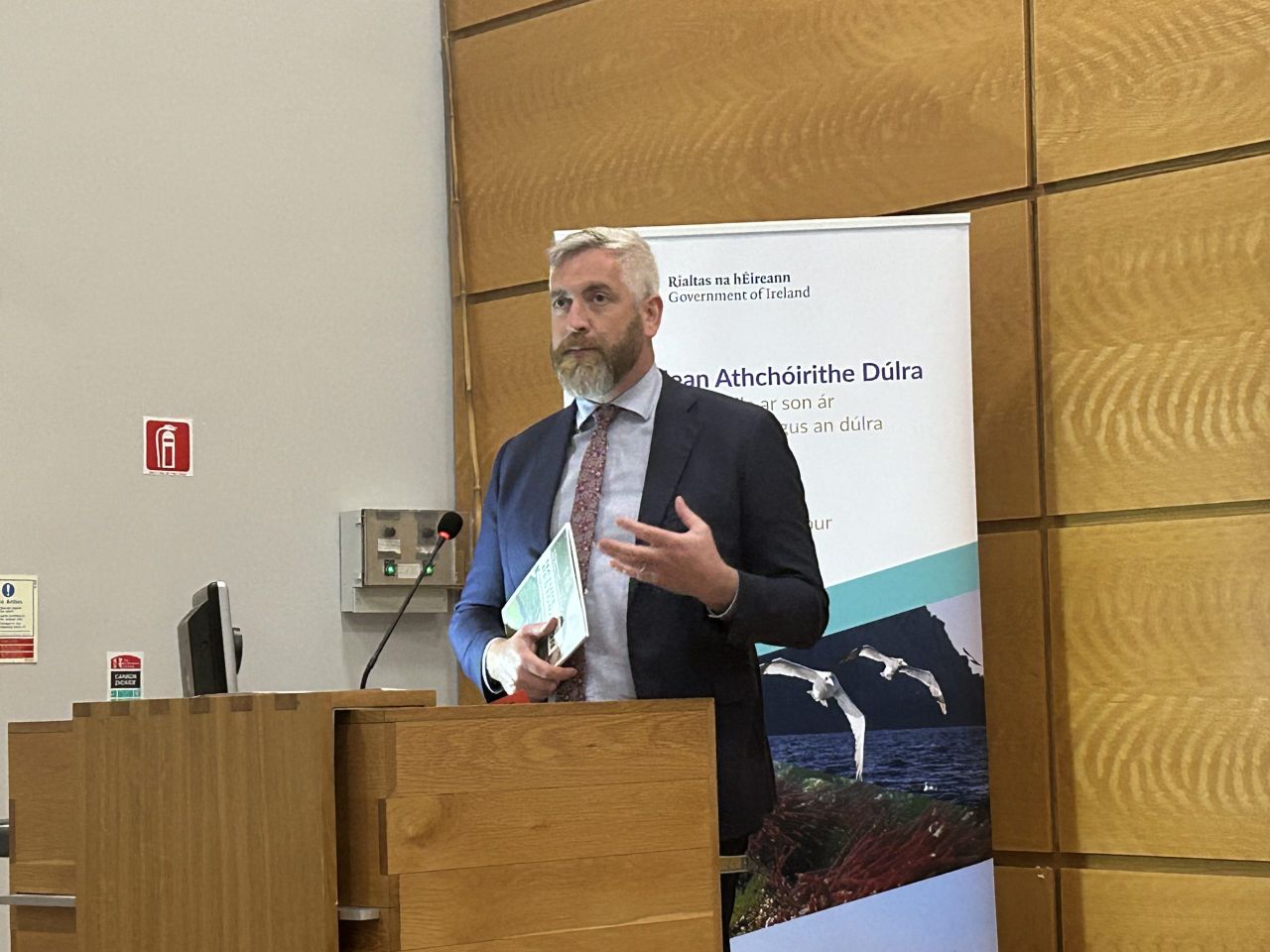
Minister of State for Nature, Heritage and Biodiversity, Christopher O’Sullivan O’Sullivan spoke to Agriland at the launch of the report.
He noted that one recommendation was “to start on public land, so the international parks and nature reserves are the first port of call when it comes to nature restoration”.
This echoes the report, which focuses on state land, mentioned the state’s “biggest public landowners”, Coillte and Bord na Móna, and cites their “commercial remit” to generate income for the state from renewable energy, timber and (historically) peat extraction.
It said that their “contradiction of purposes presents a real challenge for the future management of our public lands”.
It also stated that the Department of Agriculture, Food and the Marine is a "significant landowner", with over 1,700ha combined, that "faces challenges in revisioning a healthy environment as a core element of a successful agri-food sector”.
Other public landowners named are the Office of Public Works , ESB Networks, the Health Service Executive, the Industrial Development Authority, and local authorities, which the plan said “must also ensure they are contributing to the state’s nature restoration obligations”.