Watch: Ditching the cows for buffalos in Co. Cork

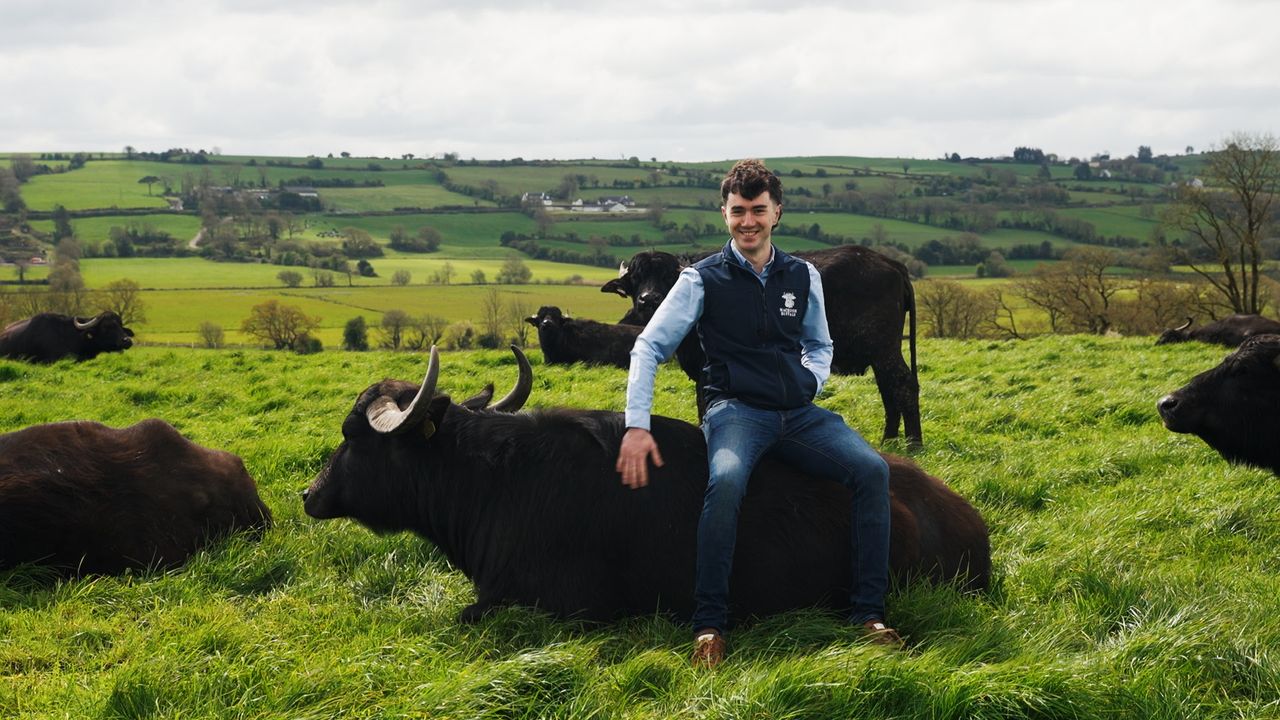
Nestled just outside the town of Macroom in Co. Cork, the Lynch family is running a rather unique dairy operation.
Your typical dairy cows will not be found on this farm, as the family is milking a herd of water buffalos instead.
As if that was not a unique enough practice on its own, the farm has also built its own on-site cheese factory where they process all their own milk, rather than supplying a co-op.
Kieran Lynch is the man behind the operation, a fifth-generation family farmer who has taken over the reins from his father Johnny.
Johnny would have grown up with typical Friesian cows and milked them himself for years, but with poor milk prices back in 2009, he decided to take a risk and try something different.
Water buffalos over in northern Italy then caught his eye, and Johnny made the bold move in becoming the first Irish farm to import the breed, with just over 30 head originally joining the herd.
17 years later, Johnny has taken a step back from the actual farm operations and taken to the cheese-making side of things.
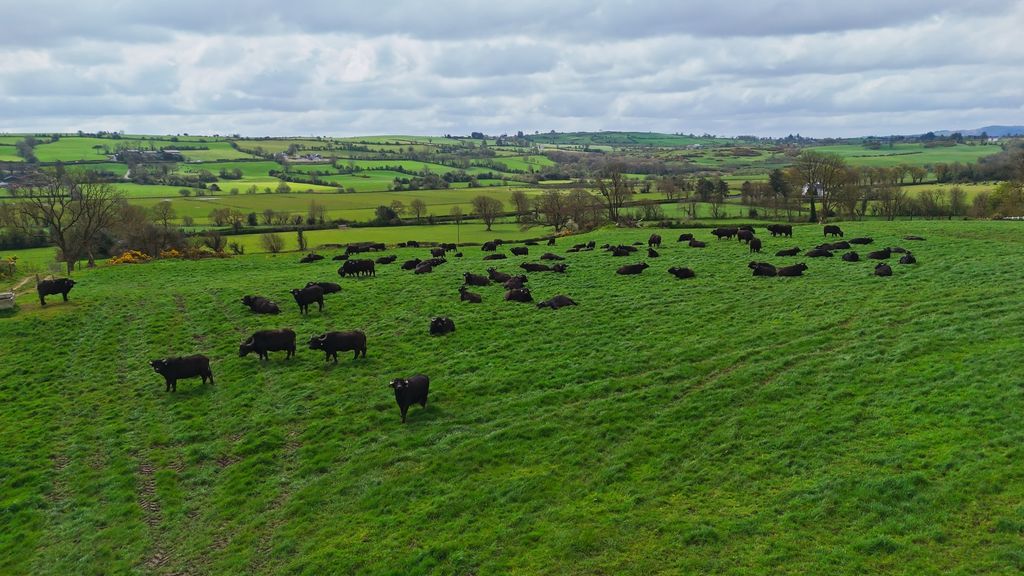
In that time, the volume of buffalos has grown exponentially, with 700-800 now being farmed across five platforms, two of which are milking blocks.
As it stands, out of 320 buffalos due to calve down in 2026, 88 are currently being milked on the home block, with a further 105 on an outblock.
The rest will calve down throughout the year while others dry up, to ensure milk production is consistent for the cheese factory.
The farm keeps a steady level of solids throughout the year at 7.5% fat and 4% protein out of an average 2,700L per lactation, as their main product, mozzarella, requires a 2:1 fat to protein ratio.
Maintaining this production lets them strive for a 25% return rate on milk production, which ultimately means every 100L of milk should be equating to 25kg of mozzarella.
Breeding buffalos
Buffalos have a gestation length of approximately 312 days, just over a month more than typical Friesian cows the Irish dairy sector is used to.
This may seem like a disastrous gestation length from afar, but with the Lynchs supplying their own cheese factory, they need stock calving down all year around to keep up with milk production.
To do this, a stock bull is usually given the job of inseminating any spring calvers.
Then Kieran uses artificial insemination (AI) on autumn calvers, saying it is the best opportunity to bring in new bloodlines, with straws imported from Italy.
When it comes to breeding, he noted how they had issues with heat detection collars in the past, which could potentially be put down to the thick skin of the animals.
However, he is looking to install smaXtec boluses this year after hearing that they are working on a buffalo farm in the UK.
Kieran also noted that the window for AI after heat is much different to dairy cows, saying that the window opens up around 24 hours post onset of heat, but has a large range.
They are using a Draminski estrous probe, but even at that, he said the margin for error can still be quite large, making it unsustainable to AI the whole herd.
Kieran said that they are achieving up to 70% in terms of conception rates, stating that buffalo farms in other countries are very surprised at the high rates.
When it does come to breeding, his main breeding criteria relates back to milk solids like the majority of dairy farms.
Kieran is also looking at health aspects, saying that issues with prolapses are common and seem to be hereditary, as well as mammary issues.
Interesting, once the buffalos are inseminated and in calf, they begin to dry off themselves.
A month or two after conception, volume will start to reduce, and four months pre-calving, they will have completely stopped producing milk, meaning no dry tubes or antibiotic are needed, unless they are for a quarter infected with mastitis.
Calving
When calves are born down, their weight can range between 30-55kg depending on bull.
Kieran actually noted how he had twins in April, which is a rare sight considering the probability of buffalo twins is only 1/1,000.
He said that the calves were 34kg/head at birth, and both are thriving and healthy, and so is their dam.
The Co. Cork farmer added that the breed is actually very easy when it comes to calving, with only five caesarean sections needed in the last 10 years, if not longer.
However this year happened to be an outlier, with two animals needing c-sections, although Kieran noted how one was well over-conditioned and the other was a small heifer.
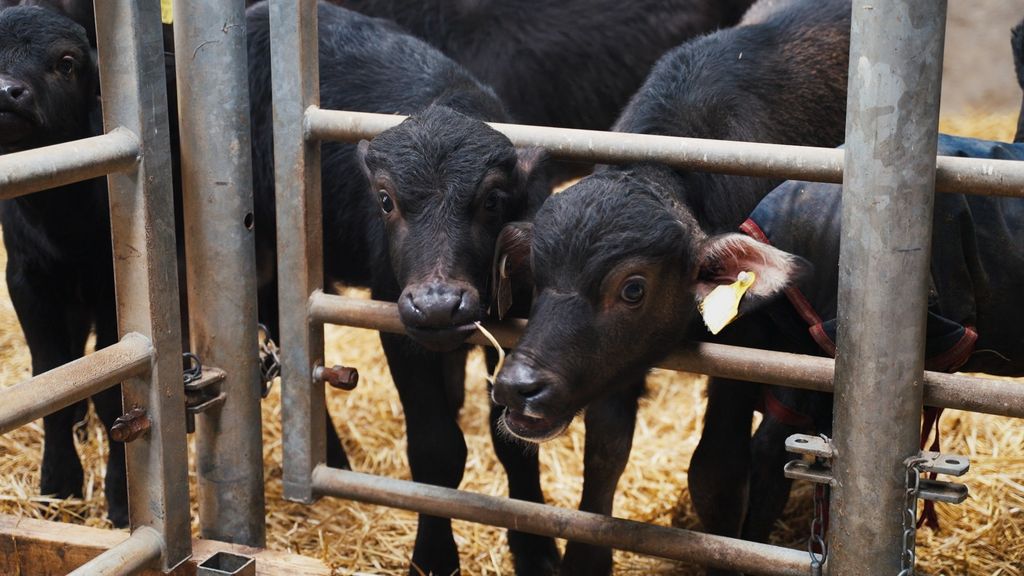
From there, the calves typically spend first two and half months housed like the majority of dairy calves in the country.
Kieran feeds them milk replacer through automatic feeders, saying that the calves goes through 50kg milk powder each over the season.
However, it was also noted that in a bid to replicate the buffalos milk which is naturally higher in fat, Kieran needs to find a replacer with a fat content higher than or equal to the protein content.
This often leaves him opting for sheep milk replacer rather than calf milk replacer.
Diet
The grazing season has been tough enough as it is for the average dairy farmer, but for the Lynchs it was even tougher, considering water buffalos by nature love to dig up and burrow into wet corners of fields.
Kieran said he would have plenty of happy animals if he let them do it, but they would not be so happy when they do not have grass for the rest of the year.
Thankfully from now on, with conditions drying up, the herd will be full steam ahead at grass.
He will then be able to pull the concentrates fed from 6kg back to 2kg.
Over the winter, Kieran lets dry cows strip graze fodder rape and kale in effort to prevent prolapses, which are common when housed but less common when out.
He aims to reseed 5-10% of the farm each year, whichever fields are being reseeded will be put forward for these winter crops.
The rest of the herd is on silage and haylage for the winter months, however Kieran noted that if the silage has too much moisture, it will affect the flavour of the milk and follow right through to their final end products.
Therefore he has to aim for high 77% dry matter digestibility (DMD) silage, and feed haylage where that is not possible to maintain flavour consistency.
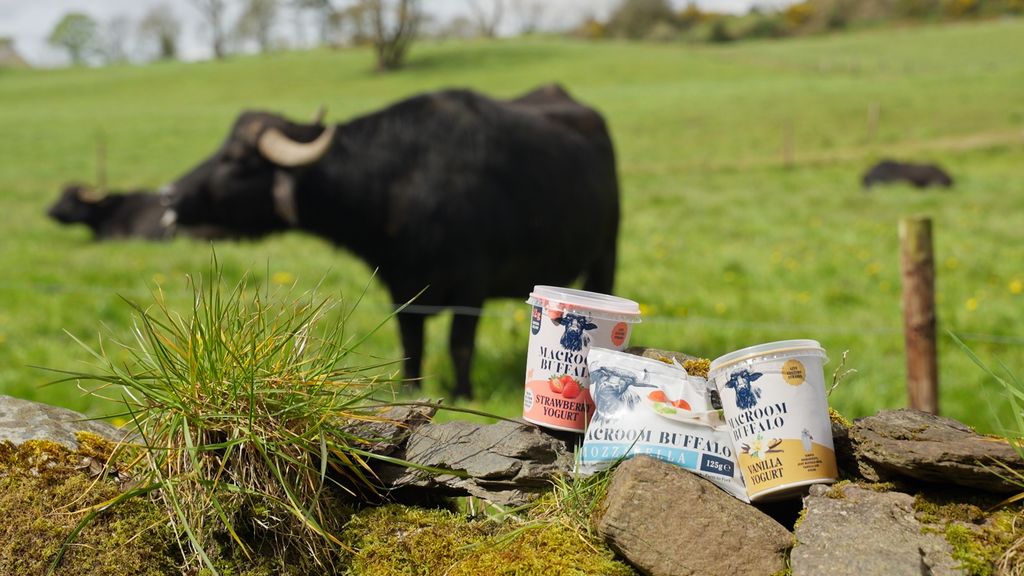
Macroom Buffalo Cheese
In 2015 the Lynchs set up their own cheese factory and started selling under their own brand name 'Macroom Buffalo'.
The main focus when they started was mozzarella cheese, as demand was strong.
This was something Johnny had originally noted back in 2009 when buying in the first of the buffalos, but despite that there was no buffalo mozzarella being produced in Ireland at the time.
However, since then, the Lynchs have expanded their product range significantly, with several cheeses now being produced including ricotta, burrata, bocconcini, Cypriot style, and Greek style.
Most recently, the family farm has also branched into yogurt-making, with a range of flavours being produced.
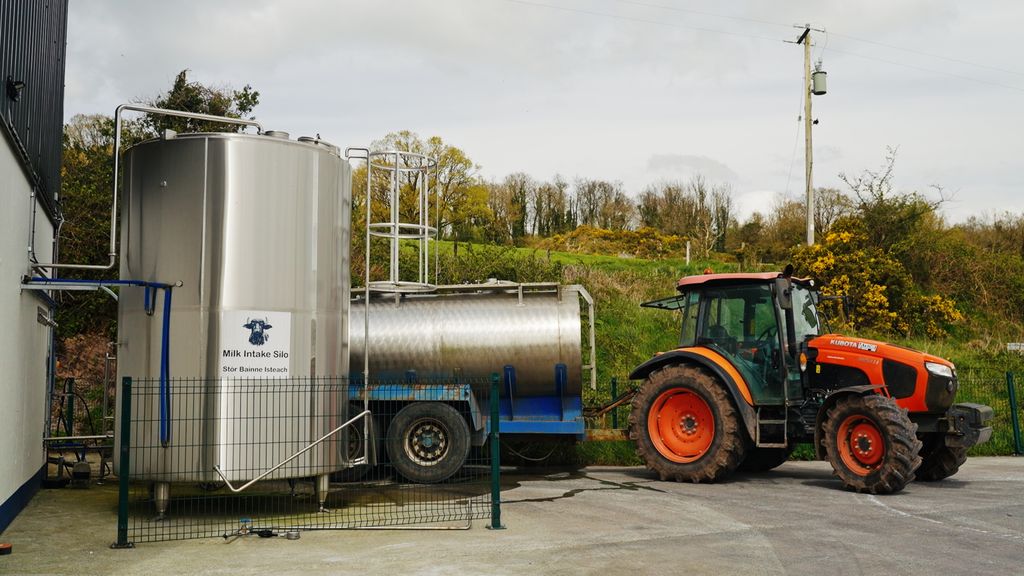
Each evening, the milk from the morning and evening milking is unloaded at the plant's silo.
At 4:00a.m the following morning, the lights flicker on in the cheese plant, as the cheesemaker gets to work with that milk.
He begins by pasteurising it to get rid of bacteria, which involves the milk being heated to high temperature and then rapidly cooled.
From there, he adds the rennets, an enzyme which helps separate the whey from the curd.
He then waits for pH to drop to 5, as that is the point where the curds can be heated up and stretched, which is where they are ultimately formed into balls of mozzarella.
These balls are then dropped into a mould of cold water, which shocks them into that permanent mozzarella ball shape.
The cheesemaker finally puts these into a salty brine.
This is the only preservative used, but it has the ability to keep them fresh for three weeks, which Kieran said is "enough time to get to the supermarkets and into the cupboard".
He explained how their mozzarella and yoghurt are only made for orders, as their shelf life is too short to be hoping orders come in on time.
However, any surplus milk that is not needed to fulfil orders on the day is used to produce longer shelf life products such as their Greek style cheeses.
If you are interested in hearing more about the Macroom Buffalo farm, tune into episode three of Agriland's limited podcast series 'The Dairy Trail' on Monday (May 4) at 5:00p.m here on Agriland or whatever platform you use to listen to your podcasts, as Kieran tells us all about their operation.