How the Irish dairy sector financially navigated a turbulent 2025


The 2025 financial year will be remembered across the Irish dairy sector as one defined by a tale of two halves.
A strong first half - thanks to solid markets, favourable weather conditions and record milk volumes - led to a sharp deterioration from August onwards, as a global oversupply of milk caused commodity prices to fall steeply.
Against this backdrop, Ireland's major dairy co-ops have now released their annual results, and the picture that emerges is one of resilience under pressure, alongside assessments of the challenges ahead.
Tirlán
The processor, reinforced its strategy around value-add nutrition, international diversification, and balance sheet "discipline" in 2025.
Revenues for the year grew 10% to €2.94 billion, while earnings before interest, tax, depreciation and amortisation (EBITDA) were €117 million.
Operating profit for 2025 came in at €63.7 million, its profit after tax rose 8% to €39 million, and core net debt fell to its lowest level in over a decade at €126 million.
The co-op's strategic €126 million investment in a new whey processing facility at Ballyragget, is its largest ever value-add investment, targeting whey protein isolate and clear whey products for the sports and performance nutrition sectors.
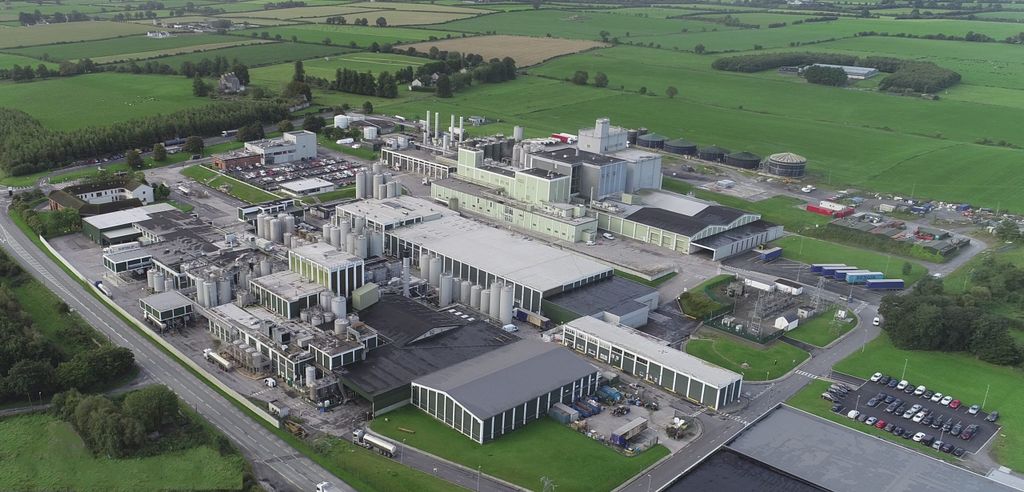
Through its Kilkenny Cheese Ltd joint venture with Royal A-ware, Tirlán produced more than 50,000t of continental cheese in 2025, with the associated whey stream feeding directly into the new facility.
The processor also introduced a €15 million 'Generational Renewal Programme', which pays new entrants a 2c/L bonus on all milk supplied in their first three years of production.
The co-op retains a 17.9% shareholding in Glanbia plc, valued at €734 million.
The co-op processed "one-third of Ireland's milk pool" last year, approximately 3.23 billion litres of milk, which was a 7% increase from 2024.
The processor also noted that milk solids were up 9% year-on-year.
Tirlán also paid out approximately €1.7 billion in milk payments to farmers.
Its weighted average milk price for the year was 54.4c/L.
Lakeland Dairies
Co. Cavan-headquartered Lakeland Dairies delivered a "strong performance" in 2025, with group revenues growing 10% to €1.93 billion.
EBITDA was "robust" at €71.8 million for the year, profit before tax rose 19% to €25.2 million, while after tax, this figure was €22.4 million.
Shareholder funds stood at €290 million, and the processor recorded a net debt of €226 million.
The co-op also upgraded its UHT blending capacity in 2025, which increased its ability to produce a broader variety of products at scale.
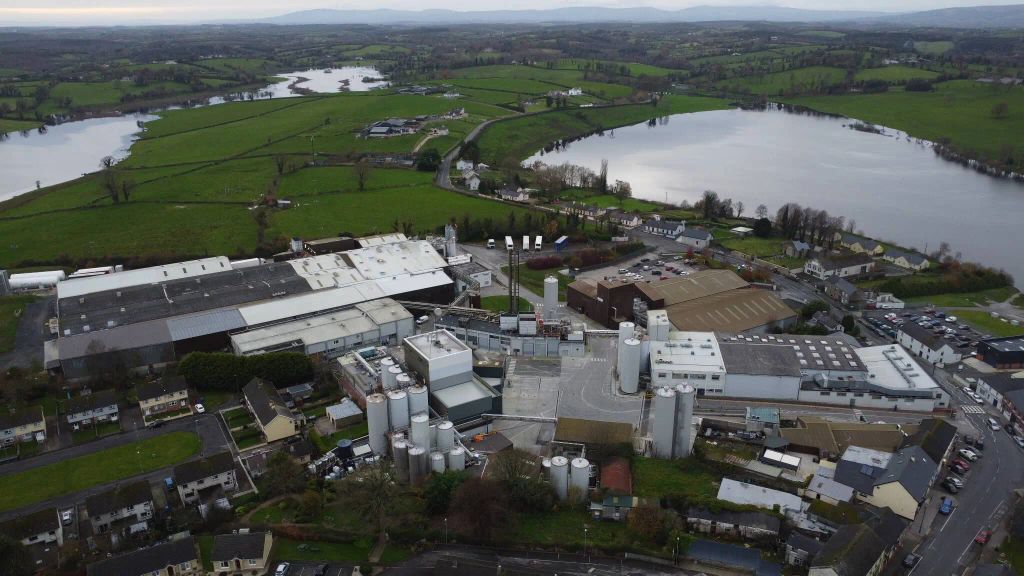
Capital investment included a new liquid milk processing facility in Killeshandra and new intake facilities in Bailieborough.
The 2024 acquisition of De Brandt, a texturised butterfat operation in Belgium, continued to build Lakeland's presence in premium dairy segments.
Chief executive Colin Kelly told Agriland: "The biggest expense the business has is the milk check, and we're like probably no other business in that we want to pay as much as we possibly can for our raw material."
The co-op processed a record 2.14 billion litres of milk from over 3,000 farming families in 2025.
It paid out €1.05 billion in milk payments last year, reflecting 54% of the co-op's revenue going directly to farmers.
Lakeland Dairies estimate the knock-on-effect of this payment will contribute between €4-€5 billion to the rural economy, both north and south of the border.
The average milk price for the year was 53.2c/L.
Dairygold
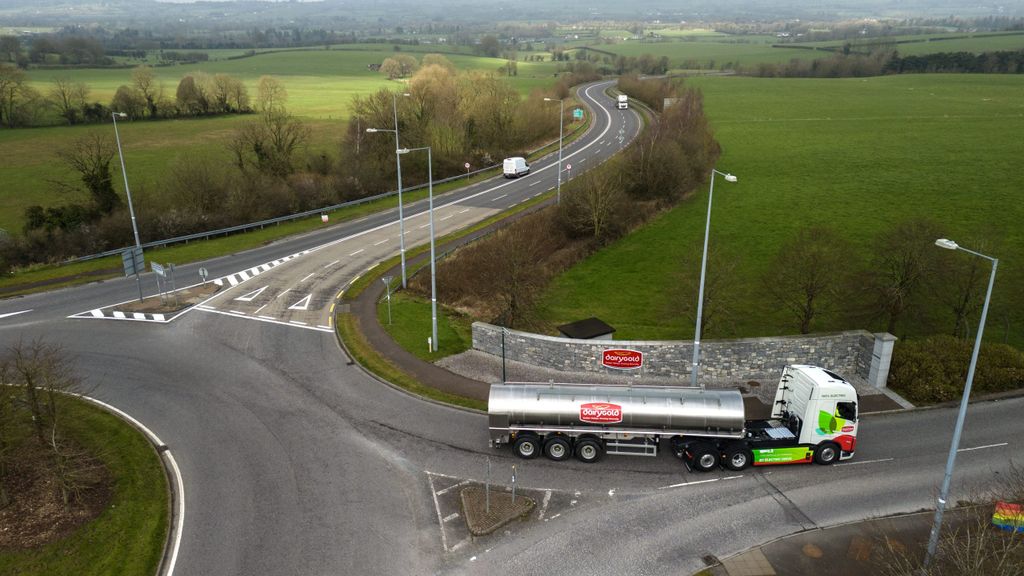
Ireland's "largest" co-operative, Dairygold, reported a "resilient financial performance" for 2025, despite "exceptional" market volatility.
Turnover rose 10% to €1.5 billion, but EBITDA fell to €52.7 million in 2025 from €65.4 million in 2024, directly reflecting the unprecedented fall in global dairy commodity returns during the second half of the year.
Operating profit dropped from €37.1 million to €21.3 million in 2025.
The co-op was particularly exposed given that the sharpest global price falls occurred over a four-week window in August and September, just as cheese stocks were at their peak.
Despite this, Dairygold reduced its net bank debt in 2025 by €22 million to €135.3 million through asset divestments, including the €25.6 million sale of its Creamfields development property, formerly the site of the Cork Milk Producers (CMP) Dairies in Cork City, to Cairn Homes plc.
Its 'Business Optimisation Programme' targeting €14 million in savings over three years delivered €8.5 million in its first year, exceeding targets by €1.5 million.
Dairygold's "strategic investment" of its casein capacity makes it "one of the largest casein production facilities in Europe".
Growing its Vita Actives nutraceuticals subsidiary also signals the dairy industry's intentional shift towards higher-margin ingredients.
The co-op collected 1.44 billion litres of milk from suppliers in 2025, an increase of over 4% year-on-year, while the co-op also saw its highest ever average milk solids per cow at 454kgs.
As dairy market returns dropped significantly as the year progressed, the co-op's quoted milk price reduced from 50.0c/L in April, to 36.0c/L in November.
The quoted average milk price for the year was 46.1c/L. When including Quality and Grassroots payments plus VAT, this equates to a paid price of 53.8c/L.
Carbery Group
West Cork-based Carbery Group demonstrated the value of a deliberately diversified business model last year.
Group turnover grew 8% to €723 million and group EBITDA held broadly steady at €52.3 million despite weaker commodity returns.
The co-op reported an operating profit of €23.8 million last year, while the group's net debt decreased to €34.3 million.
For 2025, a total of €5.8 million was paid out to its shareholders.
The key differentiators for the processor were its Nutrition and Taste divisions, both of which delivered "significant profit growth."
Whey protein demand increased, driven by active nutrition and the expanding GLP-1 weight management trend, with its 'Optipep' hydrolysate platform gaining ground globally.
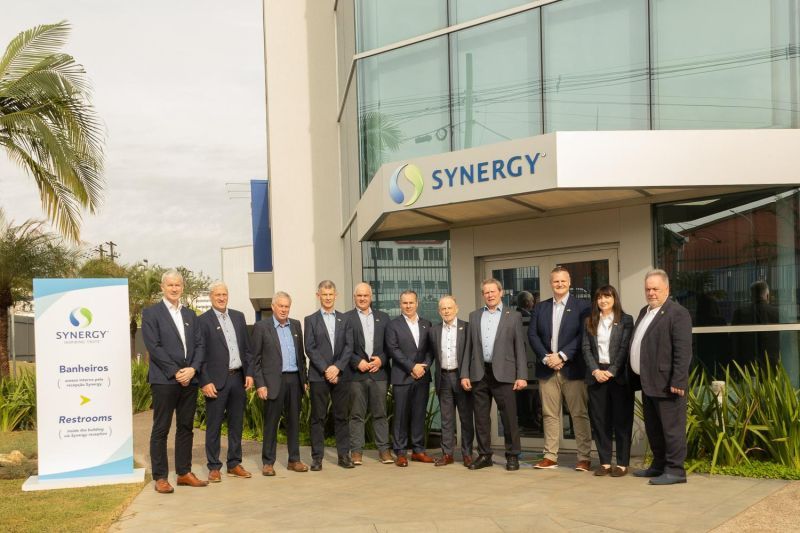
In October, under its global taste business, Synergy Flavours, the co-op acquired 100% of 'SoluTaste' in Brazil, which it said "strengthened the group’s position in South America".
Carbery set aside €3 million to a 'Stability Fund' to support milk prices in 2026 if "markets remain soft".
It distributed €5.8 million in 2025 through its 'FutureProof' sustainability bonus, bringing total payments since 2022 to €18 million.
The group processed its second highest ever level of milk with over 600 million litres.
The average milk price for the year was 47.44c/L.
ArraTipp
Formed last year from the merger of Arrabawn and Tipperary Co-op, ArraTipp reported its first full statutory accounts as a merged entity, covering 10 months to December 2025.
Turnover for the period was €707 million, EBITDA reached €26.2 million, operating profit stood at €14.1 million and net profit was €2.3 million.
Net debt fell sharply from €78 million in February to €53.4 million in December, while the balance sheet strengthened to €106 million.
The co-op paid €584,657 as 'Share Interest' to shareholders during the 10-month period.
Capital expenditure of €13.8 million was heavily weighted towards its Ingredients division, reflecting continued investment in processing infrastructure.
Beyond the financials, the "successful" execution of the merger and integration of the co-ops was noteworthy.
The co-op processed 742 million litres of milk and 163 million litres of buttermilk, equating a total 905 million litres processed.
The average milk price paid to suppliers was 47.1c/L.
Aurivo
The north-west processor Aurivo delivered its strongest financial results in recent years in 2025, coupled with record milk intake, near-zero net debt, and a 9.9% increase in operating profit.
Group turnover rose 12.3% to €814.2 million, EBITDA increased to €29.5 million, operating profit was €18.7 million, while net profit after tax reached €12.9 million.
The most striking result for last year was the near elimination of net debt from €11.5 million to just €0.2 million, while shareholder funds grew 10.5% to €120.2 million.
Aurivo invested €12.1 million to its "strong business mix" which spans across dairy ingredients, consumer foods, agri business, and livestock marts, this provided insulation from the commodity downturn in the latter half of the year.
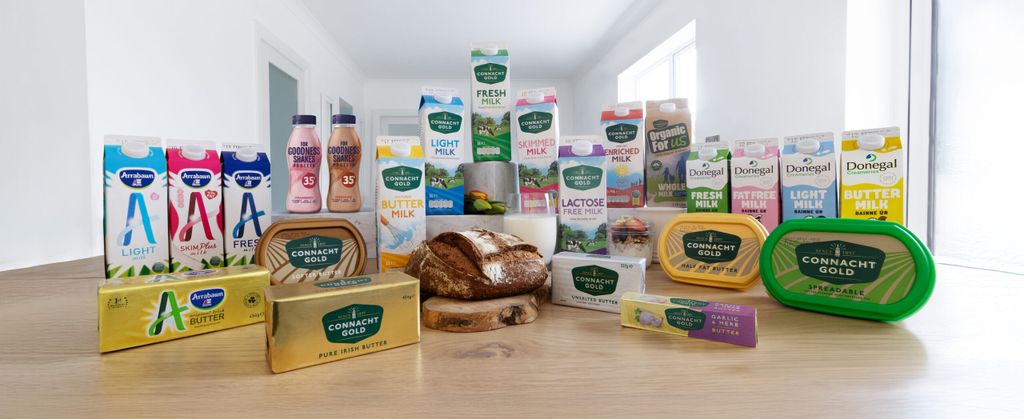
Its 'For Goodness Shakes' sports nutrition brand delivered a "standout performance" with over 20% like-for-like growth in the fourth quarter of the year following a "brand refresh."
A new all-island "strategic partnership" with Dale Farm in Northern Ireland, focused on byproduct utilisation and value-add protein, was a significant development last year.
Suppliers delivered Aurivo's highest-ever milk intake of 544 million litres, at an average price of 55.3c/L, the highest figure in this article.
Future outlook
A common thread ran across all six of the co-operative's financial results: global markets remain volatile amid heightened geopolitical crises and, as price takers, Irish farmers have to take the hit.
Tirlán chief executive, Séan Molloy detailed the prospective milk forecast for the remainder of 2026 during an interview with Agriland in April.
He said: "We are in a very challenged environment now insofar as that the milk price we're paying, in some cases, isn't covering the full cost of production. That's a very difficult place for farmers to be.
"I'm 20 years in this business now. I've never seen such uncertainty and volatility in international markets that we're witnessing now."
To combat this, the various financial results above indicate that Irish co-ops have been pushing diversification strategies to offset potential milk price decreases.
Co-ops engaging in multiple divisions such as in whey processing, establishing property portfolios and expanding their product offerings may also be doing so to equip themselves with the mechanisms to weather any future economic storm.