Heydon launches new Plant Health and Biosecurity Strategy

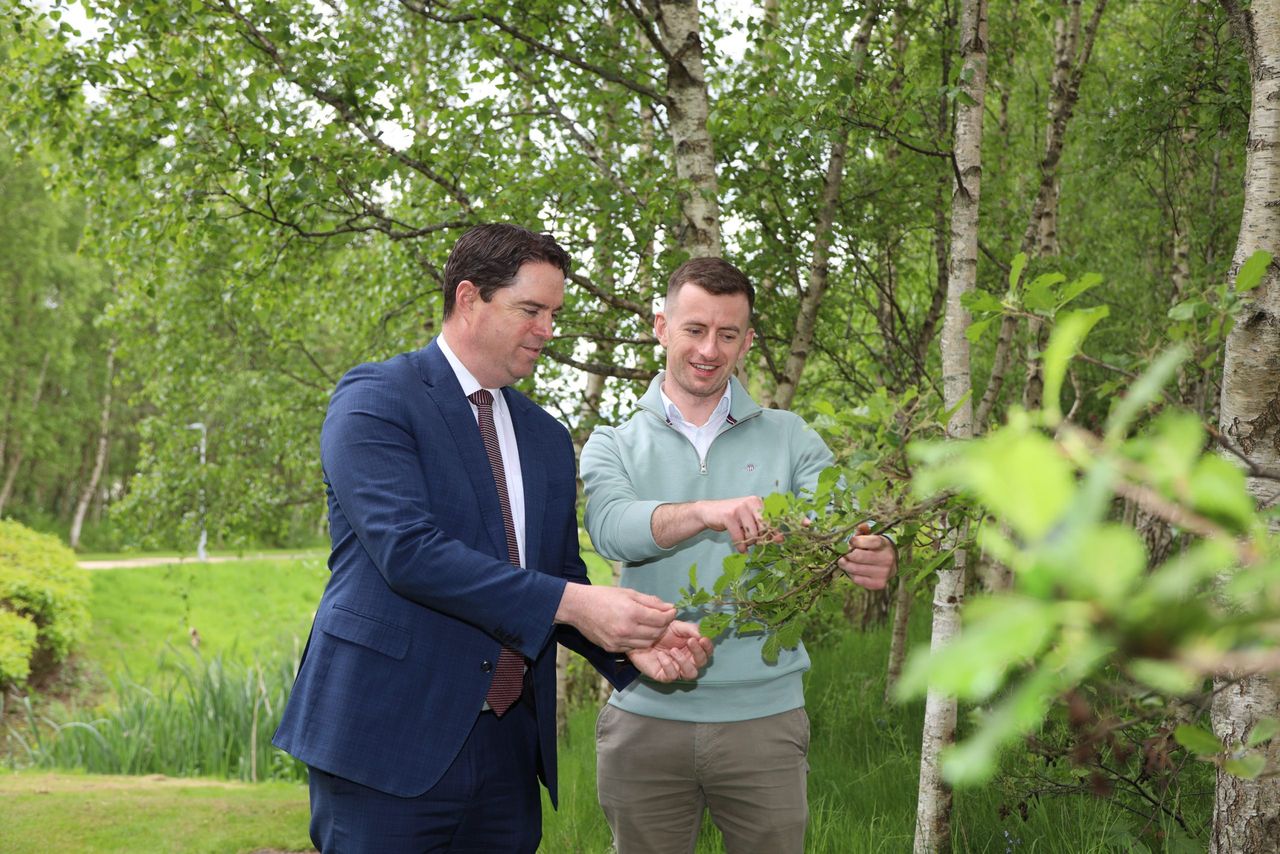
Minister for Agriculture, Food and the Marine Martin Heydon has launched the new Plant Health and Biosecurity Strategy for 2026-2030.
The strategy was launched at an event at the Department of Agriculture, Food and the Marine's Backweston laboratories in Co. Kildare.
That event heard that the UN’s Food and Agriculture Organisation estimates that up to 40% of food crops are lost every year because of plant pests.
Minister Heydon noted other factors that make protecting plant health more difficult, such as international travel and trade.
These have increased significantly in the last 20 years and can facilitate the spread of pests and diseases around the world.
According to the department, the new strategy acknowledges Ireland’s key natural advantages, geographical isolation and temperate climate, which help prevent pest and disease incursions and outbreaks.
However, it also identifies that risks to plant health are increasing due to increased globalisation, e-commerce and climate change.
In line with EU legislation, the department implements measures to mitigate against these risks.
The department has prepared contingency plans for 15 priority pests, including the Asian longhorn beetle (Anoplophora glabripennis) and the plant pathogen Xylella fastidiosa, which means that if any of these were found in Ireland, there is a plan to "urgently respond" with a view to eradicating or controlling them, the department said.
Xylella fastidiosa is a bacterial disease that causes severe damage to a wide range of plants, including oak, cherry and ash and is carried by sap-feeding insects.
It has been been detected in Italy, France, Spain and Portugal and if it spread across the entire EU, could cause an annual production loss of €5.5 billion and put nearly 300,000 jobs at risk.
As part of Ireland’s surveillance for the disease, in the last five years, 1,099 samples have been taken and tested for the disease by the department, with no detections of the pest.
The department has also prepared a plant pest contingency plan for the Asian longhorn beetle, a highly destructive pest which poses a threat to a wide range of broad-leaved trees.
In 2012, an outbreak in the UK required over 2,000 trees to be felled as part of the government response and eradication was deemed successful; however, it came at a cost of more than the equivalent of €1.1 million.
A previously identified risk, the potato tuber moth (Phthorimaea operculella) which poses a serious threat to potato production was detected by department inspectors last year in a consignment of potatoes imported from Egypt.
The consequences of an established population of these moths in Ireland would significantly affect Ireland’s €80-100 million potato industry, the department said.
Following the department inspection, the consignment was immediately rejected and re-exported, and the relevant authorities were notified with the rapid response preventing potential spread into the wider environment and supply chain.
The department said the new strategy recognises the importance of cooperation between the relevant government departments in Ireland and Northern Ireland, as well as the Agri-Food and Bioscience Institute (AFBI) in Northern Ireland, to maintain an all-island approach to safeguard plant health and biosecurity.
Launching the new strategy, Minister Heydon said: “The strategy’s vision aims to protect Ireland’s agriculture, horticulture and forestry sectors and the wider environment from plant pests and diseases, thereby safeguarding food security, facilitating safe trade and protecting the environment.
"Plants produce 98% of the oxygen we breathe and more than 80% of the food we eat. Healthy plants make a significant contribution to agricultural production, food security, economic activity, biodiversity, environmental health, and people’s wellbeing," the minister added.
He said that cooperation and collaboration "are crucial to protecting our plant health and biosecurity", and he acknowledged the cooperation and collaboration at European and International level.
"Plant health and biosecurity is in everyone’s interest, and I encourage everyone to play their part," Minister Heydon said.