Could a 24-month calving interval work?

Over the last decade it seems as if the workload is growing on Irish dairy farms, yet the labour force seems to be shrinking.
Figures show that the volume of people working in the agriculture sector is growing, yet a lot of farmers on the ground will agree that finding skilled, reliable farm labourers can be near impossible.
Considering the whole topic of generational renewal and how the average age of the dairy farmer is still in the mid-50s, it is evident that a lot of the new generation coming through are opting for 'reliable jobs' in the sector.
Whether that be advisory roles, sales positions, or a number of other opportunities, there is a guaranteed pay cheque at the end of the month.
That being said, there seems to be a common trend where a lot of these workers return home to family farms eventually, but in the meantime, labour can be stretched thin.
That is why we have seen practices such as once-a-day milking grow in popularity, while technology usage has also soared especially when it comes to breeding.
But now it has gone a step further, with DairyNZ researching the concept of 24-month calving intervals.
Calving interval
Researchers have been trialling the 24-month calving interval at DairyNZ’s Scott Farm since 2023.
The farm is located in the Waikato region of the north island, an area that is often compared to the Irish dairy sector.
330 cows are being milked on the Scott Farm, which covers 115ha and is comprised of a variety of soil types.
Looking at the labour pinch points in the spring, the researchers weighed up the options of 18 and 24 month calving intervals compared to the usual 12.
However, they felt that the 18-month calving interval would be harder to manage in terms of grass availability, which could ultimately end up being a costly practice due to the additional feed requirements to bridge the gap in the diet.
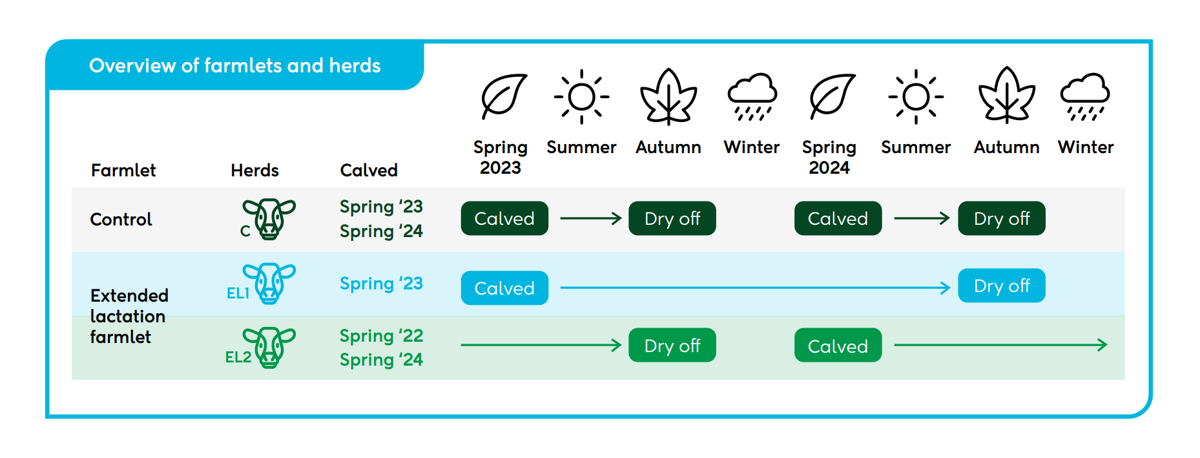
Therefore the group designed the initial model based on the 24-month calving interval, with half the herd calving down on alternating spring seasons.
For example, a 100-cow herd would be split into two groups of 50.
The group that calved down in 2025 would not calve again until spring 2027, while the 50 calving down in spring 2026 would then calve again in spring 2028.
Research
The research found that after two seasons, the Friesians maintained similar levels of milk solids production, operating profit, and sustainability, when compared to cows which were on the typical 12-month calving interval (control group).
As well as that replacement rates were as good as halved, which lets farmers focus on dairy-beef.
This is an important positive considering the controversy that often arises in New Zealand with regards to 'bobby calves'.
The researchers did say that each year, a third of the group due to calf down are first calvers in a bid to maintain a balanced age structure, which effectively brings the replacement rate to 17%.
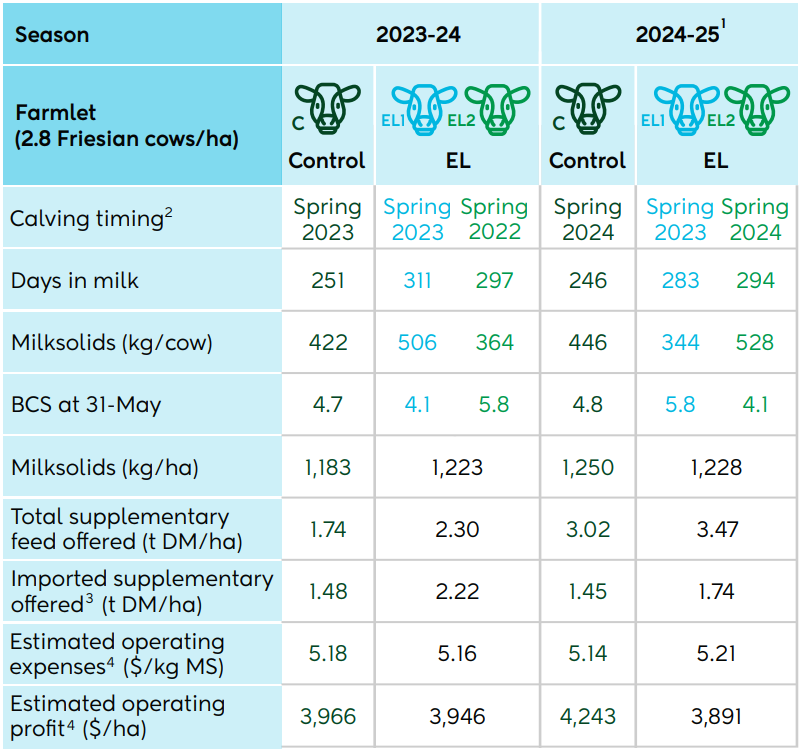
The researchers noted that there was drought during the 2024/2025 period, as well as a delayed planned calving start date.
It was also noted that the extended lactation initially required an additional 180kg of dry matter per cow to keep the herd milking through winter.
Autumn pasture cover was increased, and calving was delayed in a bid to reduce this feed demand for the following season.
However, the study reverted to the original calving dates, as even with a delayed start date, extra supplements were still needed yet there was fewer days in milk.
How's it working on farm?
With the results of the trial proving successful, the model was implemented on a commercial farm to see how it operated outside of relatively controlled conditions and in the real day-to-day chaos.
A 240-cow sharemilking herd underwent the change, mating only 60% of their crossbred herd in spring 2024.
One of the farmers in the arrangement said that the trial has being going well so far, with the majority of the cows milking strongly throughout the winter.
Only one cow dried herself off during the winter, while one more was also culled, the farmers also noted that the level of metabolic issues remained fairly similar to the level experienced while operating the standard 12-month calving interval.
The farmers highlighted that there was a noticeable reduction in stress during the calving season.
They recognised that changing the interval requires a huge mindset change, but so far have no regrets in the system.
That leaves the question, could we see an uptake in 24-month calving intervals in the dairy sector here in Ireland, or would our climate prove too costly?