Several landowners still waiting on greenway CPO payments - TD

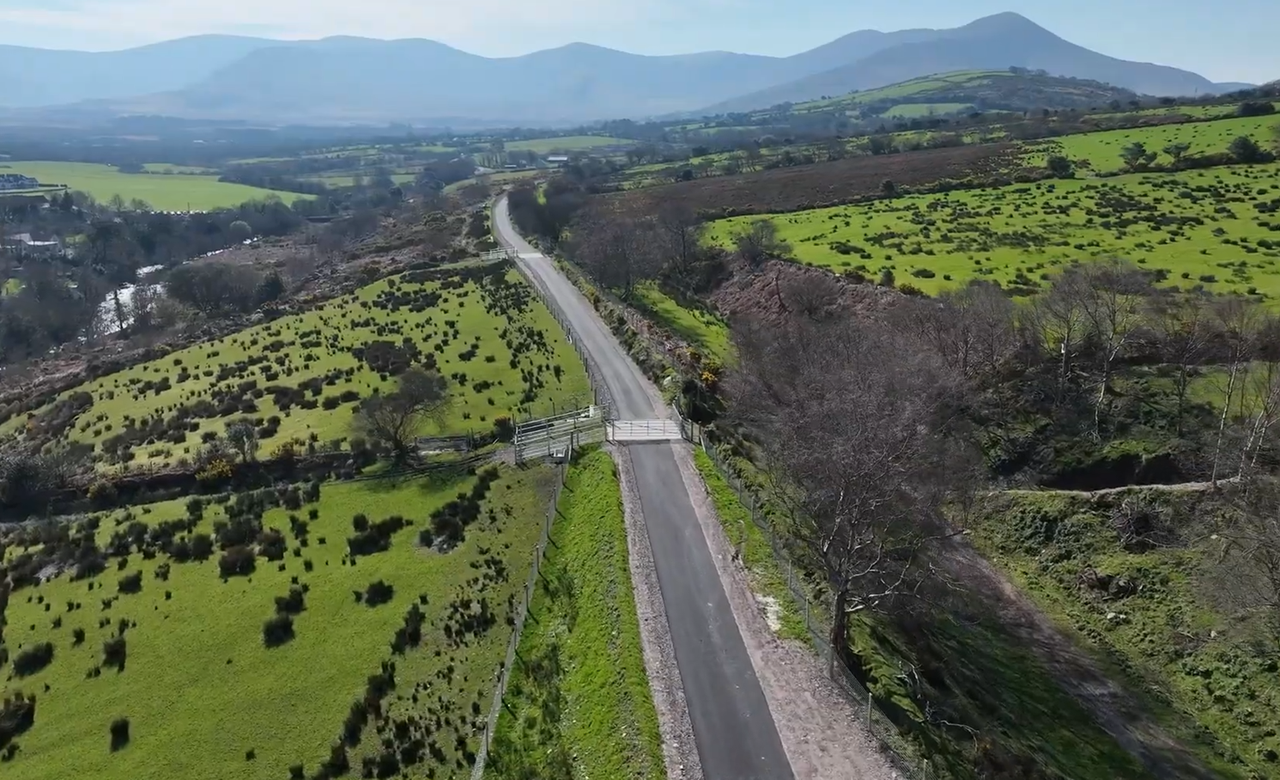
Several landowners with claims agreed are still waiting on payment from compulsory purchase orders (CPOs) for the South Kerry Greenway.
That was confirmed by Morgan Lyne, committee member and South Kerry representative for the National Greenway Action Association (NGAA) at the recent meeting of the Joint Committee on Agriculture and Food on greenways and CPOs,
Lyne was replying to Independent Ireland TD Michael Collins, who told the committee that some landowners were “waiting for payments”.
Lyne said: “As regards the South Kerry Greenway, we were issued the CPO in 2022 and construction started in 2023, but there are 138 landowners.
“Recently it came out from Kerry County Council that 16 don't have any claims in, so there's 122 with claims in.
"Of those, 54 have agreed, but of those 54, only 34 are paid.”
'Recreational'
At the same committee, NGAA chairperson Cleona O’Shea described greenways as “recreational” and said that such amenities “should not be forced through private farms against the will of the people who own, work and live on that land”.
O’Shea continued: “We are not opposed to walking, cycling, tourism or community amenities.
“We are opposed to private farmland and family homes being targeted, pressured, or threatened with compulsory purchase for recreational greenways."
“A greenway is not essential infrastructure. It is a recreational amenity.
“That matters, because recreational amenities should not be forced through private farms against the will of the people who own, work and live on that land.”
O’Shea stressed that, for farmers, land is “not spare ground”.
She said: “It is the farm business, the home place, the security for lending, the inheritance plan, the drainage system, the paddock layout, the machinery route and the livestock movement system.
“When a greenway is drawn through a farm, the damage is not limited to the strip taken.
“It can split the holding, break grazing blocks, interfere with cattle movement, damage drainage, restrict machinery access, reduce privacy, increase safety risk, create biosecurity exposure and devalue the retained farm.”
That, she said, is why landowners are angry.