New PCR test to target herbicide resistance in wild oat populations

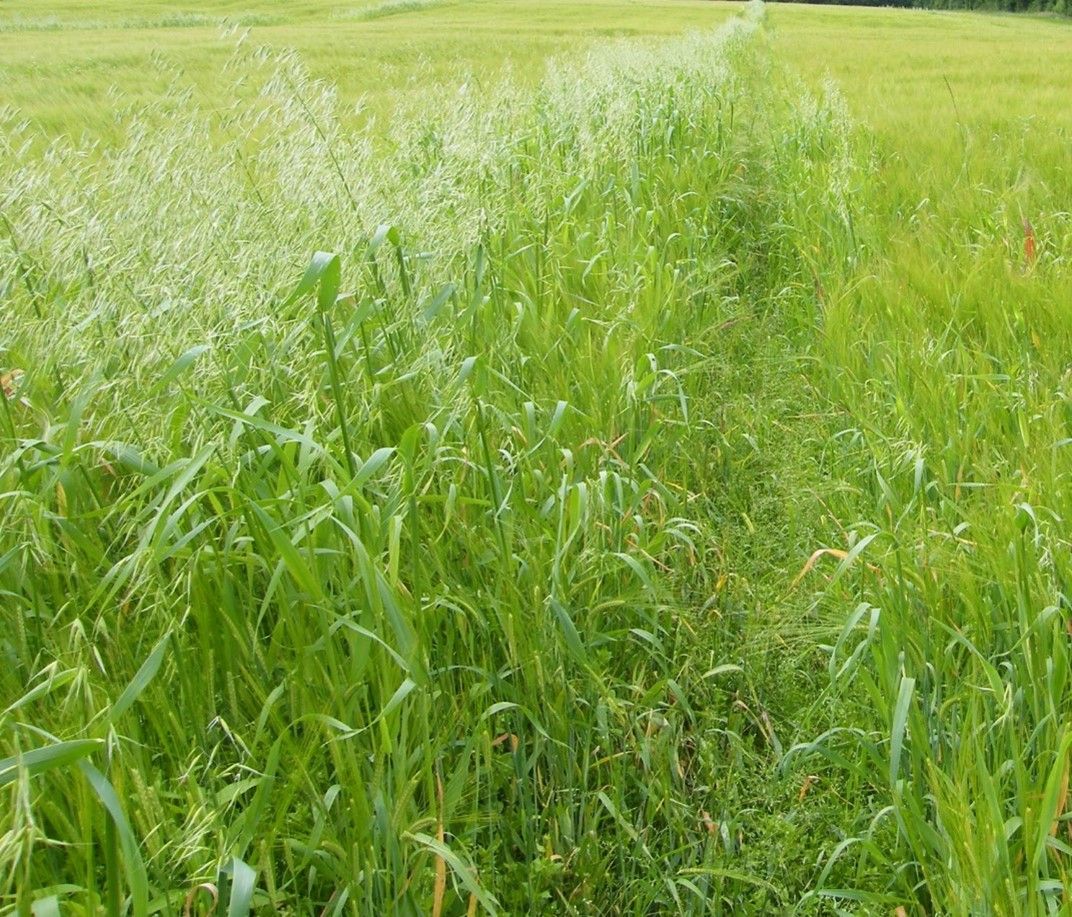
Teagasc is to launch a polymerase chain reaction (PCR) test to help identify wild oat populations that are herbicide resistant.
Just over 170 instances of wild oat resistance have been identified across a growing number of Ireland’s tillage regions.
Securing a relatively small additional number of affected population samples will allow Teagasc scientists to finalise the work required to fully refine the new test.
Teagasc agronomist, Shay Phelan, confirmed these developments while attending a recent spring crop walk, hosted by the Grant family from Manorcunningham in east Co. Donegal.
The availability of a PCR test will allow growers to submit leaf samples, as opposed to seeds, for assessment.
Phelan explained: “The new test will allow the genetic basis of the resistance to be identified.
"In turn, this information will provide the means by which a much more accurate approach can be taken when it comes to the control of wild oats within crops.”
Phelan noted that Teagasc scientists are currently reliant on growers sending in seed sample of wild oat plants with suspected herbicide resistance.
“This has a number of drawbacks. In the first instance, it can be difficult to get the seeds to break dormancy.
“Then it’s a case of weeds to grow in a laboratory situation, where the growing plants are sprayed with a number of herbicides," he explained.
Wild oats
The Teagasc representative told growers attending the Manorcunningham event that wild oat resistance is now a major challenge confronting Ireland’s tillage sector.
Significantly, the problem has not yet been identified in Co Donegal. However, this remained a strong possibility, according to Phelan, given the large quantities of straw that was transported to the county from other parts of the country.
Spanish straw imports were also cited as being sources of wild oat populations with potential herbicide resistance.
Adding to the complexity of the wild oat challenge is the fact that plant populations thought to be herbicide resistant by farmers may not be at all.
In such instances, the problem can be attributed to the efficacy of the spraying techniques implemented by growers.

“Given these circumstances, it is important that all herbicides are applied at their recommended rates," Phelan said.
“Sprayers should be set up to ensure they deliver the optimal level of herbicide to the target weed.
“Nozzle type is extremely significant in this regard.”
The Teagasc representative noted that herbicide resistance issues are also developing within a number of broadleaf weed populations.
“It is important that the tillage sector retains access to the herbicide chemistries that are now available.
“Using these products in the most effective way possible is, therefore, of paramount importance," Phelan stressed.