Forward buying fertiliser - 'how can farmers risk in very difficult year?'

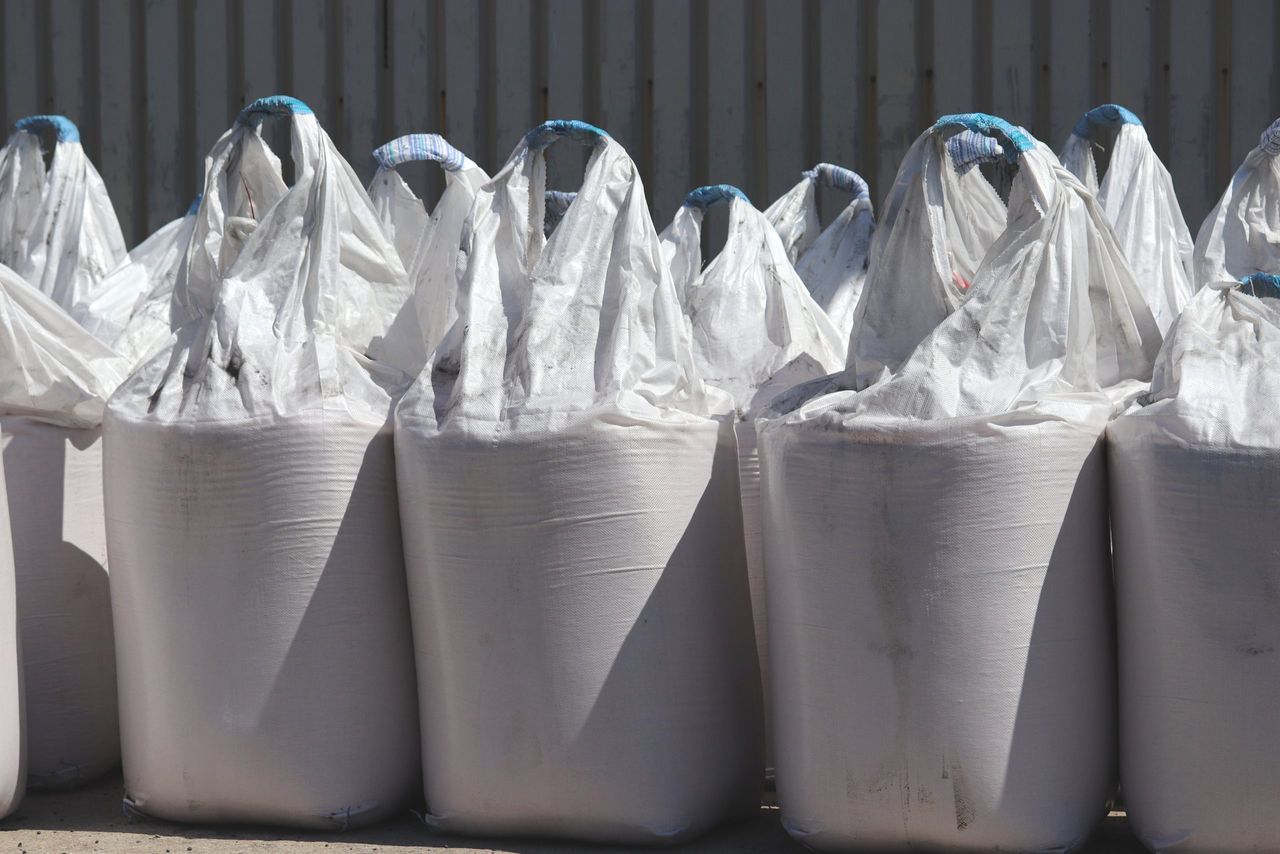
The Irish Co-operative Organisation Society (ICOS) has said co-ops have "struggled to maintain a supply of fertiliser" for members in recent months.
ICOS president Edward Carr said there is significant concern about being able to secure fertiliser for 2027.
He said that there is talk out there that "farmers are going to have to forward buy fertiliser at a very high price".
Speaking at the meeting of the Oireachtas Joint Committee on Agriculture and Food this week, Carr said: "How can farmers risk that in a very difficult year?"
"My understanding is that companies importing fertiliser, they're not going to commit to buying this fertiliser unless farmers or co-ops commit to putting money on the table," Carr said.
CBAM
At the committee meeting, Carr urged for the Carbon Border Adjustment Mechanism (CBAM) to be suspended.
The CBAM is effectively a tax on imports of carbon-intensive products into the EU, including fertiliser.
The CBAM requires importers of fertiliser to pay for certificates to import the products.
Due to high prices and lower availability of inputs as a result of the conflict in the Middle East, there are calls for the CBAM to be suspended when it comes to fertiliser.
'Huge impact'
Carr said that CBAM is having a "huge impact on cost and availability".
"For example, the cost of CBAM on non-EU CAN is approximately €115 per tonne in 2026, which is a prohibitive cost," he said.
"ICOS has consistently warned against the introduction of CBAM for fertiliser."
An analysis by Copa Cogeca estimates that CBAM will cost over €800 million in 2026 alone, with the total cost rising to €12 billion within the next seven years, Carr said.
"As the cost of European produced fertiliser has risen to match the CBAM levy, Copa Cogeca believe the true cost of CBAM could exceed €39 billion by 2034, equivalent to 10% of the current CAP budget."
The European Commission amended the CBAM regulation to allow the temporary suspension of CBAM (under Article 27a).
This process is now before the European Parliament and Council of the EU.
Carr said that ICOS is urging all Irish MEPs to "support the introduction of Article 27a, and to work to ensure the procedure is expedited and enacted at EU level as quickly as possible".
Contractors
Meanwhile, the Association of Farm and Forestry Contractors in Ireland (FCI) told the Oireachtas committee that agricultural contractors are responsible for the majority of fertiliser application in Ireland.
However, "they face rising costs, increasing regulatory demands, and insufficient policy recognition".
Norman Egar, national chair of the Association of Farm and Forestry Contractors in Ireland (FCI), told the committee that ongoing geopolitical instability, including conflict in the Middle East, has contributed to volatility in global energy and input markets.
"This has had a direct and immediate impact on fertiliser-related costs, including the cost of transport, machinery operation, and application," he said.
"For contractors, who typically operate on tight margins and high turnover volumes, these rising input costs are not theoretical - they translate into real and immediate financial pressure.
"The cost of spreading each tonne of fertiliser has increased significantly, and this has implications not only for contractors themselves, but for the farmers who rely on their services."
Policy
Egar stressed to the committee that despite the central role of contractors in the agriculture industry, they have not been "afforded the level of recognition or inclusion in policy development that their contribution warrants".
"This is particularly evident in the ongoing rollout and discussion surrounding the National Fertiliser Database," according to the FCI chair.
"The current legislative framework, including the definition of a 'professional fertiliser end user' clearly encompasses agricultural contractors.
"This definition includes operators, technicians, employers, and self-employed individuals who apply fertiliser as part of their professional activity."
Egar said by any reasonable interpretation, agricultural contractors fall fully within this category.
"Yet, in practice, they have been largely absent from key planning, consultation, and implementation discussions," he said.
"This disconnect between legislative definition and policy inclusion represents a significant gap - one that has practical consequences for the effectiveness of the system being developed."
80% of fertiliser applied by contractors
According to the FCI, agricultural contractors in Ireland operate in excess of 1,400 fertiliser spreaders and are responsible for applying over 1.1 million tonnes of fertiliser annually.
This equates to approximately 80% of all fertiliser used on Irish farms.
"The vast majority of fertiliser application in this country is carried out not directly by individual farmers, but by contractors working across multiple holdings, often under tight seasonal timeframes and logistical constraints," Egar said.
"Given this reality, it is difficult to see how any system designed to accurately track fertiliser use, improve nutrient management, and enhance environmental outcomes can succeed without fully integrating the very operators responsible for the bulk of application."