Farmers urged to be aware of importance of tractor safety this spring

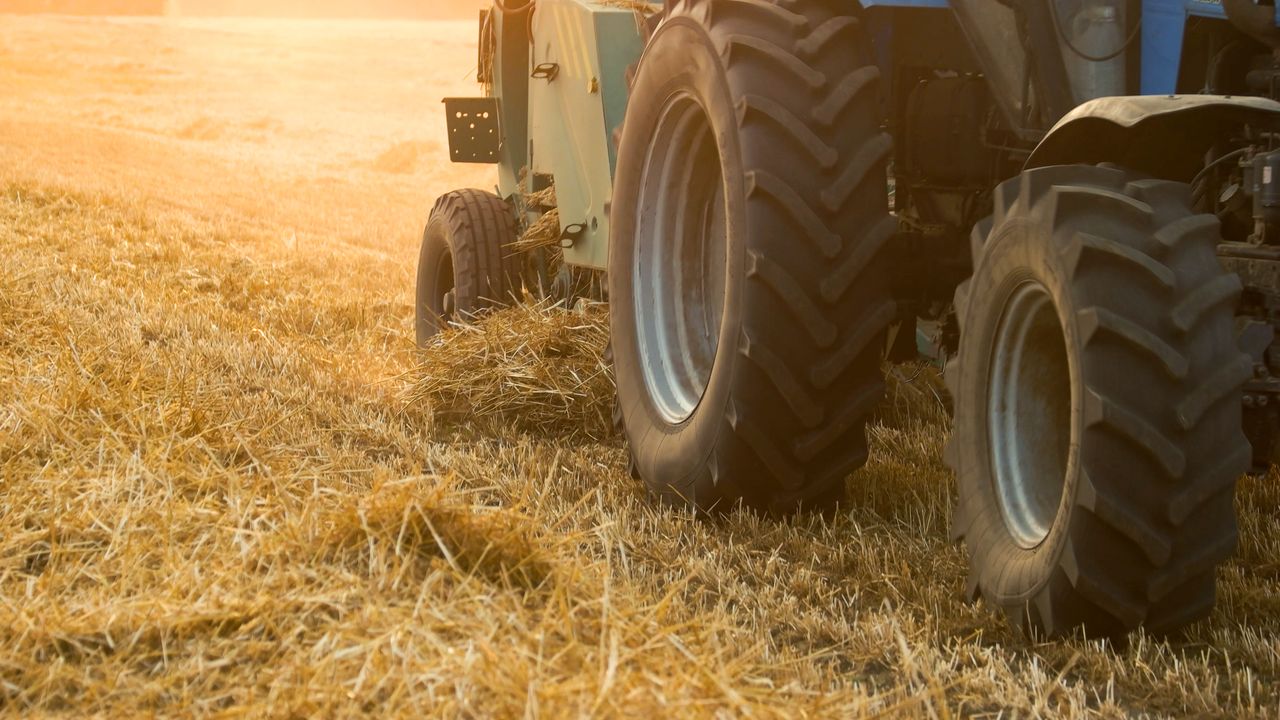
Spring has sprung and with it come lengthening days and warmer conditions, marking a very busy time on farms.
Teagasc's Paul Mullins has discussed the importance of tractor safety.
"There will be a lot of machinery on the move, in terms of tractors with slurry equipment, fertiliser spreaders and other implements to get land set up for the year ahead," Mullins said.
"While this is welcome, it also brings its dangers. Over half of all farm fatalities involve machinery.
"With this in mind, we should take a moment to consider some of the dangers that we might face and how they can be addressed."
'Potentially lethal'
Tractors are a mainstay on pretty much all farms, Mullins said.
However, they can be "potentially lethal" if not properly maintained or handled.
Mullins outlined that in terms of maintenance, the Health and Safety Authority (HSA) recommends farmers should make sure that:
- A cab or safety frame is fitted;
- All controls are in good working order and clearly marked;
- Brakes are checked regularly and are always in sound working condition;
- All relevant guards are in place and that PTO and hydraulics are functioning correctly;
- Mirrors, lights and wipers are in working order at all times.
Tractor usage
When it comes to using the tractor, there are a number of other things to ensure.
These include that the driver is competent and fit. If driving on the public road, they must be licensed and be over 16-years-old.
Mullins said the driver must be aware of other people that they may come in contact with when driving the tractor, such as children.
Other important things to ensure when it comes to tractor safety:
- The tractor is always parked safely and securely;
- The cab floor is kept clear to allow safe use of brakes and clutch;
- The power take-off (PTO) can be turned on and off correctly, and that the PTO shield is kept in place at all times;
- All tractor components are maintained and serviced, including hydraulics, U-guard and hitches.
Driving on slopes
Another issue to consider is driving on slopes, Mullins said.
When doing so, one should consider the risk of overturning.
Always assess the slope and ground conditions before commencing work, and consider if it is worth taking the risk of operating on sloping ground.
Mullins stressed that farmers should make themselves familiar with the slope, and to walk the slope before driving on it.
He further advised:
- Use a four-wheel-drive tractor;
- Select the right gear before approaching the slope, to avoid gear changes on the slope;
- Use engine braking when you drive down a slope;
- Keep as much weight uphill as possible;
- Turn uphill if working across a slope;
- Avoid quick, sharp turns;
- If a tractor is about to overturn, do not attempt to jump clear. Stay in the cab and hold on to the steering wheel.
Tractor safety
Mullins said that tractor drivers also need to be cognisant of other road users.
"Tractor drivers need to ensure that their tractor has an orange flashing beacon," he explained.
"It is a requirement for any slow-moving vehicle to be fitted with a beacon, as it gives advance warning to other road users.
"On the other hand, tractor drivers should be aware of the work lamps (also referred to as ploughing lamps).
"These are high-intensity lights that are designed to be used when working in a yard or field situation."
These are brighter than standard headlights, and if left on when the tractor is on a public road, they create a serious hazard.
"The glare can be blinding for oncoming and following traffic and can easily lead to a driver losing visibility of the road ahead," Mullins said.
Traffic build-up
Where traffic starts to build up behind tractors, the driver should pull in at a safe place and allow the traffic to pass.
"Where traffic builds up behind slow-moving vehicles, it can lead to frustration and may result in people taking chances that they otherwise wouldn’t," Mullins continued.
"But by the same token, other road users need to be aware that tractors and other heavy and relatively slow machinery will also be using the roads.
"Be vigilant, as these vehicles will be coming onto public roads from fields etc., and sightlines may be reduced in many instances.
"If all road users can demonstrate a degree of consideration for others, perhaps everyone might get to where they need to without undue stress."