Explainer: Changes to fuel tax and subsidies


The government has announced a range of fuel-related measures to help farmers and workers in related areas.
Agriland has reviewed the guide to the new reductions and support schemes.
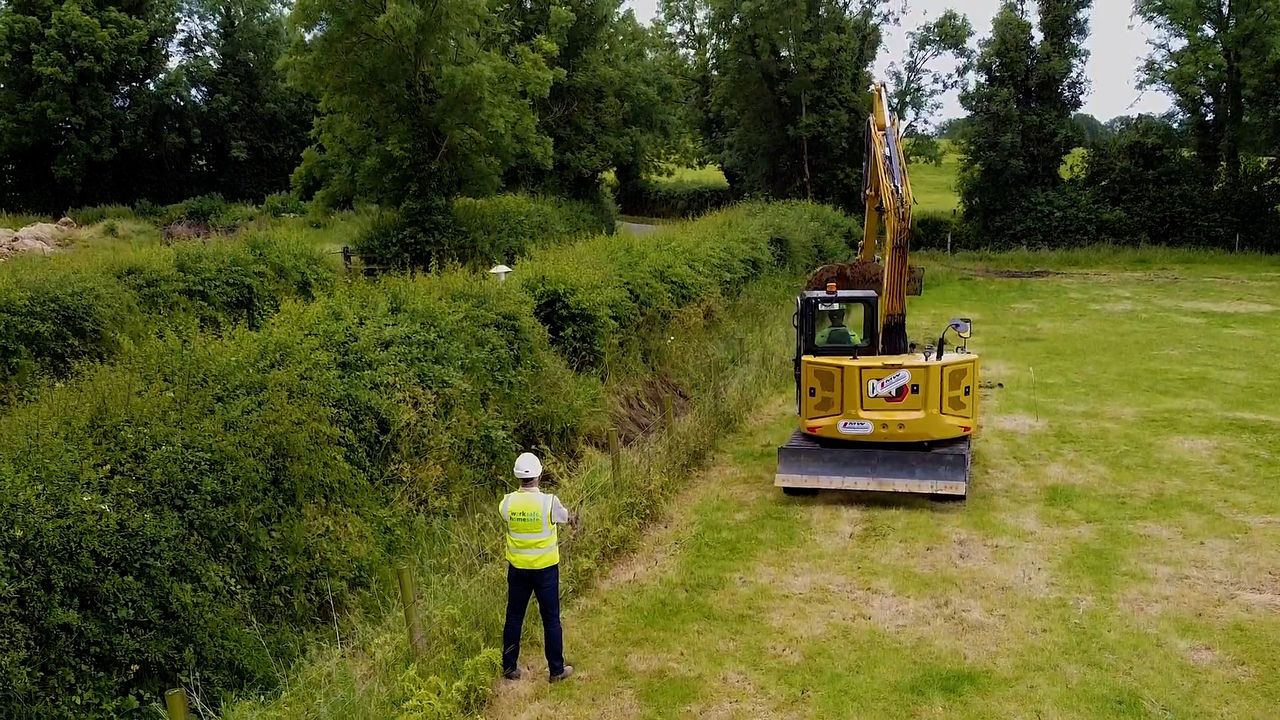
The €100 million Fuel Subsidy Support Scheme is intended to assist farmers, agricultural contractors and fishers facing increases in fuel costs.
Minister for Agriculture, Food and the Marine, Martin Heydon has confirmed that the payments will cover the months of March up to the end of July which also coincides with peak fuel usage season for field work on farms.
The package comes in response to the sharp rise in the price of marked gas oil, commonly known as green diesel, which has nearly doubled since February due to ongoing geopolitical instability in the Middle East.
Prices have risen from 97c/L in late February to €1.80/L in recent weeks, placing severe financial pressure on key sectors of Ireland’s food production economy.
In this explainer, “total reduction” means a combination of the fuel cuts from earlier in the year, and the new ones announced in recent days.
Also, unless otherwise outlined, these cuts are per-litre (e.g., 10c will mean 10c/L).
Because some reductions were made earlier this year, occasionally the word “further” will be used, in reference to those earlier reductions.
General reductions
As part of ongoing engagement with the European Commission, the government will reduce excise on diesel by a further 10c (VAT inclusive), bringing the total reduction on diesel to 32c (VAT inclusive).
Looking at petrol, the government will reduce the excise on petrol by a further 10c (VAT inclusive), bringing the total reduction on petrol to 27c (VAT inclusive).
For green diesel, the government will reduce excise by a further 2.4c (VAT inclusive), bringing the total reduction on green diesel to 7.4c (VAT inclusive).
These overall reductions include the already announced National Oil Reserves Agency (NORA) levy.
The government will defer the planned increase in carbon tax, scheduled for May 1, until this year’s budget, which will be announced in October and implemented at the beginning of the following year (January 2027).
This will impact green diesel and non-propellant fuels such as kerosene heating oil, natural gas and solid fuels.
The reductions in the excise on fuel for consumers will take effect from midnight, Wednesday April 15, 2026 and run until July 31, 2026.
Farming and fishers support scheme
A new €100 million Fuel Subsidy Support Scheme is intended to assist farmers, agricultural contractors and fishers facing unprecedented increases in fuel costs.
The payments will cover the months of March up to the end of July which also coincides with peak fuel usage season for field work on farms.
The scheme will provide €20 million per month in supports, with funding directly linked to fuel usage last year.
This is intended to ensure that those most impacted by the fuel price increase receive the greatest assistance.
Farmers and agricultural contractors will benefit from a support rate equivalent to approximately 20c/L of green diesel used, based on verified fuel consumption in 2025.
Approximately 120,000 farmers and 1,500 full-time agricultural contractors will be eligible to apply for support.
Payments will be made through a single application process, with funding allocated based on fuel usage last year.
Eligibility will require applicants to demonstrate active farming or contracting status, tax compliance, and verifiable fuel usage.
A system of checks and inspections will be implemented to ensure accountability.
Additionally, up to €5 million per month will be allocated to support fishers and other sectors effected such as forestry and specialist horticulture.
Haulage support
To support the haulage and coach sector, the Department of Transport will establish a new Road Transporters Support Scheme (RTSS).
This will be modelled on the Licenced Haulage Support Schemes of 2022 and 2023, which was set up to assist the sector with the higher fuel prices following Russia’s invasion of Ukraine.
The RTSS will provide direct payments to haulage and coach operators.
Payments will be graduated, with smaller businesses receiving a proportionately greater level of support.
An initial payment backdated for March 2026 will made to each qualifying haulage or coach operator. The scheme will remain in place for three months.
Payments will be made for April and May, if the national average price of diesel exceeds €1.90/L in the month.
For the hauliers, the measures included an enhancement of the Diesel Rebate Scheme, with the rebate per litre increased from 7.5c to 12c.
Hauliers also benefited from the general reduction in excise and the NORA levy on diesel.
Implementation and next steps
The Department of Agriculture, Food and the Marine (DAFM) has commenced preparations to implement the scheme as quickly as possible.
It has said that stakeholders will be kept informed as the scheme is finalised and rolled out.