Taking opportunities to get lime to grass


With the way fertiliser prices have gone since the war broke out in the Middle East, the importance of lime has once again proven itself.
Farms that have optimum soil fertility through targeted lime spreading in previous years will be in a position where they do not need to spread as much chemical nitrogen (N) to maintain production.
But there is not many farmers in this position, as figures show that more than 80% of Irish soils are testing sub-optimal for major nutrients, such as soil pH, phosphorus (P), and potassium (K).
Farms that do have optimum soil fertility have double the N efficiency of a farm which does not have optimum fertility, meaning their cost will be well and truly reduced in a year like this.
But we also need to remember, just because fertiliser prices have rocketed does not mean we should not be taking advantage of our allowances this year, especially if fields are lacking on fertility.
If that does happen, we will be a similar situation to 2022/2023, where sward production fell and farms ended up with huge concentrate bills.
Lime application
Lime can often be forgotten about when a fertiliser plan is put together, but its importance can not be understated as it drives fertiliser efficiency.
The weather may be poor, but we should be looking for days this spring where we can get out with a bit of lime.
Margins are also tight, but considering lime is not brutally expensive (roughly €22/t collection or €33/t delivered and spread), it will not break the bank, while the return on investment will be well worth it.
Spreading lime actually has one of the quickest returns on investment on any farm investment, as for every €1 invested, it will return up to €7 in the form of extra grass growth, reduced N usage, and increased soil fertility.
Liming acidic soils increases grass production by 1.0t DM/ha, which is valued at €180/t DM on dairy farms.
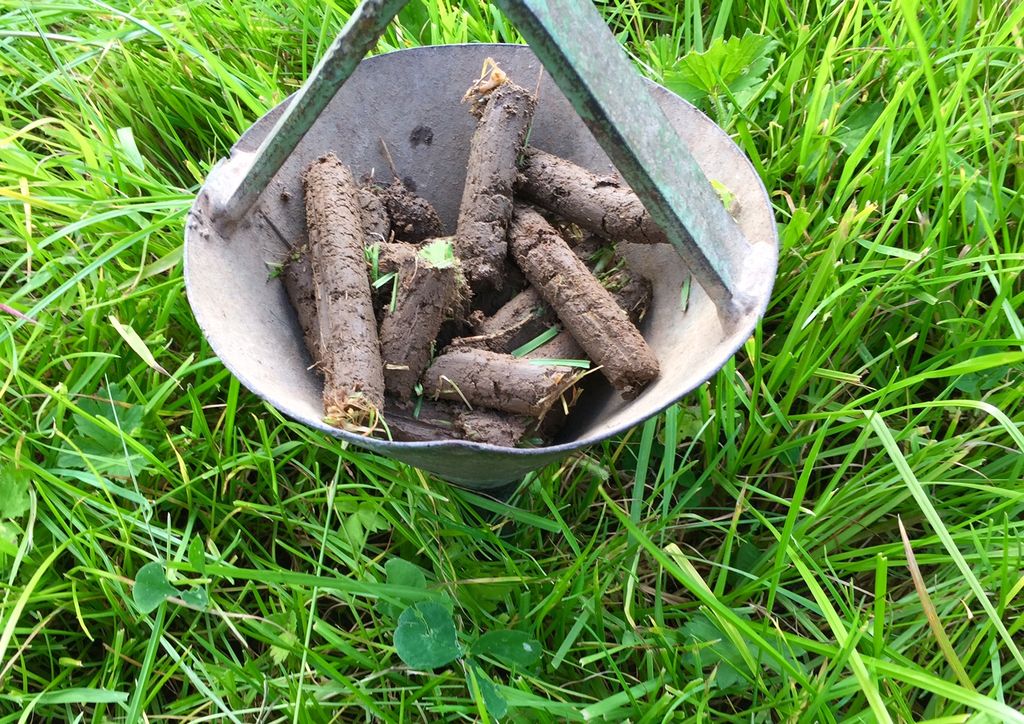
Soil samples should be taken now if not done already, and farmers should be targeting the most acidic fields in the next patch of dry weather, heading in when cover are low.
Ideally we should avoid spreading lime on high covers of grass (800kg DM/ha or over), as there may be lime residues still on the grass when cows get back into it.
We also need to leave sufficient time before silage, ideally up to three months to ensure the lime is fully washed into the soil.
Residues in grass silage can affect good preservation conditions for the silage.
The same goes for spreading slurry, which should be spread at least one week prior to liming to ensure both can be absorbed to their full potential.
Lime should be applied a little but often, spreading at rates of roughly 2.5t/ac, depending on the requirements in a single application.
Paddocks in a serious deficit can not receive more than 5t/ac within two years.