EU young farmers call for creation of agri just transition fund

Young farmers have today (Monday, May 4) told EU ministers that "beyond risks, the human resilience" of the agriculture sector is "at stake".
An informal AgriFish Council meeting is currently taking place in Cyprus.
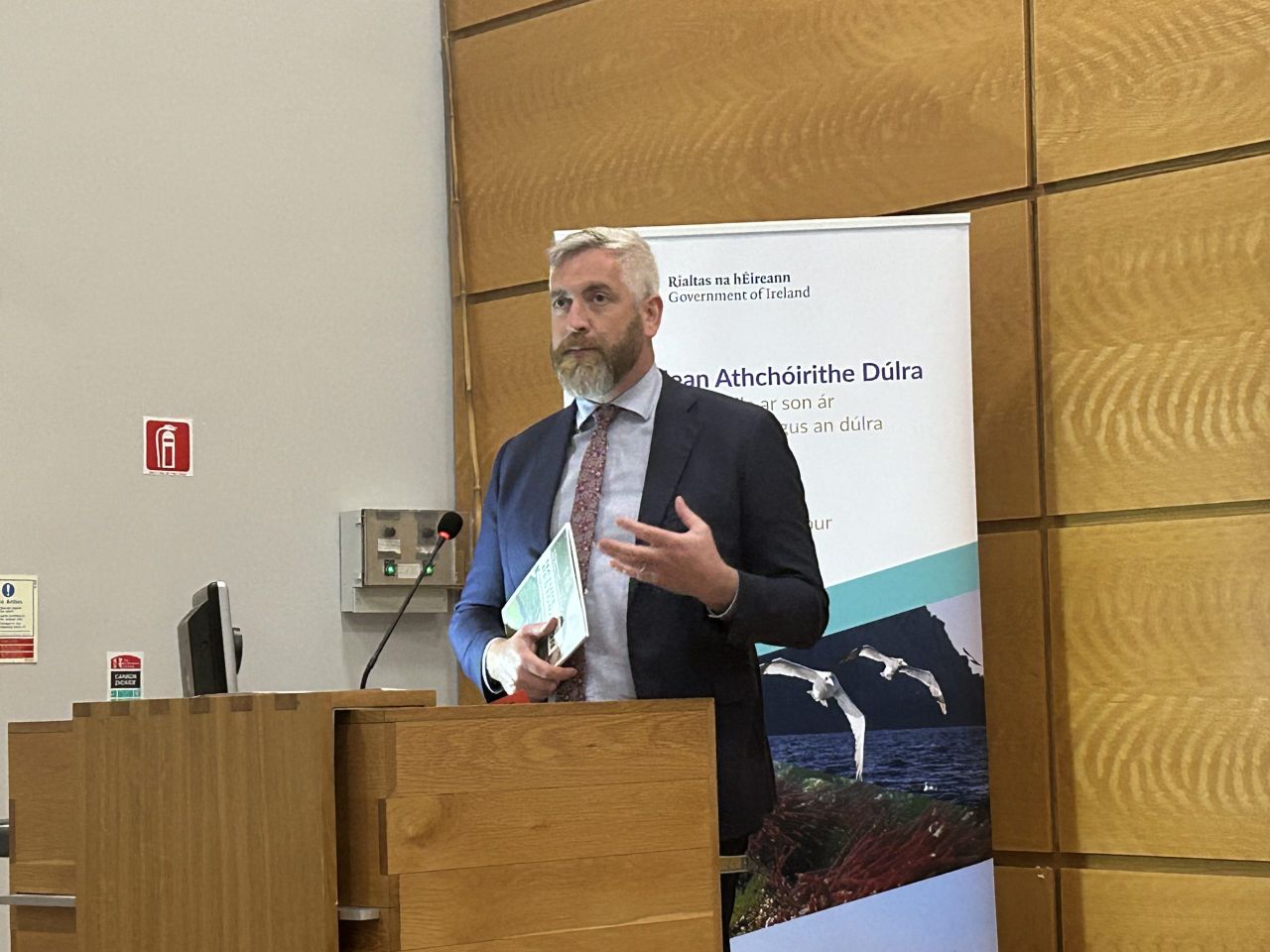
CEJA, the umbrella group of young farmers and rural youth organisations, addressed EU agriculture ministers during this informal meeting under the Cypriot presidency theme 'actions on agri-climate risk management in the EU'.
The meeting, organised against the background of the unprecedented energy and input crisis triggered by the conflict in the Middle East, was an "opportunity to address the worries of the community of young farmers", CEJA said.
Risks
In the face of accumulated risks, young farmers "call on EU decision-makers to adopt a more diversified toolbox, able to address not only the risks inherent to agriculture but also those originating from outside it, as is currently witnessed".
Starting with the current energy and input costs crisis, CEJA’s president Peter Meedendorp declared that: “Even the most optimistic among us are starting to feel worn down.
"The conflict in the Middle East is not something distant; it is already shaping our reality.
"It makes us question whether we can afford to sow next season, whether inputs will be available and affordable, and whether our farms can remain viable in the face of rising costs, falling prices and constant policy uncertainty.
"What we need are clear signals that we are not alone in this."
Before addressing ministers, Meedendorp outlined the four pathways proposed by CEJA to face the ongoing crisis.
Firstly, while the state aid framework presented last week is a "first step in the right direction", the foreseen difficulties to implement support in all the member states "call for additional liquidity support via non-allocated funds of the CAP and other instruments".
Secondly, CEJA is asking the council to consider the creation of an agricultural just transition fund derived from the revenues of the decarbonisation framework of the EU.
In the absence of short-term flexibility to revisit this framework, if agriculture is going to contribute to the decarbonisation of other sectors via increased prices, then it "must also benefit from the revenues that are generated", according to CEJA.
"Thirdly, young farmers have heard the call of the last week to contribute to the transition more directly, and intend to do so, but require the regulatory framework, in particular water and nature directives, to evolve, allowing for faster access to permitting and for making use of the circularity potential of the sector," it continued.
"Fourthly and lastly, balance needs to be restored in the value chain.
"Young farmers stand in favour of further cooperation between the farming and the fertiliser sectors, but cooperation should be based on clear and enforceable rules, which would require additional scrutiny of certain pricing policies currently practised on the ground."
CAP
Looking ahead, as the Common Agricultural Policy (CAP) is being revamped, CEJA said it "remains clear" that risk management "must become a much more predominant objective in the future framework".
"This means mandatory programming of risk management instruments, improved design for tools, integration of a climate diagnosis in the starter pack for young farmers and more efficient crisis response," CEJA said.
"The risks discussed today, however, are a clear reminder that dependency is a risk in itself and that it is as important to address the risks originating outside of agriculture (e.g. energy markets, fertiliser supply chain, geopolitical tensions)."
'Resilience'
CEJA said it "remains mobilised to reflect additional solutions to face the current crisis and build the future policy frameworks".
It demands, however, that EU decision-makers "do not lose sight of human resilience in this process".
Peter Meedendorp stated that as "agriculture is facing an unprecedented mental health crisis, if we want farmers to remain part of the solution, then we must ensure they are first given the conditions to endure".