€4.5m for food and bioeconomy research projects at MTU

Munster Technological University (MTU) has secured over €4.5 million in research funding for projects focused on sustainability, food systems, public health and the circular bioeconomy.
The funding from the Department of Agriculture, Food and the Marine (DAFM) forms part of the government’s €37.5 million national investment in research for the agri-food, forest and bioeconomy sectors.
The successful projects aim to support the development of new value chains for Irish agriculture, provide evidence to shape future nutrition and food policy, and help unlock sustainable uses for an underutilised natural resource.
Grass4Value
MTU has secured €3 million to lead the national Grass4Value project, which will "develop cutting-edge green biorefinery technologies" aimed at transforming Ireland’s grassland sector.
The project brings together a group of institutions including MTU, University College Dublin (UCD), Teagasc and University of Galway and will connect several demonstration and pilot-scale bioeconomy facilities across the country, including MTU’s pilot biorefinery facility in Kerry.
Grass4Value will focus on converting grass and legumes into high-value products including sustainable protein alternatives, animal feed ingredients, bioenergy and fertilisers.
The project will also explore opportunities for developing functional food ingredients from grass-based feedstocks.
Prof. James Gaffey, project coordinator and co-director of CircBio at MTU, said the project will "evaluate and demonstrate new ways in which grass biorefining can help to make farming in Ireland more resilient and robust".
This is in light of "current market volatility and other environmental and socioeconomic pressures", he added.
National Children’s Food Survey
Dr. Janette Walton, senior lecturer in biological sciences and head of the NutRI Research Group at MTU, has been awarded €1.5 million to lead the new National Children’s Food Survey III.
In collaboration with UCD and TU Dublin, the study will examine the diets, eating behaviours and nutritional intake of school-aged children across Ireland.
Detailed data will be collected on food consumption, together with lifestyle factors, body weight measurements and urine samples in school-aged children aged five to 12 years in the Republic of Ireland.
The findings will help inform future food-based dietary guidelines, food safety guidance, physical activity guidance and sustainable food development in Ireland and the EU.
Dr. Walton said: “What we eat as a nation has an impact on both our own health and the health of our planet.
"An understanding of the food intake of the population and how dietary habits are evolving is essential for supporting both public health and sustainable food systems.
"This research will provide critical evidence to help shape future nutrition and food policy in Ireland for school aged children."
Wool
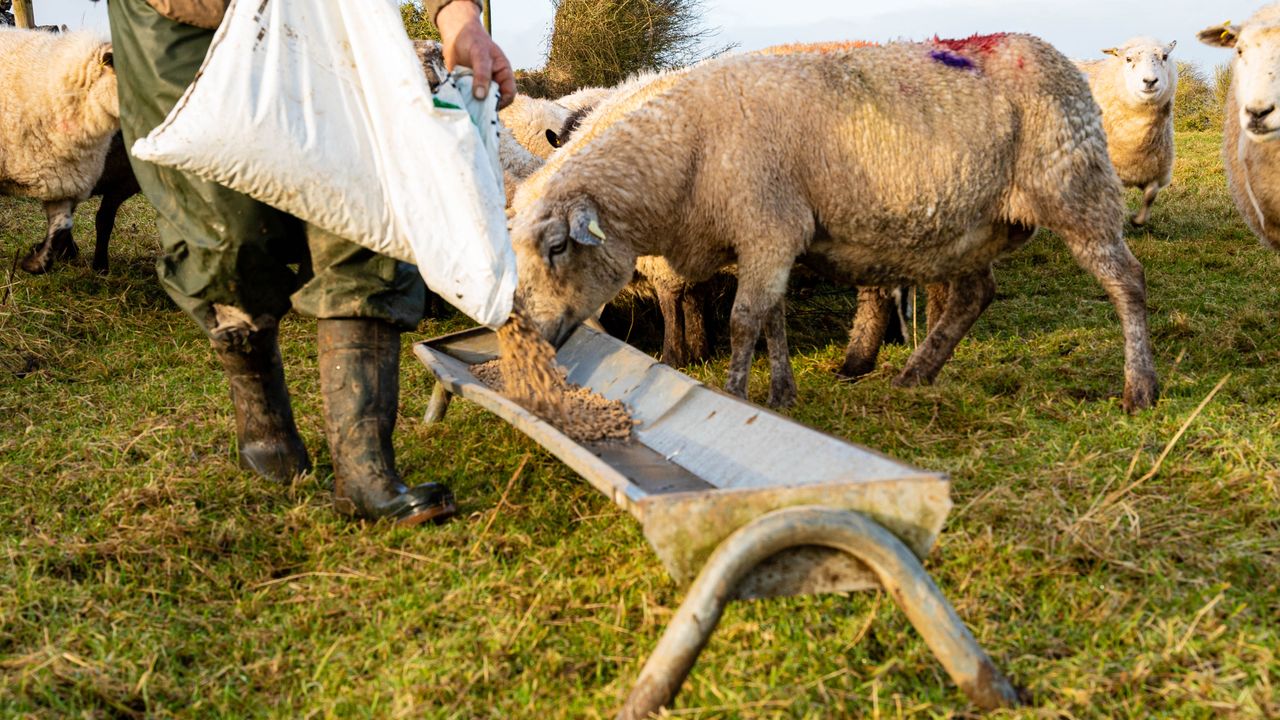
The Centre for Applied Bioscience Research (CABR) at MTU, in collaboration with University College Cork (UCC), secured DAFM funding for a research project focused on unlocking the full potential of Irish wool.
The project will address a key barrier to innovation in the wool sector: defining appropriate cleanliness or 'limit levels' for wool, tailored to its end-use.
By establishing evidence-based standards for different applications, from high-value textiles to emerging uses such as construction materials (e.g., concrete and composites), the research aims to enable more efficient processing and open new markets for wool.
The initiative aims to support more sustainable wool processing methods while creating new opportunities for farmers, manufacturers and rural enterprise.
Dr. Tim Yeomans, centre manager at CABR, said the research represents a "significant step toward realising the untapped potential" of Irish wool.
"It is an important opportunity to reimagine Irish wool as a valuable and versatile natural resource," he said.
"By developing evidence-based processing standards, we can support both sustainability and innovation across multiple sectors."