Agriculture a ‘key sector’ in renewables uptake - SEAI

The agricultural community is a “key sector” in embracing renewables, according to Fergus Sharkey, head of business supports at the Sustainable Energy Authority of Ireland (SEAI).
Sharkey was speaking at the Irish Bioenergy Association's (IrBEA's) National Bioenergy Conference today (May 7), which focussed on solid biomass.
He said: “I think the agricultural community are very aware of what grants are available, has been my experience.”
He added that the agri-community has are much more “equipped” to deal with fuel management than other industries.
He explained: “They have machinery, they have storage areas, etc.
“It's really been a key sector for us. So that's not really where the challenge is.
“I think the challenge is getting beyond that. I don't think we have any sort of real key barriers in the agricultural sector.”
Rapid approval
Sharkey also mentioned the range of measures available to help businesses, including in agriculture, reduce their carbon footprint.
Among these were measures which he described as “rapid approval”.
Rapid approval, he said, “is just a menu of measures, and anything on that menu now with a small amount of information, basically, 'what do you do as a business?'; 'Who is your contractor?'”
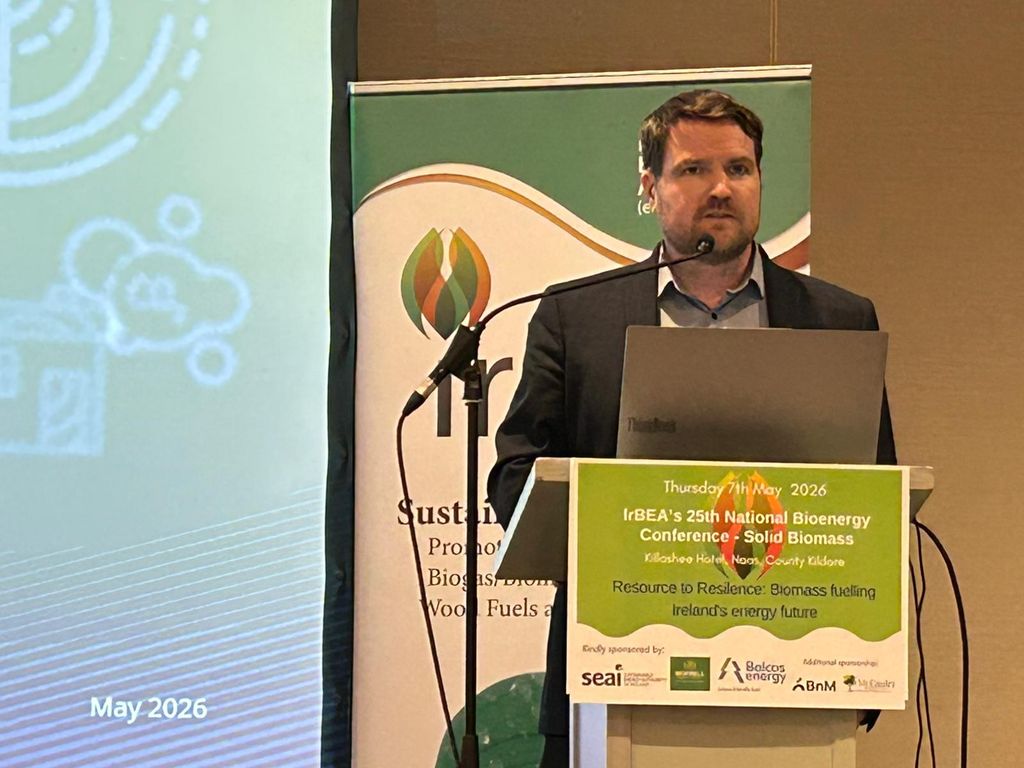
He added that with “light technical detail" about their investments, some businesses can “get an offer instantly”.
According to the SEAI representative, “it takes minutes to apply” for rapid approval.
Sharkey said that the measure has been a "significant game changer" for a number of years.
He added that SEAI would also like to add more measures to further incentivise the uptake of renewable energy among business sectors.
Minister Tim Dooley
Minister of State at the Department of Climate, Energy and the Environment, Timmy Dooley also spoke at the event.
He said that Ireland’s growing bioenergy sector can deliver major benefits for energy security, rural enterprise, and climate action.
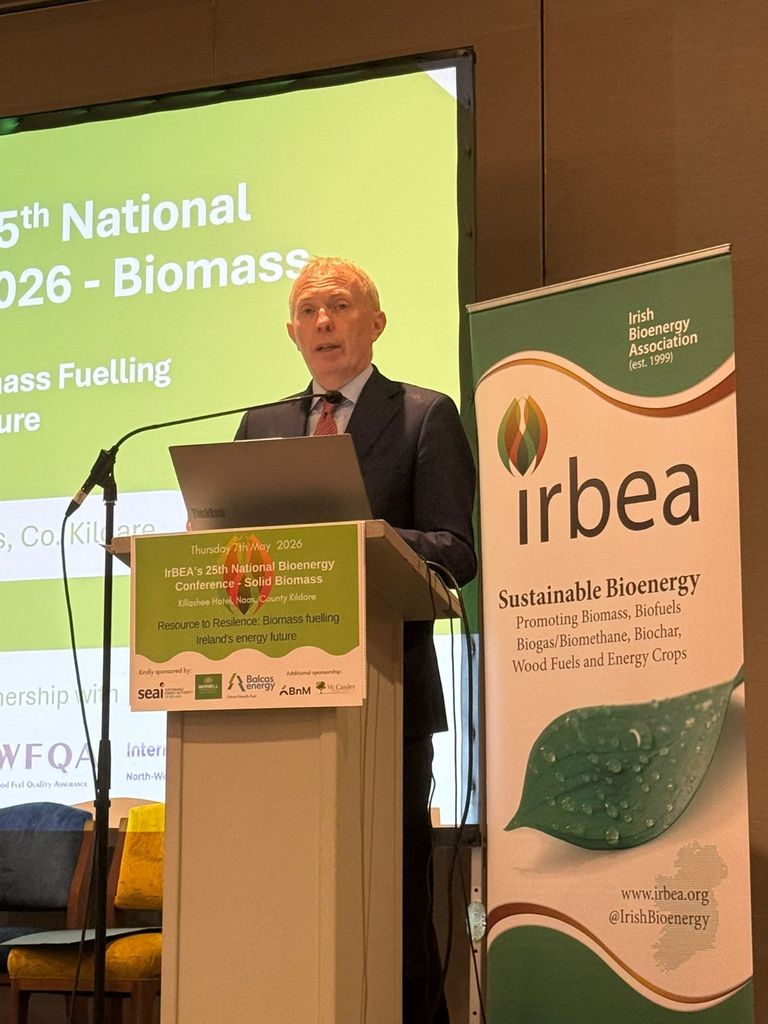
Minister Dooley said renewable heat and biomass will play an increasingly important role in Ireland’s energy future as the country works to reduce reliance on imported fossil fuels and strengthen domestic energy production.
He continued: “When people think about renewable energy, they often think first about wind or solar. But renewable heat and bioenergy are also hugely important parts of the transition.
“This is ultimately makes Ireland more energy secure, reduces our dependence on imported fossil fuels, and creates economic opportunities here at home.
"Developing indigenous bioenergy supports jobs, supports local enterprise and helps keep more economic activity within Ireland, rather than exporting energy costs overseas.”
Minister Dooley outlined a number of measures currently being progressed by government to support the sector, including reforms to the Support Scheme for Renewable Heat and work on the new Renewable Heat Obligation.
He confirmed that issues which have restricted operational supports for larger biomass projects since 2024 are expected to be resolved in the coming weeks.
The minister added that development of the industry would "require a coherent and a collaborative approach to the policy implementation across all sectors, including energy, agriculture, and enterprise”.