Winter oilseed rape and spring planting priorities

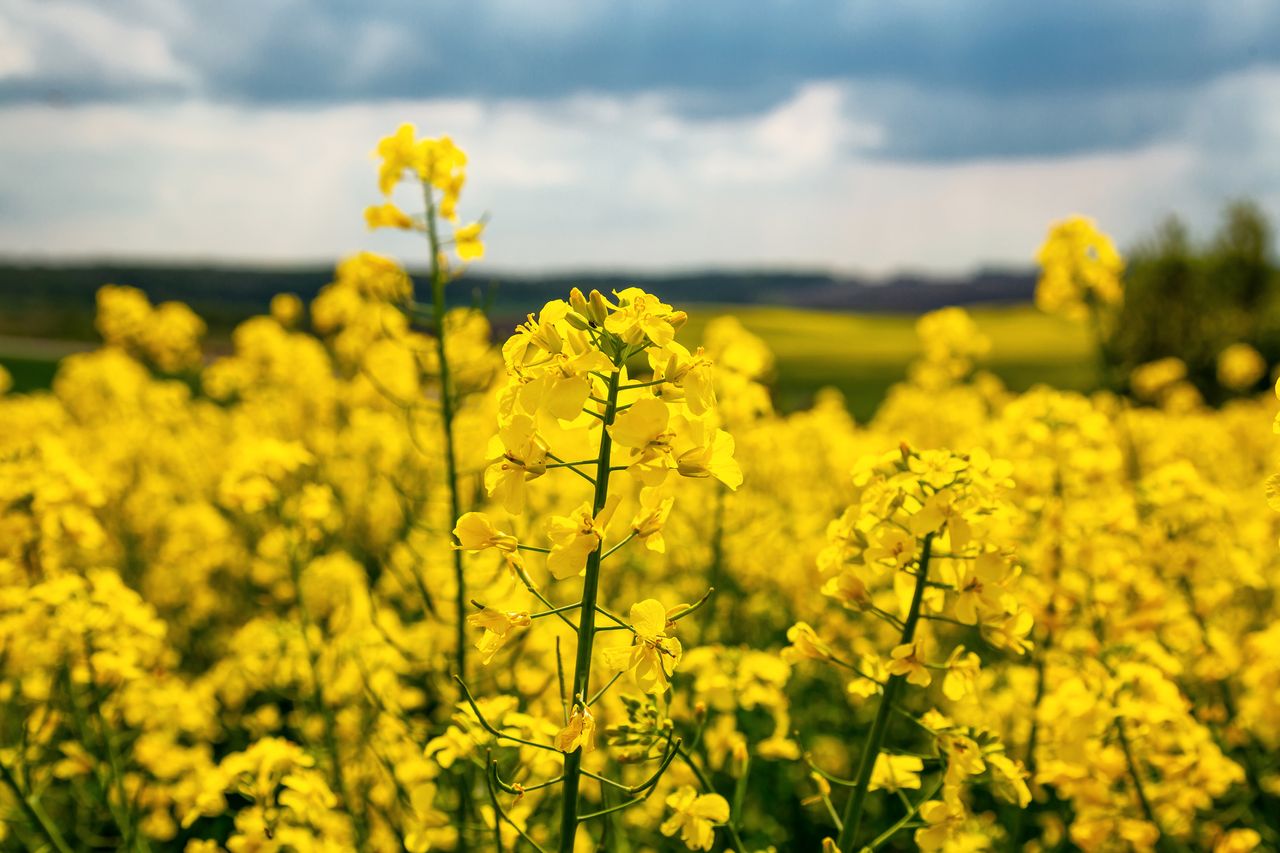
A significant number of winter oilseed rape crops are now in full flower around the country, according to Teagasc.
However, a wide range in the growth stages achieved has been noted this year.
This is a result of pigeon grazing and the variation in opportunity to get fertiliser out in a number of locations.
Sclerotinia is a fungal disease that can impact significantly on rape yields.
It is best treated preventively in fields at most at risk: specifically where rape was grown previously or nearby.
Growers should apply a suitable fungicide mix at the onset of petal fall, Teagasc said.
This is the most effective time for sclerotinia control as later infection only affects lesser yielding side branches.
Spring planting
Growers should complete the sowing of wheat, oats and beans as soon as possible.
According to Teagasc, spring barley remains to be drilled in many areas but can be planted well into April.
Barley seed rates should be increased as April progresses. Sowing approximately 350 seeds per square metre should deliver an establishment rate of 300 plants.
The threat of Barley Yellow Dwarf Virus (BYDV) must be factored in when it comes to the planting of spring cereals.
As a rule of thumb, March-sown crops usually do not need an aphicide, except in areas with a history of BYDV or near the coast.
April/May sown crops should receive an aphicide at the 3-4 leaf stage for optimum effect.
Growers should apply full label rates to get best control, followed by monitoring to assess for resistant aphids.
Where weed control is concerned, the application of a herbicide at the 4-5 leaf stage is recommended.
Best results are achieved when the weed and crop are growing actively. Weather before spraying will influence how well the weed takes up the chemical applied.
Where wild oat sprays are applied separately, growers should obey spraying intervals to maximise the efficacy of the herbicides used.
Teagasc has noted increasing issues with wild oat control so the strong advice to growers is to make sure that the herbicides are applied in the best conditions possible.
Fertiliser
Fertiliser policies should reflect the needs of the growing crops. In this context a number of priorities should be noted
Growers should select a suitable fertiliser to deliver sufficient seedbed nitrogen (N) for early establishment plus sufficient phosphate (P) and potash (K) for crop yield.
Significantly, P trials in spring barley indicate the benefits of placing P fertiliser on P Index 1 soils in terms of rapid root and tiller development.
Recent work in spring barley has also shown that higher rates of K (80-100kg/ha) can also help to reduce brackling in barley.
Where organic manures have been applied, chemical fertiliser rates should be reduced.