Winter barley: Crop management update

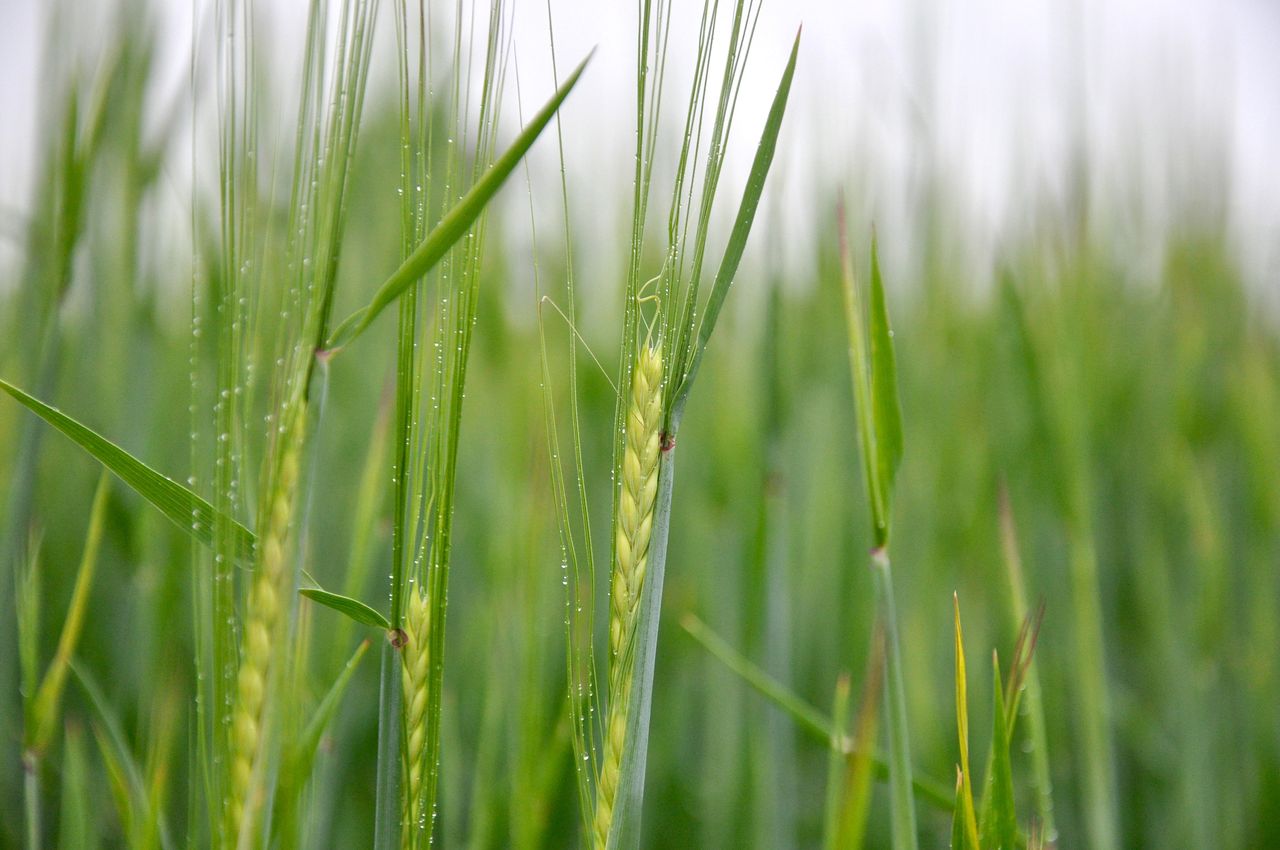
April is an extremely important period of the growing season from a winter barley crop management perspective, specifically where plant nutrition, disease control and plant growth regulation perspectives are concerned.
And with weather and ground conditions set to improve over the coming days, the time is now for growers to complete all relevant field work activities.
According to Teagasc, the five-year average winter barley yield of 8.66t/ha is below what many would tillage farmers would have expected, so timing of key agronomic inputs is crucial.
Where crop nutrition is concerned growers should complete the main split of nitrogen (N) as soon as possible.
Total N crop requirement is normally in the region of 180kg/ha.
However, in cases where growers want higher input levels, a third split before growth stage (GS) 32 should be considered.
Barley does not use late nitrogen efficiently and needs its nitrogen working before the flag leaf is visible.
Manganese deficiency has been reported again this year and needs attention.
Disease resistance
Where fungicide applications on winter barley crops are concerned, Teagasc recommends a three-spray programme where disease levels are moderate or high.
However, many of the newer varieties have relatively good disease resistance.
As a result, many growers will hope to get away with two applications.
The first spray should be applied between GS 30/31 with the second following between GS 39/49.
Where specific fungicide chemistries for winter barley are concerned, Teagasc is profiling the following options: Macfare Xpro (0.8L/ha); Siltra (0.6L/ha); Navura (0.8-1.0L/ha); Elatus Era (0.8L/ha) or Proline (0.4L/ha) + SDHI (e.g., Imtrex)/strob (e.g., Comet).
Where mildew is evident, growers should include a mildewcide in the tank mix.
Where growth regulation is concerned, growers should aim to apply a plant growth regulator (PGR) on two-row varieties between GS 32-37 for effective shortening.
Product options here include: Terpal (1.2-1.5 L/ha); Cerone (0.5-0.7L/ha) and Meddax max (0.3-0.5kg/ha).
For six-row varieties or two-row varieties on very fertile sites, two applications are generally required.
In such instances growers should consider Moddus (0.2L/ha) + CCC (1L/ha) at GS 30/31 followed the normal timing at GS 32-37.
It is important that growers take note of the weather when applying PGRs.
Frost will lessen the effect of the products while also increasing the possibility of scorching.
It is also important to avoid complicated mixes as crops can easily be damaged where there are large swings between day and night temperatures.