Watch: How are foresters recovering from Storm Éowyn one year on?

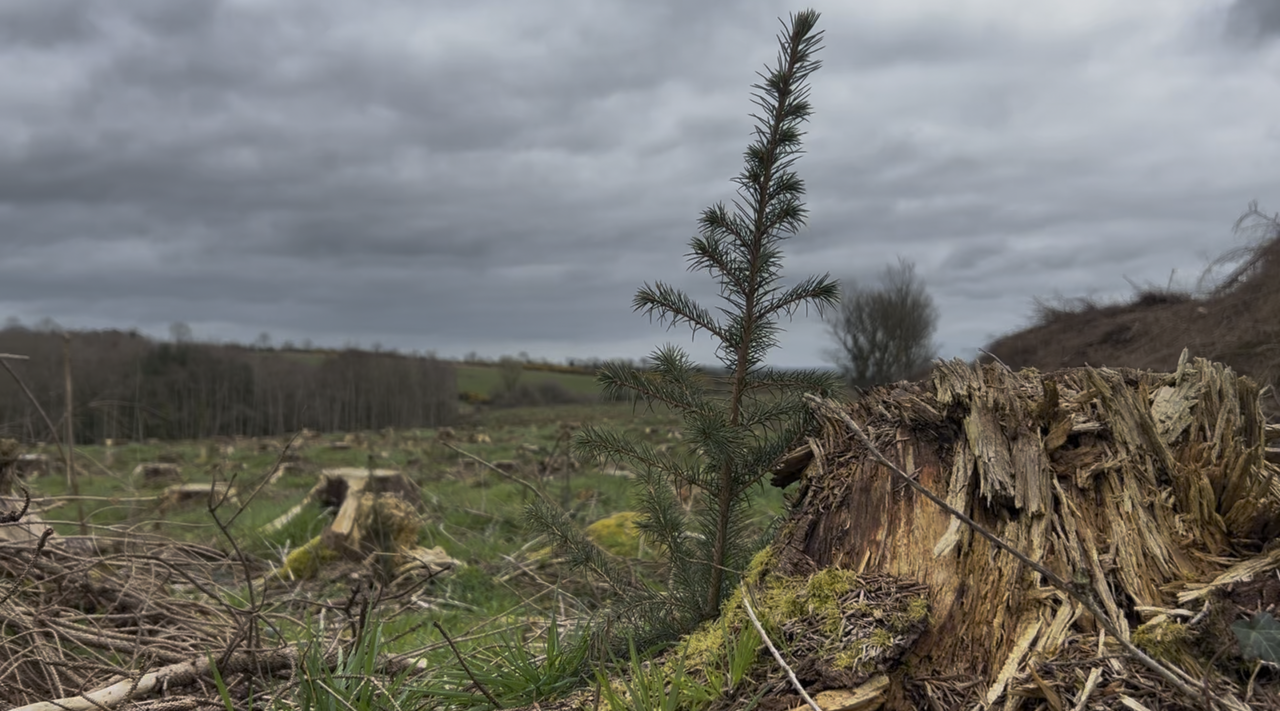
Foresters in the north-east are finally beginning to recover from the devastation caused by Storm Éowyn with signs of progress now visible more than one year later.
At a replanting event in Kilmainhamwood in Co. Meath, organised by the North East Forestry Group (NEFG), forest owners and industry experts gathered to share experiences and outline the road to recovery.
Local forest owner Peter Farrelly, told Agriland that his 40ha forestry site was severely impacted by the storm when it hit in January 2025.
Like many other foresters, the fallen trees at Farrelly's site had not reached full maturity, leaving him with windblown timber to deal with.
He said: "My forest was very badly blown as the site is very high above sea level.
"The trees were growing for 25 years; it was just at the age where the wind caught it badly, unfortunately.
"The forest needed another five years to be fully mature, but at least they were semi-mature, so it wasn't too bad."
Recalling the day of the storm, Farrelly said that he had moved quickly to start the recovery of his forest in the aftermath.
"The storm blew on Friday morning and the following Monday, I was on the phone to all the sawmills.
"I said 'there's only one way out of this; the forest has to be knocked down and cleared up'," he recalled.
Recovery
Clearing operations began at Farrelly's site in March 2025 and continued throughout the summer.
However, his financial return from selling the windblown trees was impacted by falling timber prices in the weeks following the storm.
"Selling semi-mature timber in a fallen market is not ideal, but you have to take it; you can't control the wind."
However, Farrelly admitted that the recovery "is going very well" as the site has now been replanted with Sitka spruce saplings.
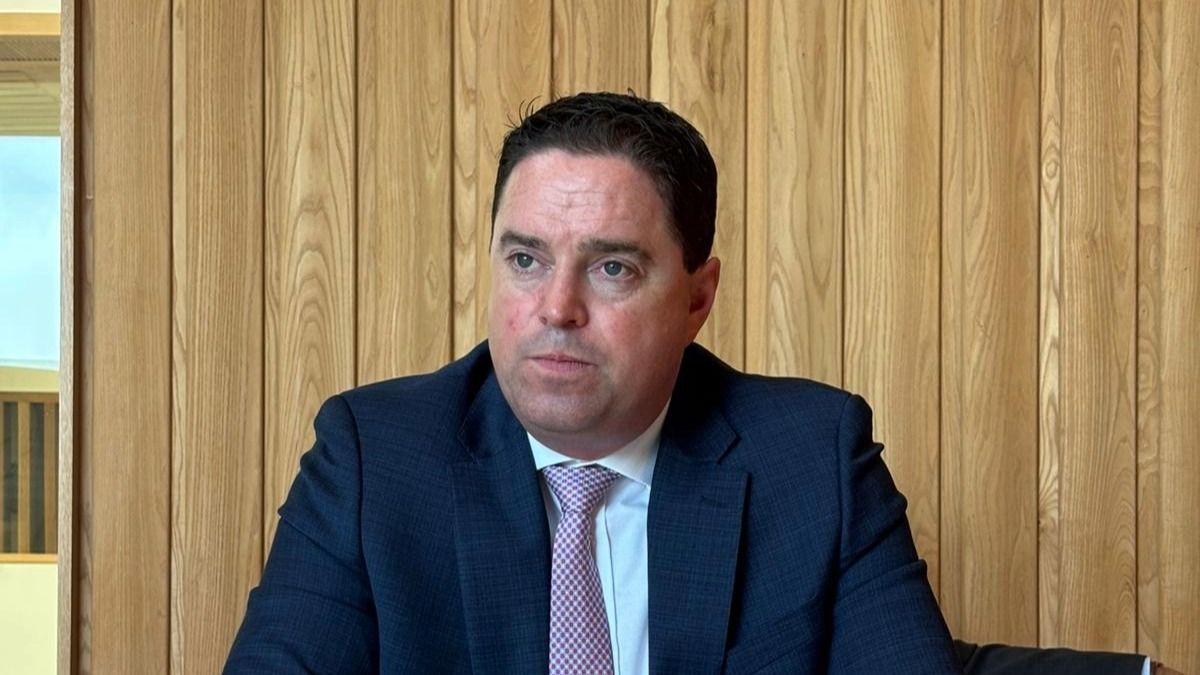
NEFG chair Ciarán Buckley also told Agriland that tragedies like Storm Éowyn highlight how important it is for foresters to stay consistently engaged with their forests.
"Storm Éowyn was a horrific event at the time, and I think it probably demoralised a lot of foresters at the time.
"You had small private forestry owners who lost 20 years of work overnight.
"But I feel that [the forestry sector] has bounced back a lot because we have had a very effective response from the government and the people have knuckled down into taking away the old trees and replanting," Buckley acknowledged.
Climate
With the impacts of climate change becoming more prevalent within the sector, the NEFG chair believes this trend reinforces the idea of forestry as a long-term investment.
Buckley said: "Farmers traditionally are looking at crops over a one to five year timeframe and I suppose it's a shift in culture to be thinking about one, two or three generations [with forestry].
"Things like ash dieback, weevils, or storms makes people step back and it reminds them that this is a long-term commitment and there is going to be big road bumps along the way."
He said that supports like the Climate Resilient Reforestation Pilot Scheme are helping foresters deal with storm impacts, with the department also announcing a Reconstitution Scheme for Windblow 2026 last month.
NEFG
With a reported increase in attendance at NEFG forestry events over the years, Buckley emphasised the role these educational meetings play in the forestry sector.
"The events are very good because foresters tend to be often farmers on their own land, who don't know other people in the same situation.
"So when they hear about events like these, often with funding and support from government agencies, it's a great way to spread information.
"And if you tell one farmer, they'll tell their neighbors and word spreads fairly quickly," he added.
The event in Kilmainhamwood yesterday (March 31) also saw Department of Agriculture, Food and the Marine and Teagasc forestry advisers in attendance to offer their expertise.