Watch: All to play for in CAP budget negotiations


Ireland's upcoming EU presidency provides a "huge opportunity" as discussions around the next Common Agricultural Policy (CAP) budget continue.
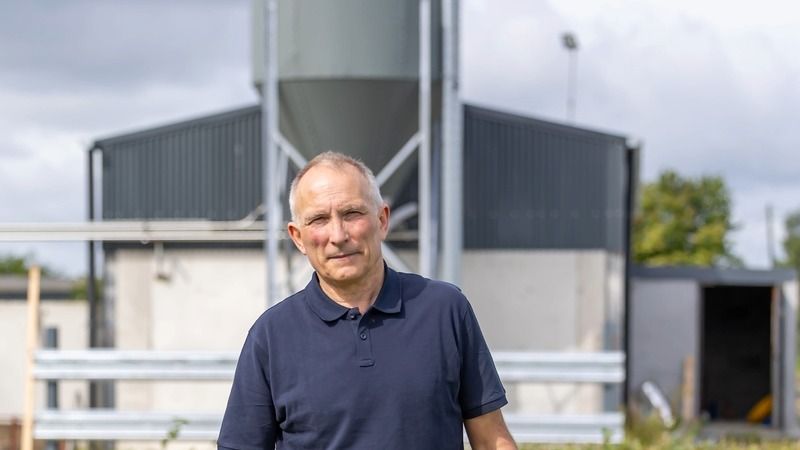
That's the view of Liam McHale, director of European Affairs with the Irish Farmers' Association (IFA).
Ireland will hold the Presidency of the Council of the European Union from July to December 2026.
It is understood that an outline of the next long-term EU budget or Multi-Annual Financial Framework (MFF), including the next CAP, may become clear before the end of the year, with trilogue discussions expected in early 2027.
CAP
The European Commission's proposals for the next CAP would see a move away from the traditional two-pillar structure.
CAP would be integrated into National and Regional Partnership Plans worth €865 billion, of which a minimum of €300 million would be ringfenced for farmer income supports.
EU Commission president Ursula von der Leyen has also confirmed that €48 billion from the Flexibility Reserve may be used for agriculture from 2028.
The commission believes the proposals would increase flexibility for member states to direct funding toward specific farmer needs.
Member states would also be able to combine area-based payments with lump sums or top-ups to prioritise those whose main livelihood is farming.
Speaking to Agriland in Brussels this week, Liam McHale said:
"The [EU] presidency for Ireland will come in July. This is during the year when the CAP negotiations, the budget, MFF, negotiations are ongoing.
"So what we're seeing is legislation, proposals, as well as the opportunity to guide them and to hopefully influence them in a positive way for Irish farmers and for European agriculture.
"We've seen last year in the CAP proposal from the commission that the budget has been reduced by 20-24%. That's perhaps our biggest challenge," he said.
CAP
The European Parliament budget committee has proposed to add €139 billion to the commission's plans.
"We saw the parliament position with the proposal of over €430 billion for the EU [CAP] budget, which would match the ambition that we have for the agriculture sector.
"We have seen that while there was a cut in the initial budget proposal, President von der Leyen and the commission have come back with some proposals that would increase the amount of the initial funding.
"That is not ring-fenced, it's not guaranteed, but it's certainly a step forward.
"We see the parliament hopefully supporting our position in our request for increased budget for farmers and for agriculture," McHale added.
The IFA director of European affairs acknowledged there are "competing priorities" when it comes to the EU budget, which currently centre on defence amid geopolitical tensions.
"We maintain that food security is non-negotiable and that we need to defend our farmers to continue with food production in Ireland and across the EU.
"Hopefully our Irish team that is obviously preparing for the presidency, whether that's in agriculture or right across the commission, will be ready to help us achieve what we believe is a priority area for our farmers," he said.
Mercosur
The EU-Mercosur trade agreement, which has been 25 years in the making and will create one of the world's biggest free trade zones, is set to be provisionally applied from May 1.
As part of the agreement, 99,000t of Mercosur beef will be allowed to enter the EU market with a 7.5% duty, while a 180,000t annual duty-free quota for poultry will also be phased-in over five years.
The EU Commission said the deal contains safeguard clauses which can be applied in cases where imports from Mercosur partners threaten to cause serious injury to EU producers.
The EU has also committed to increase border controls by 33% in 2026-2027.
"While there is a safeguard clause there, of course, unfortunately, we have got to wait until there is a negative impact on the market for that potentially to be activated.
"We know that with trade deals that we have seen elsewhere, for example, between the UK and Australia, we've seen a big increase in imports from Australia into the UK market, which we would say is now causing displacement of Irish exports of beef into that market," McHale said.
The IFA director of European affairs said there is "a rapid increase in the eagerness of the commission to tie up agreements around the world".
"We believe, if you were to add them, the cumulative effect of these trade deals will have an impact on the sensitive sectors going forward.
"We'll be watching closely the import figures from South America, from Mercosur, going forward," he said.
Beef production
The IFA maintains that when it comes to the Mercosur deal "there is no equivalence of standards" in beef production.
"At one point you had the commission telling us that there was no risk to European citizens as regards imports from Mercosur, while another part of the commission was issuing reports saying that beef with hormones had been imported, distributed and consumed by European citizens.
"We would see the challenge that the commission is faced with, obviously trying to protect citizens, but at the same time trying to bargain and achieve deals, such was done in Mercosur," he said.
"Some will say, well, let's have a look now and see how things will play out over the next year or two. But unfortunately, if there is any negative impact, it would be farmers who will pay the price.
"We believe that for any safeguard to be activated, it is a very high bar to achieve, unfortunately," McHale said.