Steps to Superior Silage
In this instalment, Dr. Adrienne Kerley, Volac’s Research and Development Technical Manager for Forage, looks at harvesting and part 1 of treating grass with an additive.
Harvesting
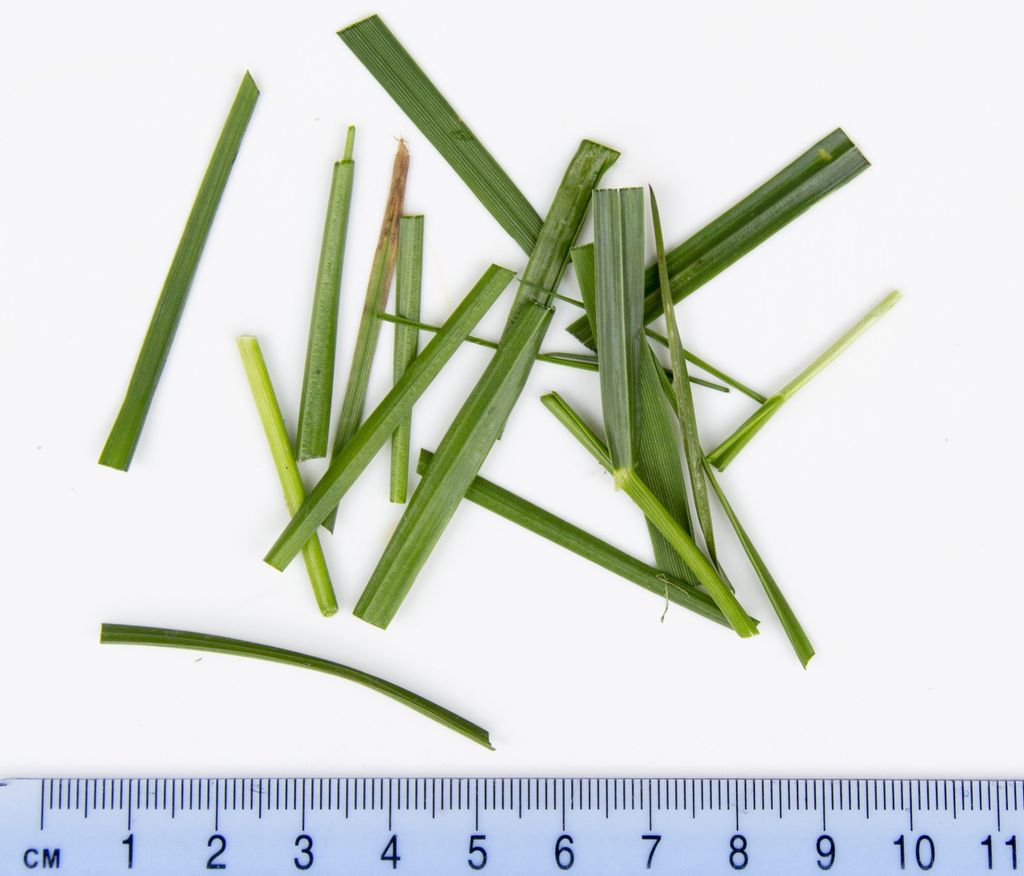
How short should grass be chopped for silage?
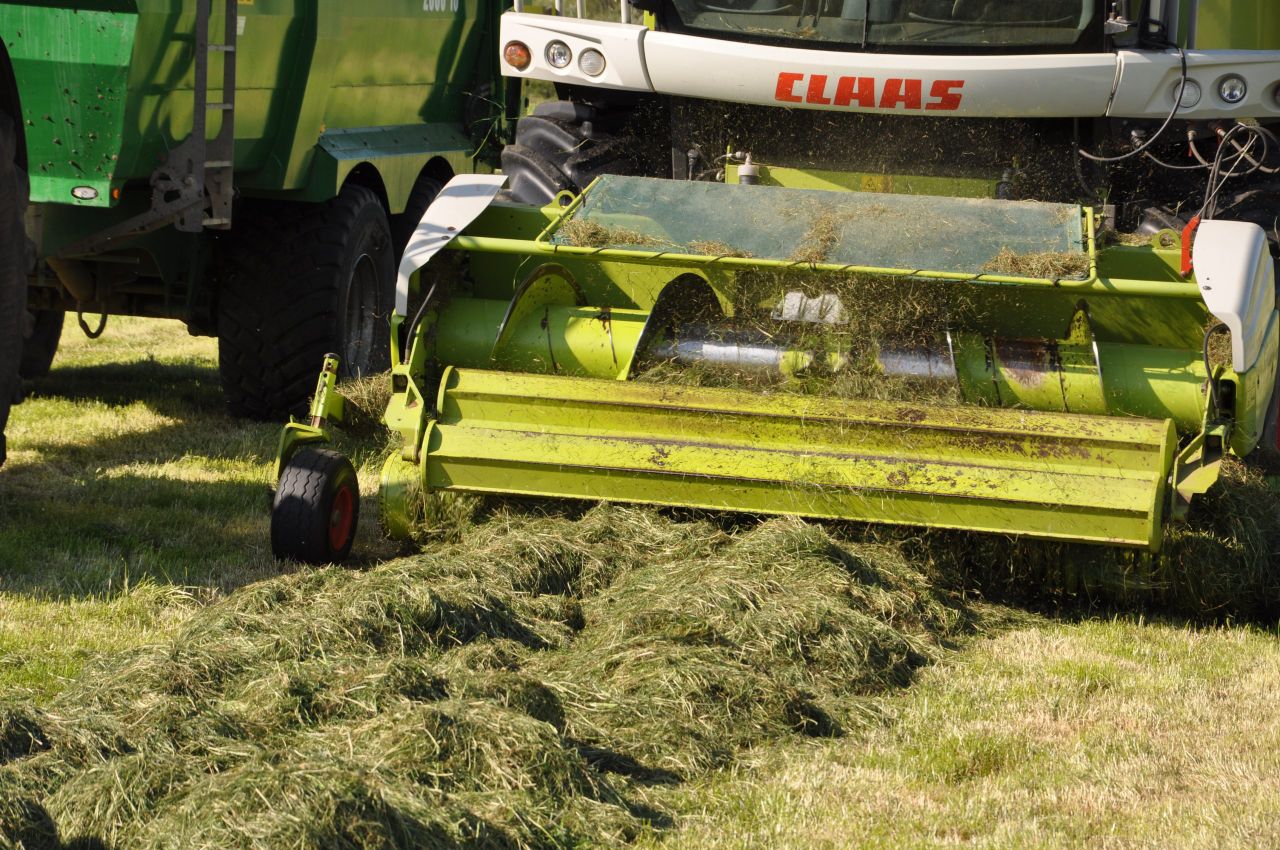
Chopping grass makes it easier to compact in the clamp, which is especially important for more fibrous crops and crops of higher dry matters (%DMs), in order to reduce losses from heating.
Chopping also releases sugars for fermentation. However, it is important not to overdo it.
The move to higher %DM grass, as well as feeding more maize and wholecrop cereals in dairy rations, has led to concerns about low butterfats due to there being insufficient effective fibre in the diet.
In general, chop length should be adjusted to %DM.
| DM | Issues | Chop Length (cm) |
| >30% | compaction | 1.5-2.5 |
| 20-30% | effective fibre | 2.5-5 |
| <20% | slippage, effluent | 5-7.5 |
However, where grass is cut younger and leafier (e.g., multi-cut) a longer chop length may be needed in order to prevent slippage in the clamp.
For example, for young and leafy material at 32% DM, consider a chop length of 3-5cm.
If it is 28-30% DM, consider a 5cm chop length minimum.
If it is below 28% DM, then consider increasing even further, e.g., up to 10cm for grass at 22% DM.
Treating (Part 1)
Is an additive needed when making grass silage?
Whenever grass is ensiled, some sort of fermentation will occur.
But while some fermentations are efficient, others are poorer and result in more of the silage’s DM and nutrient content being lost.
The quality of the fermentation will be influenced by various factors.
For example, by maximising the sugar content of the grass by cutting at the optimum growth stage and wilting rapidly, by minimising contamination with soil or slurry bacteria, and by ensuring the clamp is well consolidated and airtight.
However, another integral step is to use a proven additive that treats the grass with a high number of efficient bacteria which rapidly produce lactic acid.
Ecosyl, for example, drives fermentation by delivering 1 million, highly efficient Lactobacillus plantarum MTD/1 lactic acid-producing bacteria per gram of forage treated. Lactic acid, in turn, ‘pickles’ the forage to preserve it.
Without additive, fermentation is at the mercy of whatever bacteria happen to be present on the grass - both good and bad bacteria.
Bad ones can come from soil or slurry, but even if slurry and soil bacteria are minimised, the lactic acid bacteria that tend to be naturally present on grass are often low in number and not necessarily the most efficient strains.
If the wrong bacteria dominate the initial fermentation, the pH will fall slowly, which will allow undesirable microorganisms to continue ‘feeding’ on the ensiled grass for longer, leading to greater silage losses.
Compared with the value of silage, the cost of treating with Ecosyl is minimal.
What happens when silage is made with a quality additive?
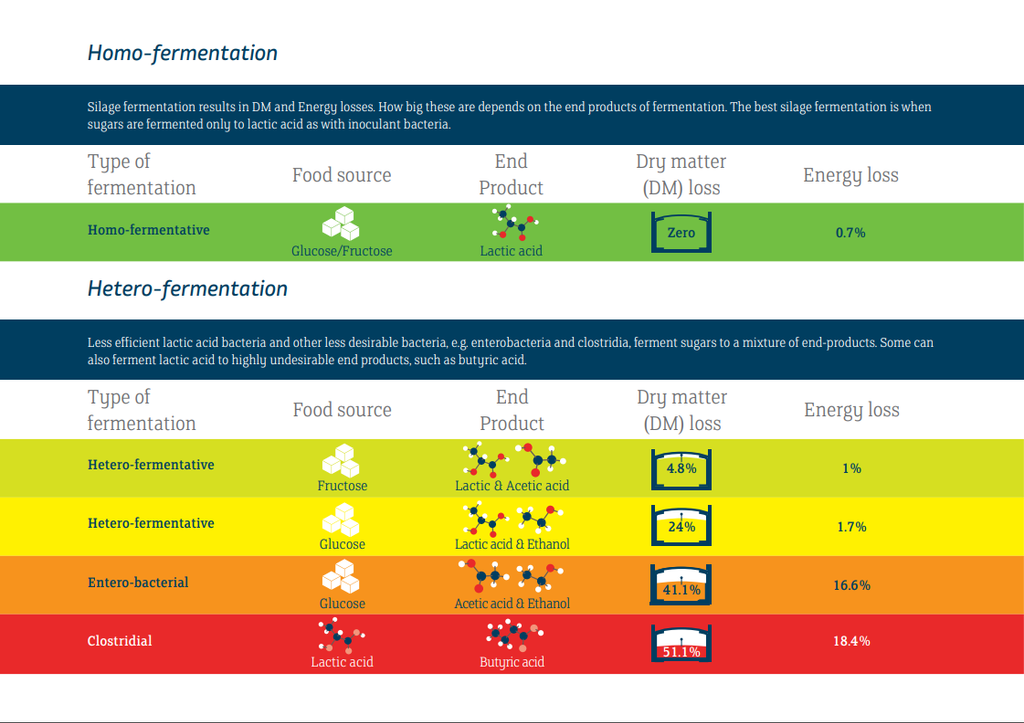
In an ideal fermentation, only lactic acid is produced. This is beneficial for two reasons:
- No undesirable by-products are produced during this process. Indeed, the lactic acid produced retains over 99% of the energy of the original fermented sugar;
- Lactic is the strongest acid produced during a silage fermentation, producing a rapid pH fall. In this way, the growth of undesirable microorganisms can quickly be halted before they have chance to cause major nutrient losses.
It is this type of fermentation that occurs when a quality silage additive containing a high number of efficient lactic acid-producing bacteria is applied. It is called a homofermentative fermentation.
What happens if grass silage ferments poorly?
At the opposite end of the scale to an efficient fermentation, poorer fermentations can occur for two reasons.
Firstly, if they are carried out by bacteria naturally present on the grass that produce lactic acid but do so less efficiently. Or secondly, if certain ‘bad’ bacteria are present on the grass.
The issue with these bad bacteria is that they produce a range of less desirable end products besides lactic acid. This type of fermentation is termed heterofermentative.
These end products can include volatile fatty acids (VFAs).
VFAs are weaker than lactic acid, so undesirable microbes can continue feeding on the nutrients in the silage for longer.
Additionally, carbon dioxide is produced. This is undesirable because carbon dioxide means loss of DM and is not good for the environment.
Another by-product of a poor fermentation is ethanol, which is not a preservation acid at all.
Particularly poor fermentations occur if enterobacteria, the bacteria associated with slurry, are present on the grass and allowed to persist in the clamp, or if clostridia bacteria are present, which are introduced from soil.
These can waste around 17 and 18% of the original energy content of the sugar.
Clostridial fermentations are particularly undesirable because they convert lactic acid into butyric acid, which makes silage unpalatable.
So not only is the silage less nutritious, but livestock want to eat less of it.
More details on the benefits of using a quality silage are available here.
Types of fermentation compared
Follow the Steps to Superior Silage series each week on Agriland to learn more about how to ensure your farm is producing top-quality silage.