Tirlán chief: 'I've never seen such uncertainty' in markets

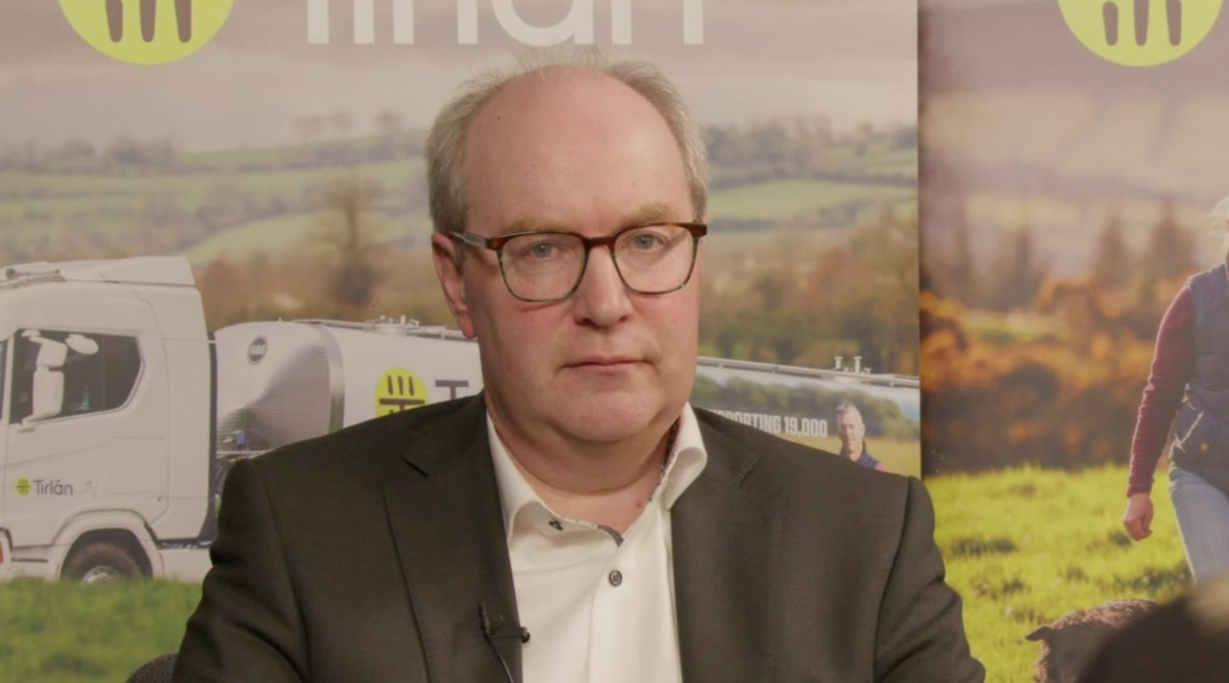
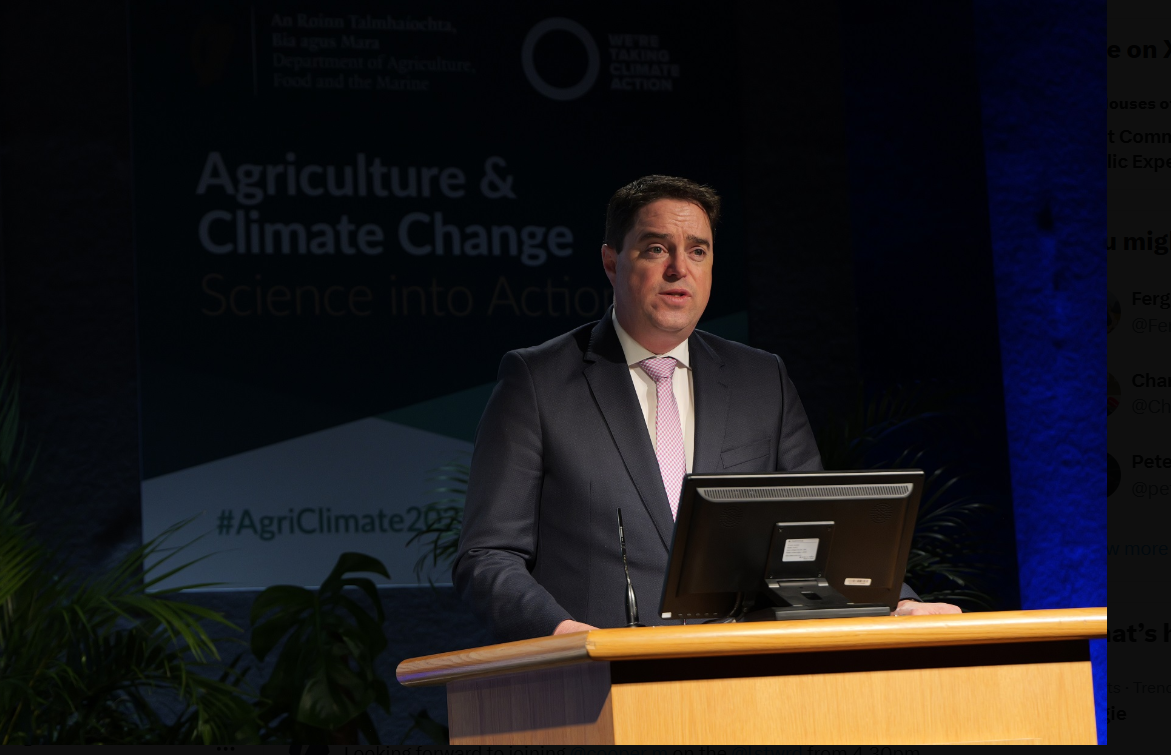
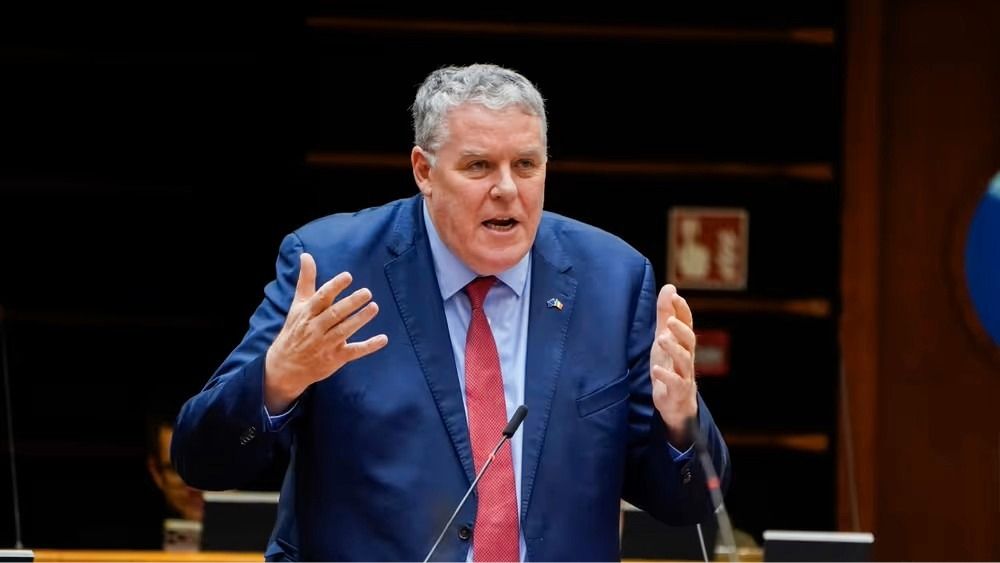
The chief executive officer (CEO) of Tirlán has said that he has "never seen such uncertainty and volatility" in international markets as there is now.
Tirlán announced its annual results for 2025 this week, with the co-op striking a positive note for last year's performance.
However, CEO Seán Molloy suggested that the situation now, after the first four months of 2026, is less optimistic, for both the co-op itself and for its suppliers.
Speaking to Agriland, Molloy indicated that the current unpredictability in dairy markets, as well as how global events are panning out, makes it difficult to predict where milk prices will go over the next 12 months.
"I would absolutely recognise last year was a good year on farms. It turned difficult towards the end the year, but overall it a was good year on farms. And you can see, a very strong year for ourselves. This year is shaping up to be very different," Molloy said.
"We are in a very challenged environment now insofar as that the milk price we're paying, in some cases, isn't covering the full cost of production. That's a very difficult place for farmers to be," he added.
"I'm 20 years in this business now. I've never seen such uncertainty and volatility in international markets that we're witnessing now.
"I would have said that last autumn, but it's only gotten worse since. One never knows what to expect now when you wake up each morning," Molloy said.
The Tirlán CEO said that to go beyond two to three months in milk price forecasting is "very difficult".
He said that some welcome gains in the market that were seen at the start of the year have now stalled.
Molloy did note that, on the demand side for milk, the situation remains somewhat positive.
However, he noted that there has been a "divergence" in the market across product groups.
"Protein is strong, which is very encouraging for folks like ourselves who invested in that space. But butterfat remains under challenge, and, in fact, it has declined in price over the last number of weeks," Molloy said.
"And cheese is well back. It's stable, but well back from what it was this time last year. I think you're talking about €700/t of a decline."
According to the Tirlán chief, a "supply correction" is needed to address the trouble in global dairy markets. However, he suggested that there doesn't seem to be any sign of that happening soon.
"That hasn't happened yet. If I look at the four or five large exporting countries, they are producing 4% to 5% increased milk in the first quarter of this year, and likely to continue for a little while further," he said.
According to Molloy, Tirlán is currently paying a price for milk slightly ahead of the market, saying that the market for milk would translate to a figure around the mid-30s in terms of cent-per-litre prices, compared to Tirlán's most recent milk price of 37.08c/L.
The processor announced that price for March milk last week, and also said it is committed to maintaining that price for April and May, "subject to any unforeseen events".
"We came out last week and we wanted to present confidence to our farmers and give them some sense of stability.
"Therefore, we've moved ahead of the market in calling that price. But we've also called it for three months. We did this last January and it got extremely good feedback from our farmers, in that it gave them some confidence in a world that was very volatile," Molloy said.
He added: "It's a floor. When we sit down [in] July, if the prices have done better than that, then we'll reflect that from that point on milk price.
"But the feedback that we've got, the feedback from our farmers is very pleased. They'd like the price to be higher, of course, and so would we. But they're pleased that we've...gone ahead of the market and...that we've brought some confidence and stability to it," the processor CEO said.
He said that the amount of fertiliser already sold to farmers this year by Tirlán will benefit them for the year.
"Very helpfully this year, we have today about 70% of our fertiliser for the year sold to our farmer. If I take one example on the urea side, those tonnes of urea that were bought are €300/t less than where the market is today," he said.
New entrants
Molloy noted that 2026 is likely to be a difficult year for new entrants to dairy, but also said that the longer term future for dairy as a sector is more positive.
"This has to be a difficult year for new entrants. You're coming into production where the cost price piece is not working as you would like it, but also, probably equally importantly, the cost of that investment...if they have to build facilities or restructure farms - and a lot of new entrants do a lot of work on their farms when they start off - it's a very expensive year," he said.
Tirlán introduced a Generational Renewal Programme last year, which pays new entrants a 2c/L bonus on all milk supplied in the first three years of production, and which the co-op said has proven successful, with 52 new entrants expected this year, a "near record annual number".
Molloy said that this programme is "really going to prove itself important this year to new entrants".
"This is going to be a challenging start. Having said that, and we have to stand back from it, the medium- to long-term outlook for dairying is really positive. This is a good business," he said.
"We...have very good products. We're adding value to those products. There's the demand in the market.
"So we have to be careful not to judge it on what might look like challenges over a few months. I would hope that for those new entrants, their funding organisations will see the same as we're seeing in that regard," Molloy added.
"Dairy is a good business, it's hard work, no doubt. But for the farmer who's well established and who's committed and who's producing the quality of product that we're getting from our farmers, I think ultimately this will be a very good business to be in," he said.