Taoiseach outlines 'need to look at incentives' to ensure food security
Ireland's reliance on food imports was raised in the Dáil this week amid calls for a 'food security strategy'.
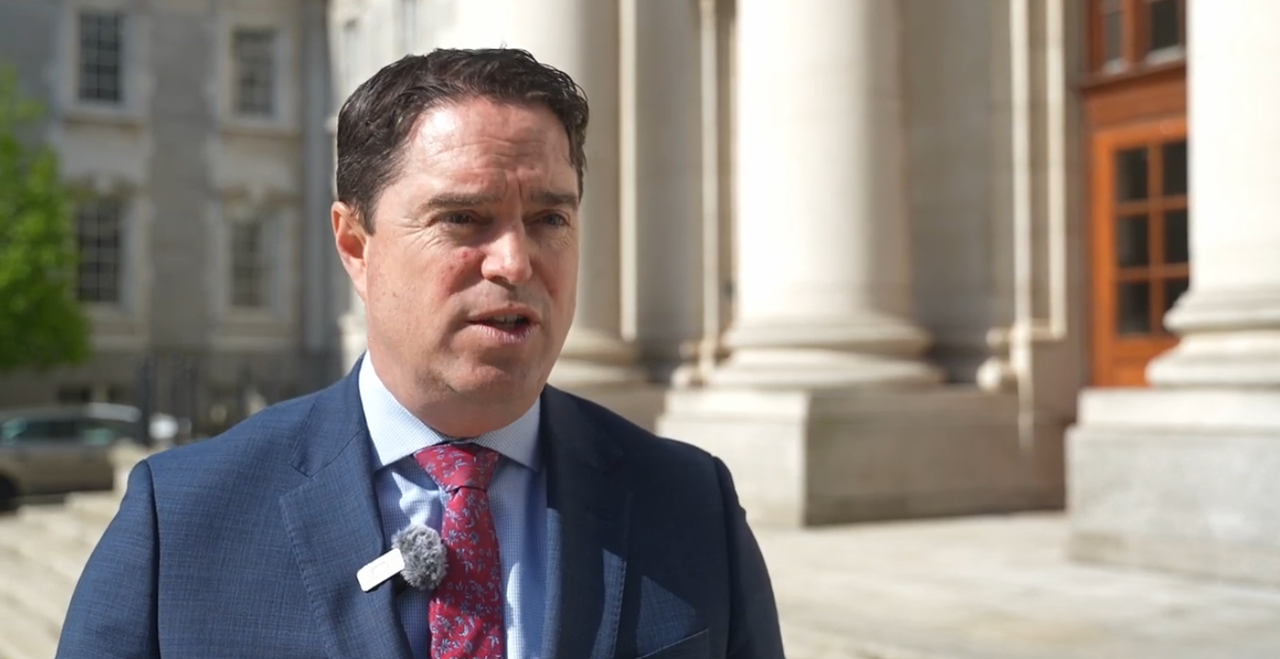
Dublin Mid-West TD, Deputy Paul Nicholas Gogarty raised the issue yesterday (May 13) and said the issue "affects every household in this country, and that is our food security, or more accurately, our lack of it."
He said: "The minister for agriculture describes the government's Food Vision 2030 as [a] strategy for a world-leading sustainable food system, but it is not a food security plan.
"Evidence shows that Ireland will not be able to sustain itself indefinitely without major agriculture and dietary change.
"We can do this the hard way or the easy way", the TD remarked.
Deputy Gogarty claimed that Ireland is currently "233% self-sufficient in meat and 300% in dairy".
He said that according to Teagasc research, "we produce enough protein for 30 million to 36 million people.
"But that does not mean Irish families would have access to the food they need if imports were to be disrupted by a war or pandemic."
'Empty' supermarket shelves
"What people buy every week is ... largely imported. Only 10% of our land grows crops in this country. Some 90% of it is grass" Deputy Gogarty claimed.
"Modern Irish beef and dairy farming depends on imported fertiliser, feed, fuel and machinery parts. What would this mean for ordinary families?"
On the impact of this at supermarket level, he said: "After a two-week scenario, supermarkets would begin to show gaps in fresh fruit and vegetables."
According to the TD, bread would become harder to source because "we import most of the milling wheat".
"Prices would rise. Choice would collapse. The weekly shop would suddenly cost more and people would buy less" he explained.
"After two months, pig and poultry products would become scarce because they rely almost wholly on imported feed. Dairy output would begin to get tighter."
The TD said there would be "more empty shelves"
"Families on lower incomes would be hit more because, as prices rise, the better-off would use their relative purchasing power to get what is available," he added.
Agricultural impact
In terms of agriculture, the TD said that after 12 months, "fertiliser shortage would reduce grass growth and silage yields".
"Farmers would cull lower yield animals. Milk and beef output would fall.
"Ireland would still have all this calorific meat-based protein but not a balanced healthy and affordable diet", Deputy Gogarty claimed.
Deputy Gogarty stated that Ireland has a "massive opportunity to expand plant protein production."
He went on to say that the Teagasc tillage initiative scheme and the Protein Aid Scheme "have shown that farmers will grow more crops if the incentives are right".
He stated: "We need an actual food security strategy. I do not believe we have one."
Taoiseach's response
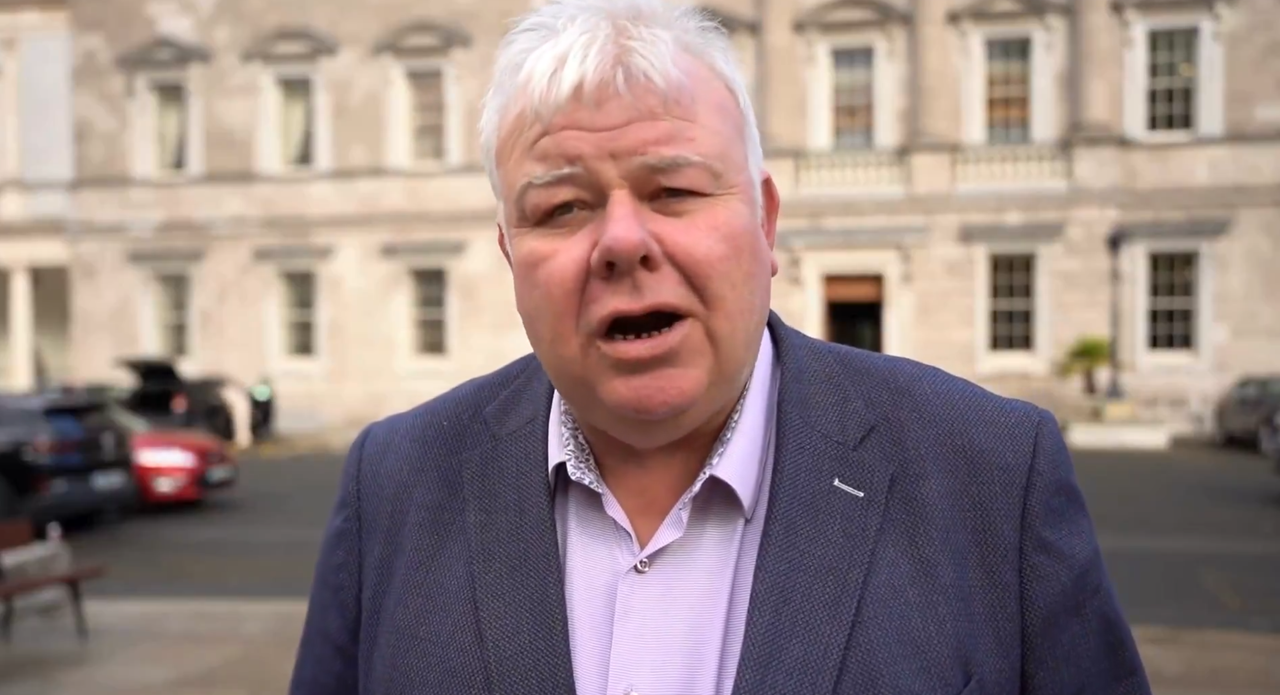
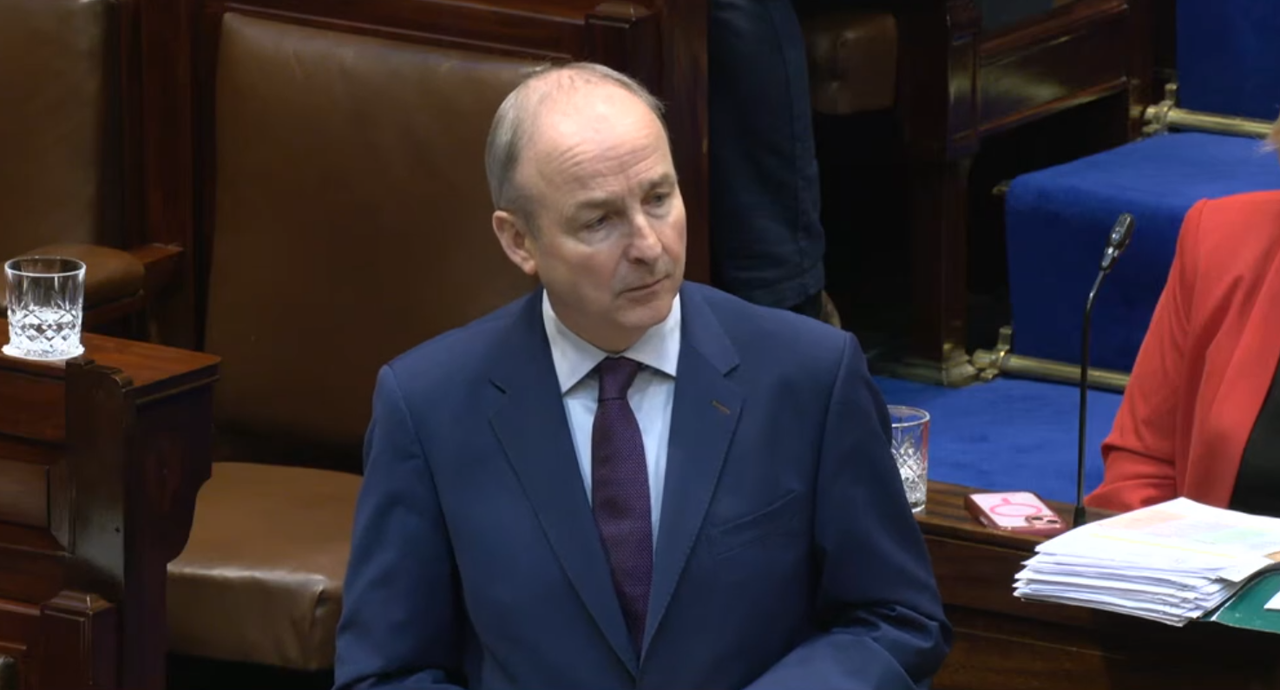
In response, Taoiseach Micheál Martin said that Ireland needs to "situate this in a European and global context rather than just in a narrow national context."
He noted that "there are vulnerabilities in terms of the importation of a range of foodstuffs and that we need a plan regarding food security on the island."
"Our dairy and meat industries are probably more carbon efficient than others across the globe", the Taoiseach claimed.
He explained that Ireland exports to "about 170 countries, so we feed a lot of people by means of the dairy, beef, lamb and pig industries.
"That is a factor which speaks to European food security and food security in Britain, where a lot of Irish produce is consumed
"We need to do more in the context of horticulture and tillage."
The Taoiseach highlighted that "we need to look at incentives to give us greater security and capacity in that respect."
In relation to wheat, the Taoiseach commented by saying "the minister for enterprise recently announced a scheme to bring flour milling back into [Ireland]."
"Schemes that can guarantee farmers a market or an outcome in respect of a product are important", he said.
Industry
The Taoiseach mentioned his visit to the newly opened Diageo brewery in Littleconnell, Co. Kildare earlier this week and said he was interested to learn that 10% of the barley grown in Ireland is used by Diageo.
"That is quite extraordinary", he added.
"About 5% of Irish dairy is used to produce Baileys, which is exported all over the world. We are part of a global food supply chain."
He stated the "dominance of meat and dairy" is "to a certain extent, related to global supply chains, markets and the returns achieved."
Noting the "weakness", he stated: "We have to work on ring-fencing good returns for tillage and horticulture into the future. Land pricing is a factor in that regard."
The Taoiseach noted the "need to systematically identify potential weaknesses that would cause problems if global events were to restrict the supply of vital imported foodstuffs or general foodstuffs we currently import".
Previous efforts
In relation to Food Vision 2030, the Taoiseach highlighted the work of the former Minister of State at the Department of Agriculture, Food and the Marine (DAFM), Pippa Hackett, and the then Minister for Agriculture, Food and the Marine, Charlie McConalogue, who he said "were very involved in supporting organic farmers."
"In that context, €256 million was allocated to support organic farmers. That resulted in significant five-year growth and a 5.5% increase in organic production up to 2025," the Taoiseach said.
"About 5,500 farmers are now engaged in the organic farming scheme. That is up 223%."
He added that Ireland has "made a lot of progress on the organics side, which is related to this issue in terms of capacity."