Study finds no evidence of increased cow mortality after Bovaer use

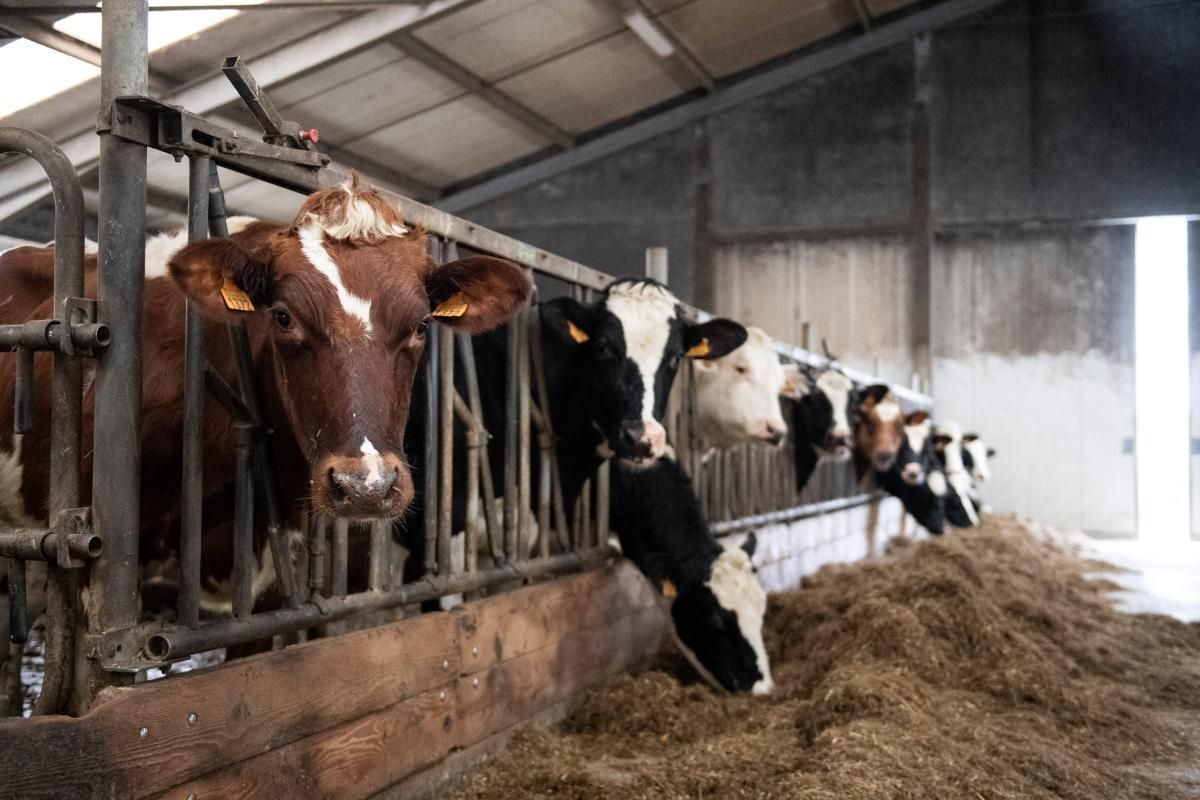
A new study published by Aarhus University has found no link between the use of feed additive Bovaer and an overall increase in cow mortality or decrease in milk yield.
However, the researchers emphasised that some Danish farmers have experienced serious problems in their herds and that there are still unanswered questions that warrant further study.
The study was commissioned by the Danish Food, Agriculture and Fisheries Agency in October 2025 following reports of sick cows and lower milk yield from some farmers after introducing Bovaer into their feed ration.
Since January 1, 2025, all conventional dairy farmers in Denmark with more than 50 cows are required to reduce methane emissions.
In order to achieve this, a farmer must either increase the fat content in their cows’ diet throughout the year or add Bovaer, a methane-reducing additive, to the feed for 80 days a year.
Bovaer contains the active ingredient 3-nitrooxypropanol (3-NOP), which inhibits the formation of methane in the cow's rumen.
The substance is approved as a feed additive in the EU based on an assessment from the European Food Safety Authority (EFSA).
Bovaer
The study is based on data from 73 Danish dairy herds with around 27,650 cows that used Bovaer in 2025.
Niels Bastian Kristensen, associate professor from the Department of Animal and Veterinary Sciences at Aarhus University, said the researchers found no evidence of an overall negative effect from Bovaer on milk production, disease incidence or mortality in the data analysed.
The researchers also found no signs of increased incidence of mastitis or metabolic disorders during periods of Bovaer feeding.
However, the scientists are clear about the limitations of the study.
"It is important to emphasise that there is great variation between herds, and that the study does not necessarily capture all the challenges that dairy farmers have experienced in practice," Niels Bastian Kristensen said.
The researchers also said it is likely the study underestimates some problems because cows with reduced well-being or lower feed intake were not necessarily treated with prescription medication and would not clearly appear in the records.
In many herds, Bovaer was introduced in the autumn months, when milk yield traditionally declines.
While such a decline may have been perceived as an effect of Bovaer, the report points out that the seasonal decline in milk yield nationwide in 2025 was actually smaller than in previous years.
"There are significant seasonal variations in milk production, and this is something we have known about for many years.
"When many herds introduce Bovaer at the same time in the autumn, it becomes more difficult to separate the effects from each other afterwards," Niels Bastian Kristensen said.
Research
According to Niels Bastian Kristensen, the overall results do not necessarily mean that all herds have reacted the same to Bovaer.
“The absence of a clear overall pattern in the data does not rule out that some herds may have experienced problems with Bovaer feeding.
"It simply means that we cannot see a clear pattern across the data," he said.
The researchers also acknowledged that the study was conducted over a short period of about three months and is based on retrospective data from herds where Bovaers had already been introduced.
Niels Bastian Kristensen also said that the farmers' experiences must be taken seriously.
"We have a number of reports where we have to agree with the dairy farmers that what they have experienced has been devastating.
"Some herds describe introducing Bovaer as running into a wall, and others describe problems that suddenly arise during the period of Bovaer allocation.
"At the same time, the overall data does not show a clear negative impact, and this is part of what makes the picture complex," he said.
The researchers found differences in the composition of milk in cows that were given Bovaer.
This included analyses of the milk's content of protein, urea and 3-hydroxybutyrate, which are naturally occurring substances that are normally used as measurement points to assess the cow's production, protein supply and metabolism.
"We can see that the milk analyses are changing. The question is whether Bovaer actually changes the amount of the substances we measure, or whether Bovaer causes a systematic analysis error," Niels Bastian Kristensen said.
The researchers said there is a need for more controlled studies where herds are followed before, during and after the introduction of Bovaer.
Milk producers
The National Association of Danish Dairy Producers (LDM) told Agriland that it is "astonished by the conclusions of the report".
"The results presented in the report do not even remotely reflect the sequence of events experienced by a large number of dairy farmers during the last quarter of 2025, when it was mandatory to include Bovaer in feed.
"The sample forming the basis of the report’s analyses appears to include only a very limited number of farms with severe problems and, in some cases, dead cows.
"The report in no way resolves the unanswered questions that still remain: why did things go so badly on some farms and not on others?" the organisation said.
The National Association of Danish Dairy Producers added that it "strongly dissociates itself from the report and hopes that politicians will examine the matter in greater depth rather than merely reading the report".
Research
Dsm-firmenich, the company that developed Bovaer, has welcomed the publication of the report by Aarhus University.
"The study is an important contribution to understanding the situation in Danish dairy production and provides a strong basis for informed, evidence-based decisions going forward," a spokesperson told Agriland.
The company said the findings are consistent with the previously published national Danish milk production and animal health statistics for 2025.
DSM added the findings are also consistent with the "existing extensive scientific evidence, including more than 150 on-farm trials and over 120 peer-reviewed studies demonstrating no adverse effects on animal production, health or welfare".
The company said that Bovaer has been used in over 25 countries in the feed of more than 500,000 cows.
DSM said it eemains committed to working closely with farmers, veterinarians, feed advisors, researchers, and industry stakeholders "to support farmers in realising small but significant feed efficiency and ECM gains through the use of Bovaer".
The EFSA is currently carrying out a review into the use Bovaer in dairy cows which is due to be published by June 30, 2026.
While, a research project was launched in last year by Aarhus University to investigate animal welfare in cows fed Bovaer, with results expected in 2028.