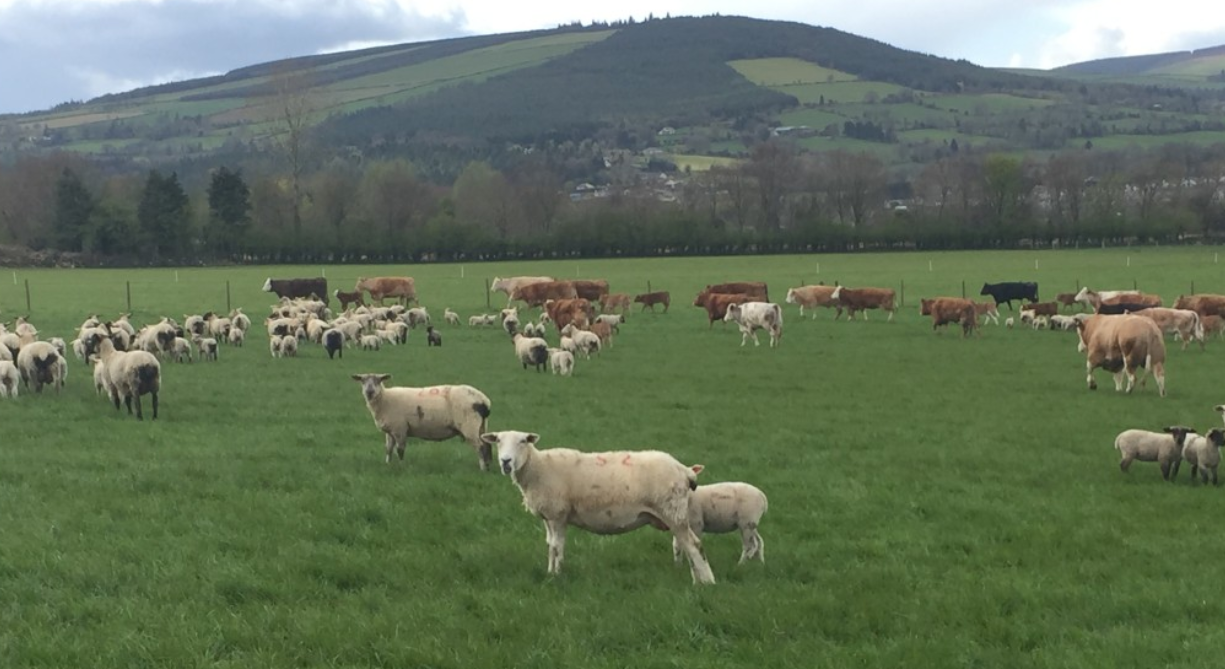
Newford Farm suckler herd hit gross margin of over €1,960/cow in 2025

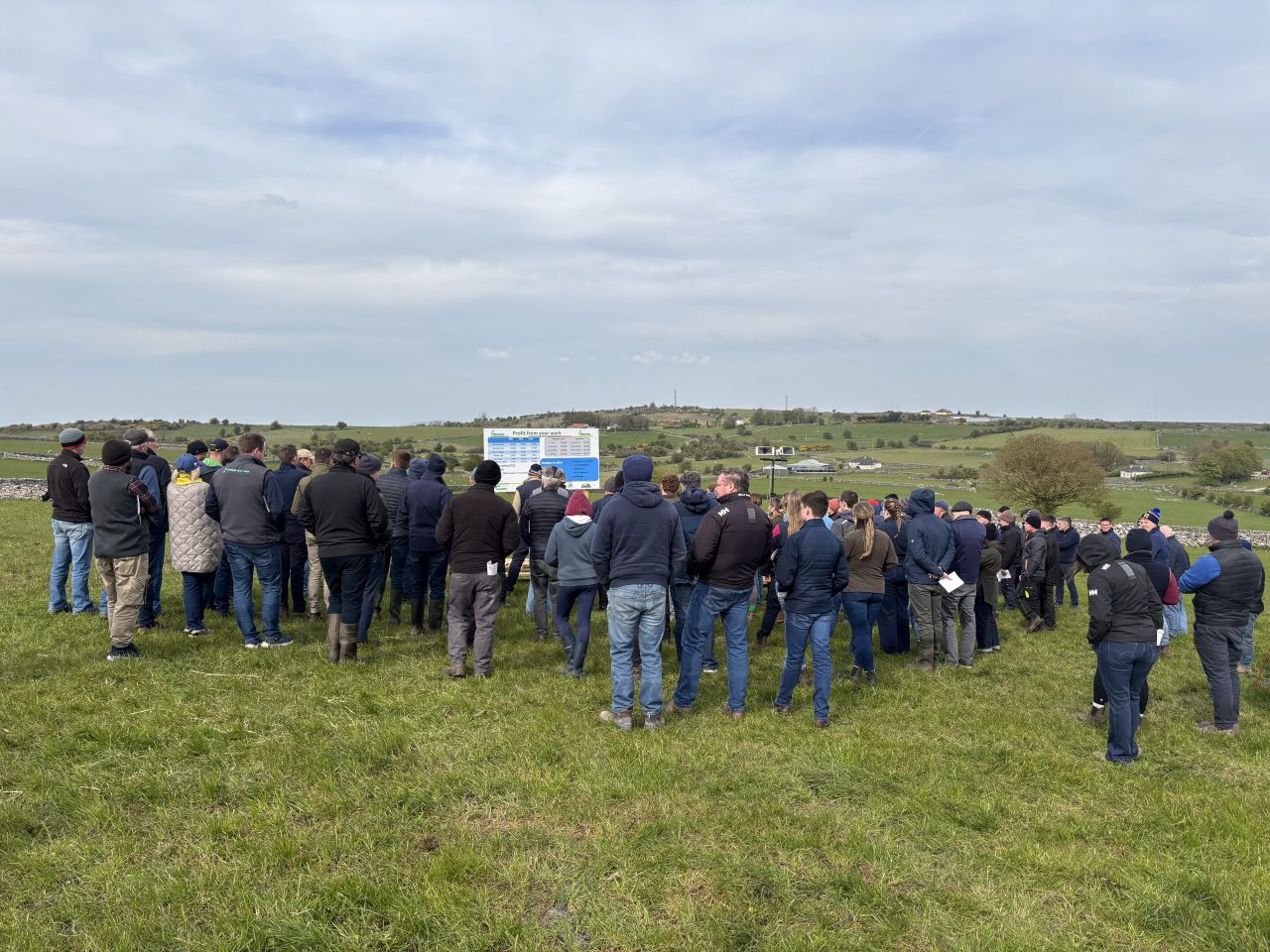
Crowds of farmers and industry personnel gathered at Scrine near Athleague, Co. Roscommon, this evening (Wednesday, April 22) for the Newford Suckler Breeding Open Day.
The event was hosted by Teagasc and project partners DawnMeats and McDonald’s.
The 90-cow suckler calf-to-beef demonstration herd relocated to the Roscommon site from Athenry, Co. Galway at the end of 2023.
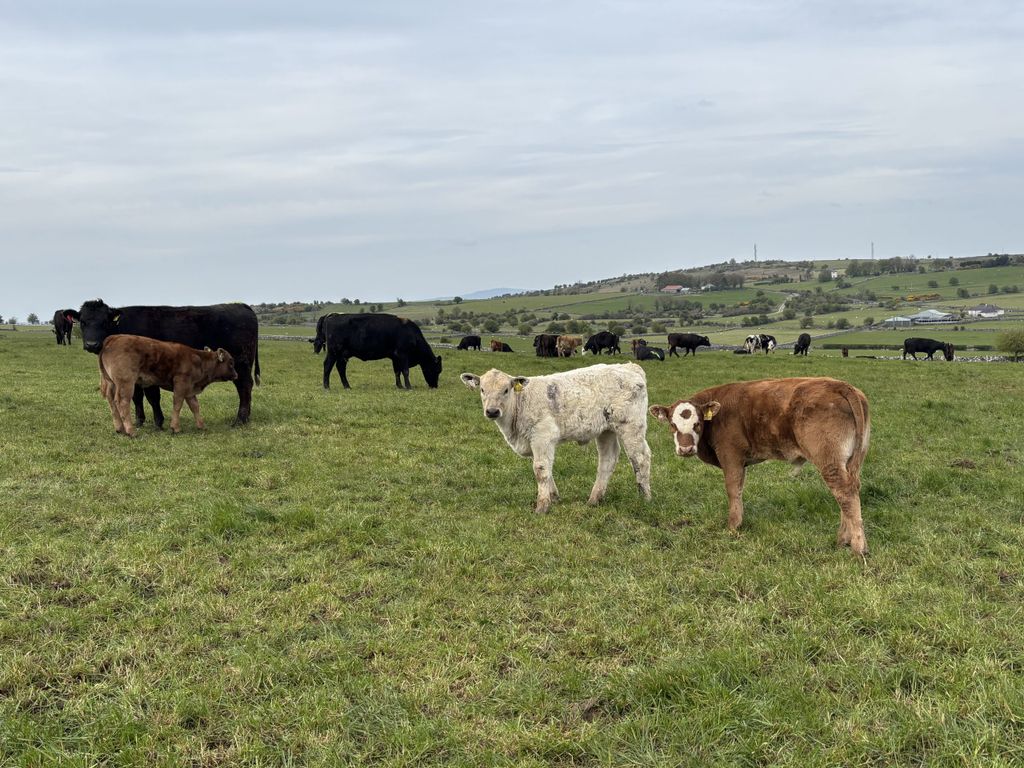
The herd uses 100% Artificial Insemination (AI) with a compact calving pattern and a focus on using 5-star terminal genetics.
The farm size is approximately 75Ha (185ac).
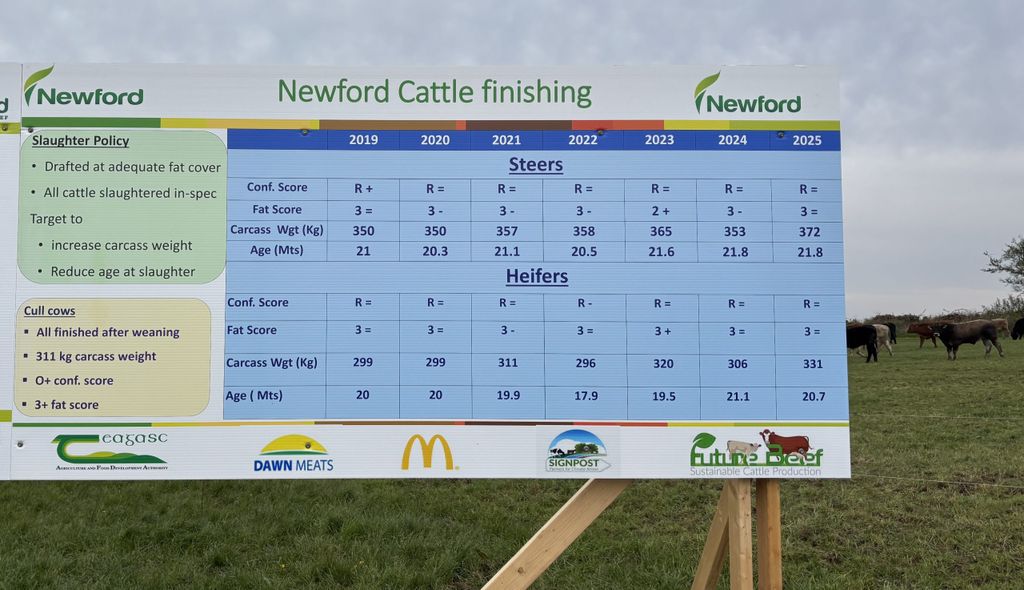
Heifers are drafted for slaughter at approximately 20 months of age and steers at 22 months. The aim is to balance carcass output with control of variable costs.
Average annual heifer carcase weight is generally 300-330kg grading 'R=3='.
Average annual steer carcase wight is generally 350-370kg grading 'R+3'.
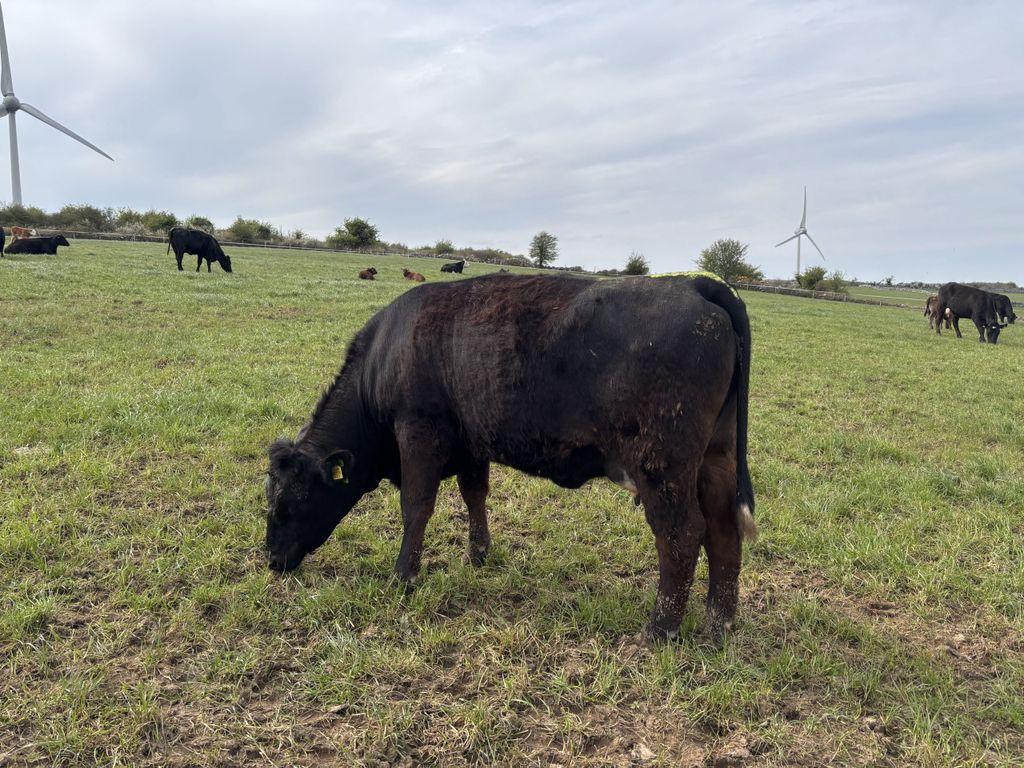
The cow type is predominantly Angus cross Friesian and breeding heifers produce their first calf at 24 months of age.
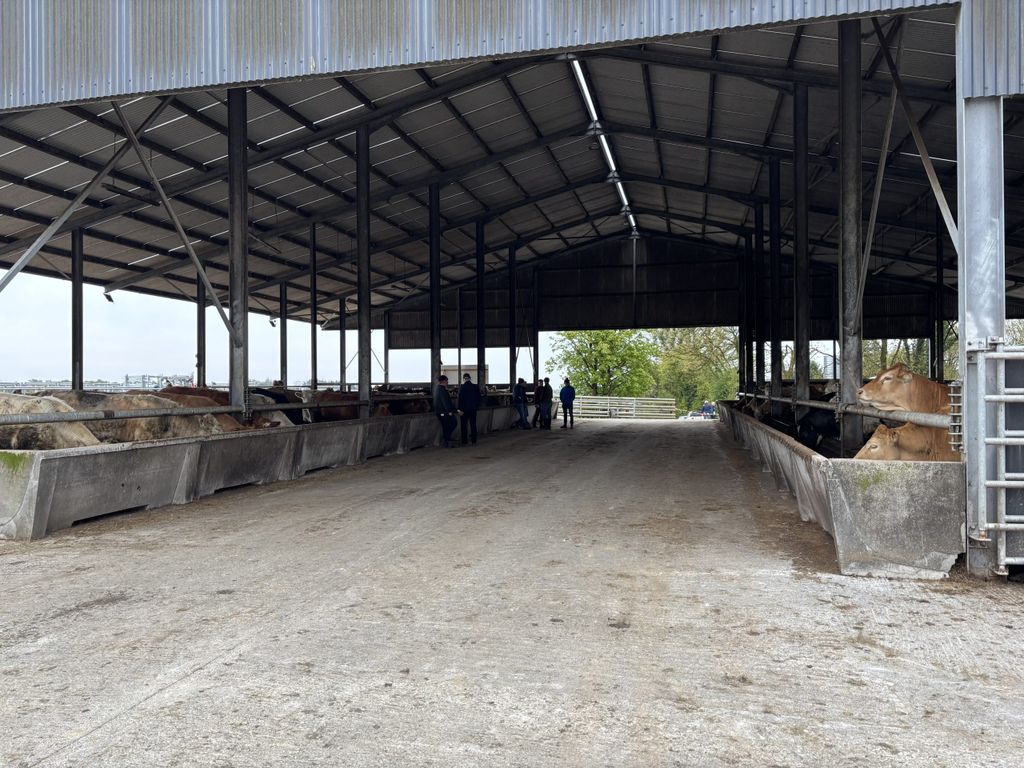
A separate beef finishing unit operates on site and is independent of the suckler demonstration farm that was showcased at the event.
The table below details the profit and loss account for the Newford Farm in 2025:
| Profit and Loss Account | Total (€) | €/ha | €/cow |
|---|---|---|---|
| Gross Output | 285,816 | 3,816 | 3,323 |
| Variable Costs | |||
| Purchased concentrate | 23,004 | 307 | 267 |
| Straw forage | 3,500 | 47 | 41 |
| Fertiliser | 16,166 | 216 | 188 |
| Lime | 5,779 | 77 | 67 |
| Veterinary | 15,203 | 203 | 177 |
| AI/breeding | 7,638 | 102 | 89 |
| Contractor – silage cutting | 25,331 | 338 | 295 |
| Seed and spray | 5,675 | 76 | 66 |
| Silage additive and polythene | 875 | 12 | 10 |
| Levies and transport | 3,847 | 51 | 45 |
| Sundry variable costs | 9,437 | 126 | 110 |
| Total Variable Costs | 116,454 | 1,555 | 1,354 |
| Gross Margin | 169,362 | 2,261 | 1,969 |
| Fixed Costs | |||
| Hired labour | 22,777 | 304 | 265 |
| Machinery running | 11,585 | 155 | 135 |
| Machinery leases | 8,982 | 120 | 104 |
| Loan interest | 6,052 | 81 | 70 |
| E.S.B | 3,334 | 45 | 39 |
| Depreciation | 16,198 | 216 | 188 |
| Repairs and maintenance | 7,645 | 102 | 89 |
| Insurance | 2,150 | 29 | 25 |
| Professional fees | 1,500 | 20 | 17 |
| Sundry fixed costs | 1,807 | 24 | 21 |
| Total Fixed Costs | 82,030 | 1,095 | 954 |
| Net Profit | 87,332 | 1,166 | 1,015 |
| Premia: | 15,722 | 210 | 183 |
| Net Profit (incl. premia) | 103,054 | 1,376 | 1,198 |
The analysis in the table above is completed based on the farm operating within an owned land structure for comparative perspective and therefore in the analysis, land rental costs or farm management-related costs are not included but additional hired labour costs are included.
Similarly, BISS and CRISS payments are not included as part of the financial analysis.
Newford Farm profitability
It was highlighted on the day that the gross output on the farm was significantly higher than in previous years, driven primarily by stronger beef prices.
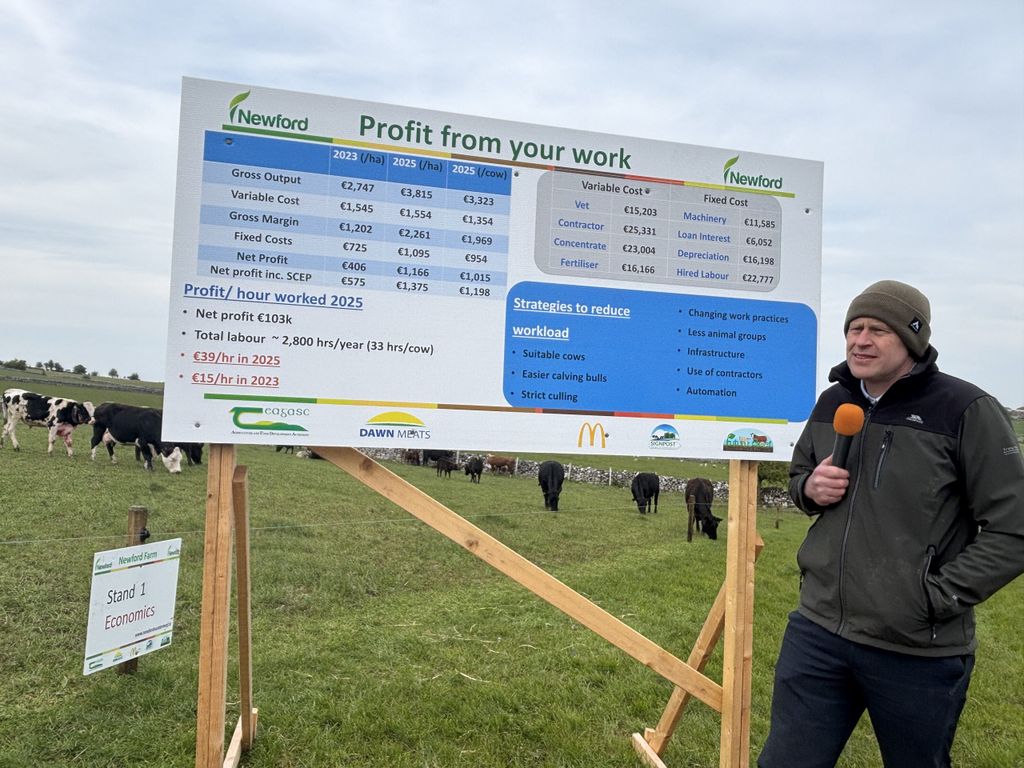
As variable and fixed costs remained broadly stable, the farm achieved its highest-ever net margin in 2025.
The speakers at the event emphasised that the accounts do not include land charges or the cost of a farm manager and therefore, the margin represents the return on the farmer’s own labour and management.
Variable costs
For several years, Newford Farm has focused on extending the grazing season to reduce contractor costs associated with silage making and slurry spreading.
This strategy has continued following the relocation from Athenry to Roscommon.
It was highlighted that to minimise expenditure on purchased feed, there is a strong emphasis on grazing management and silage quality.
Optimising forage quality ensures that concentrate requirements remain low for both finishing cattle and weanlings.
Additionally, the farm has renewed its programme of incorporating white clover into pastures - a policy initiated in Athenry but temporarily disrupted by the move.
This allows the farm to maintain high pasture growth with relatively low nitrogen inputs.
Fixed costs
The most significant fixed cost at Newford is hired labour, which supports the farm manager during peak periods and allows for scheduled time off.
On many suckler farms, this labour is often provided by family members and undervalued as a business input. However, labour remains the most significant input in suckler beef production.
Future plans
Over the coming years, Newford will focus on optimising the return on labour by maintaining high output while maximising pasture utilisation and minimising purchased feed requirements, while minimizing labour input.
The farm has identified and are currently implementing several labour-saving strategies to improve overall efficiency.
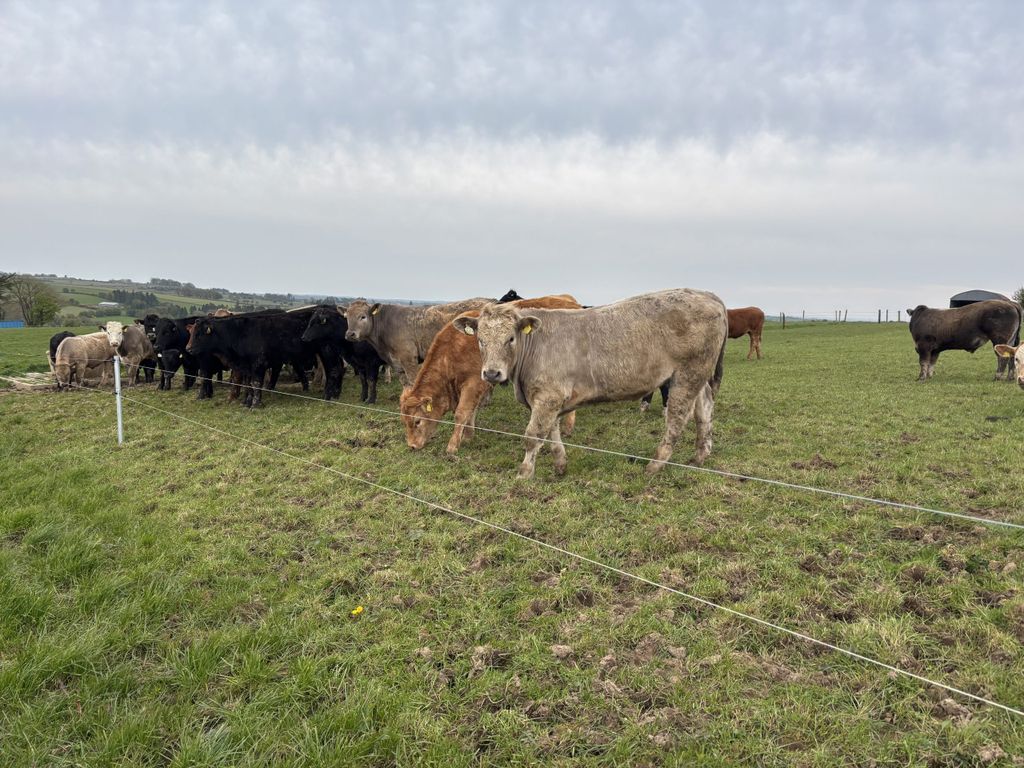
Some of these labour saving strategies include genetics, culling, work practice reviews, infrastructure, outsourcing and automation.
More to follow from Agriland about the Newford Suckler Breeding Open Day.