New workbook 'celebrates the wildlife we have on our doorstep'

By learning about the plants and animals around them, children can develop a sense of care and responsibility for nature that will stay with them into adulthood.
That's according to the chief executive of Longford Council chief executive, Paddy Mahon.
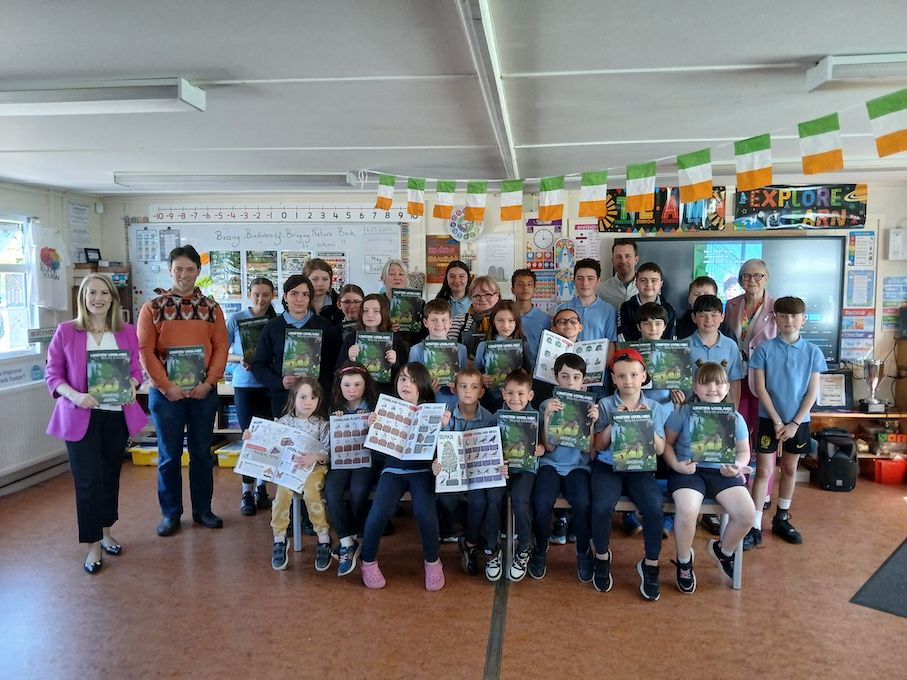
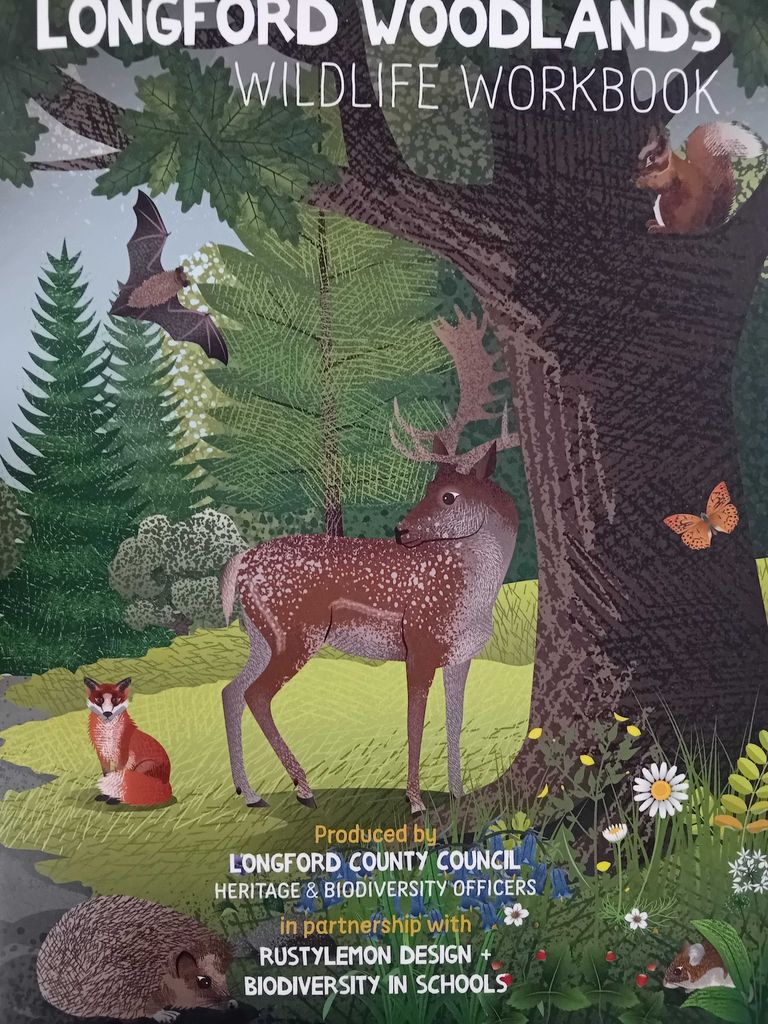
He was speaking at the recent official launch of a new Longford Woodlands Wildlife Workbook at Forgney National School, beside Newcastle Woods, giving the county's primary school pupils a fun and practical way to learn about local wildlife.
The workbook is the second in a county series, following the successful Longford Boglands Wildlife Workbook.
The woodlands workbook focuses on the wide range of species found in Longford’s woodlands, with a balanced look at both native and non‑native plants and animals.
The project was funded by the National Parks and Wildlife Service (NPWS) through the Local Biodiversity Action Fund, with 15% match funding from Longford County Council.
Developed as a hands‑on learning resource, the workbook is designed to support classroom learning while encouraging children to explore and value the natural environment around Longford.
The workbook was created through a local collaboration involving Mary Fleming of Rusty Lemon Designs; Mark Nolan of Biodiversity in Schools; Adam Mulvihill, biodiversity officer with Longford County Council; Martina Needham, county librarian; and Mairéad Ní Chonghaile, heritage officer with Longford County Council.
Cathaoirleach of Longford County Council, Cllr. Garry Murtagh said that the workbook is a real credit to Co. Longford.
"It celebrates the wildlife we have on our doorstep and does so in a way that is engaging, accurate and easy for children to understand," he said.
"It is especially encouraging to see local creativity and expertise at the heart of the project, from the artwork to the biodiversity content.”
County council CEO Paddy Mahon said that woodlands support biodiversity, but are also part of our biodiversity in their own right.
"This workbook helps young people to see that clearly," he added.
The launch location highlighted the close link between the workbook and the real landscapes it explores, reinforcing the message that nature learning begins close to home, the organisers said.