Landowners slam greenway policy at committee hearing

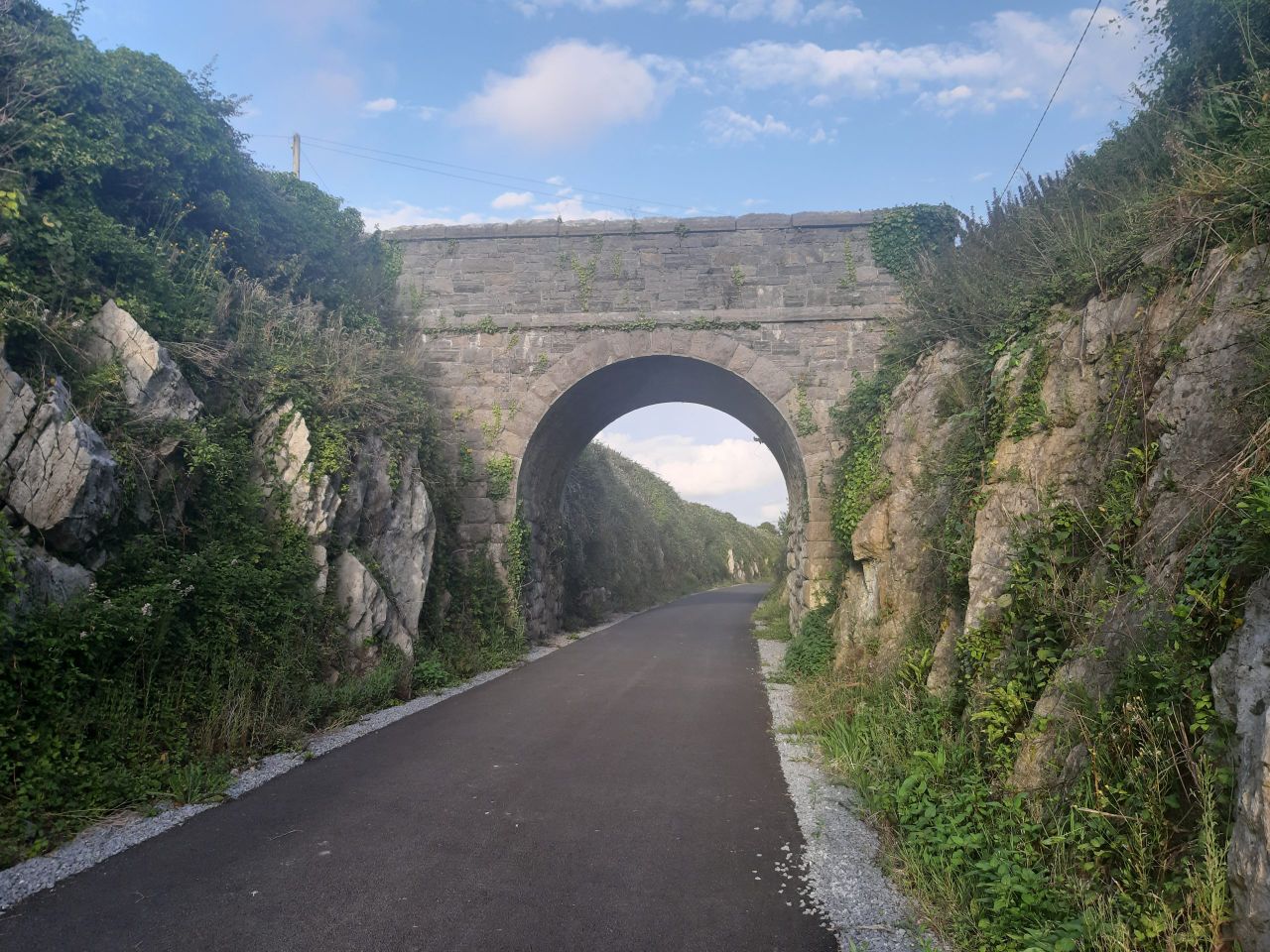
There should be "no CPO" (compulsory purchase orders) for recreational greenways across private farmland or family homes, farmers and landowners urged today (Wednesday, May 6)
The National Greenway Action Association (NGAA), the Irish Farmers' Association (IFA) and the Irish Natura and Hill Walkers Association (INHFA) met with the Joint Committee on Agriculture and Food this afternoon to discuss current greenway policy and legislation.
NGAA chairperson Cleona O’Shea described greenways as “recreational” and said that such amenities “should not be forced through private farms against the will of the people who own, work and live on that land”.
O’Shea continued: “We are not opposed to walking, cycling, tourism or community amenities.
“We are opposed to private farmland and family homes being targeted, pressured or threatened with compulsory purchase for recreational greenways.
“A greenway is not essential infrastructure. It is a recreational amenity.
“That matters, because recreational amenities should not be forced through private farms against the will of the people who own, work and live on that land.”
O’Shea stressed that, for farmers, land is “not spare ground”.
She said: “It is the farm business, the home place, the security for lending, the inheritance plan, the drainage system, the paddock layout, the machinery route and the livestock movement system.
“When a greenway is drawn through a farm, the damage is not limited to the strip taken.
“It can split the holding, break grazing blocks, interfere with cattle movement, damage drainage, restrict machinery access, reduce privacy, increase safety risk, create biosecurity exposure and devalue the retained farm.”
That, she said, is why landowners are angry.
She added: “They are not angry because the public wants a walkway.
"They are angry because the state is treating private productive land as available unless the landowner can prove otherwise.
“That is backwards.”
Code of Best Practice
O’Shea also referred to the Code of Best Practice for National and Regional Greenways, which she said “talks about consultation, public-land use, fair treatment and accommodation works”.
“But landowners are seeing routes gather momentum before proper engagement, private farmland pursued before public options are exhausted, survey pressure, consultant pressure and, behind it all, the threat of CPO.
“A code without enforcement is not protection. It is only paper.”
INHFA
Pheilim Molloy, national chair of INHFA, said: “For greenway projects to succeed in the long term, they must be built on meaningful collaboration and mutual benefit.
“Where routes traverse private land, farmers must be recognised as equal partners in the conception, design, and ongoing management of these projects.
“This partnership model ensures that greenways contribute not only to the wider tourism economy but also to the sustainability and viability of farm enterprises.”
He added that permissive access agreements or lease arrangements are the “preferred mechanisms for securing land use”.
Molloy said: “These approaches allow farmers to retain ownership, maintain their livelihoods, and actively participate in the greenway's success.
“In contrast, land acquisition by state bodies removes farmers from the equation, erodes goodwill, and reflects a lack of trust in rural communities’ ability to co-deliver high-quality infrastructure.”
Early consultation
Molloy added that consultation "must begin at the earliest conceptual stage of any proposed greenway - not after routes have been selected or funding allocated".
“A clear, transparent protocol is required to ensure that all stakeholders, particularly landowners, are informed and engaged from the outset.
“This process must include structured meetings with open dialogue and question-and-answer sessions, rather than passive ‘drop-in’ formats that fall short of genuine consultation," he said.
IFA
Paul O'Brien, infrastructure project team chair at IFA, noted that approximately 60 greenway projects are presently being worked on by county councils and consultants nationwide, "with a combined proposed length of around 3,000km".
"Many of these proposals are already creating significantuncertainty and concern among rural families, farmers, and communities.
"Using TII’s indicative estimate of €2 million per kilometre, the potential overall cost could be in the region of €6 billion. This contrasts sharply with TII’s current annual greenway budget of approximately €60-€65 million," he continued.
According to O'Brien, this highlights the "absence of a clear, budget-led approach" to greenway planning and prioritisation.
He said: "In practice, many of these projects are unlikely ever to be delivered, yet they continue to progress through planning stages, generating unnecessary anxiety and disruption in rural areas.
"A more structured, budget-led framework should be considered as part of the government review, ensuring that projectambition is aligned with realistic funding, prioritised delivery, and certainty for landowners."