Geopolitical crises have 'challenged assumptions on food security' - minister

Recent geopolitical crises have "challenged established assumptions on food security", Minister for Agriculture, Food and the Marine, Martin Heydon has said.
Minister Heydon was responding to questions from Independent Ireland TD Michael Collins, who asked if the Department of Agriculture, Food and the Marine (DAFM) has carried out an updated assessment of Ireland's food security in light of ongoing international conflicts.
These include instability in the Middle East and Ukraine, and the associated disruption to global food, fertiliser and energy markets, deputy Collins said.
Food security
Minister Heydon said that Ireland is one of the most food secure countries in the world, ranking second of 113 countries assessed for food security, according to the Global Food Security Index.
"Furthermore, the Teagasc Sustainability Report 2024 finds that Irish dairy, cattle, tillage and sheep farms produce protein sufficient to meet the requirements of over 36 million people, or 30 million people on a net basis," the minister said.
"However, recent geopolitical crises have challenged established assumptions on food security."
He said that the Common Agriculture Policy (CAP) and the EU single market are the "critical mechanisms for ensuring food security" in the EU.
"The government will continue to support farmers as we make payments under Ireland’s €9.8 billion CAP Strategic Plan and via specific supports, as required," Minister Heydon said.
"I will continue to engage actively and constructively in negotiations concerning CAP post-2027 to ensure that the agri-food sector in Ireland and Europe continues to benefit from an ambitious, workable and adequately-funded CAP that balances economic, social, and environmental sustainability and underpins food security."
Preparedness
Minister Heydon said that the EU Agriculture and Fisheries Council of Ministers, of which he is a member, "continues to support the work of the European Food Security Crisis preparedness and response Mechanism (EFSCM).
"The EFSCM was established in 2021 to monitor and respond to threats to EU food supply and security, including implementation of mitigation measures," the minister said.
"To date, four reports on the State of Food Security in the EU have been published, and a food supply and security dashboard has been developed to monitor evolving risks to food security and supply."
Food Vision
The minister said that Ireland's approach to delivering sustainable agriculture and food is set out in Food Vision 2030 strategy.
"I recently announced a mid-term review of Food Vision 2030, and food security will be among the issues to be considered," he said.
"Prolonged elevated energy prices and increasing input costs are a concern.
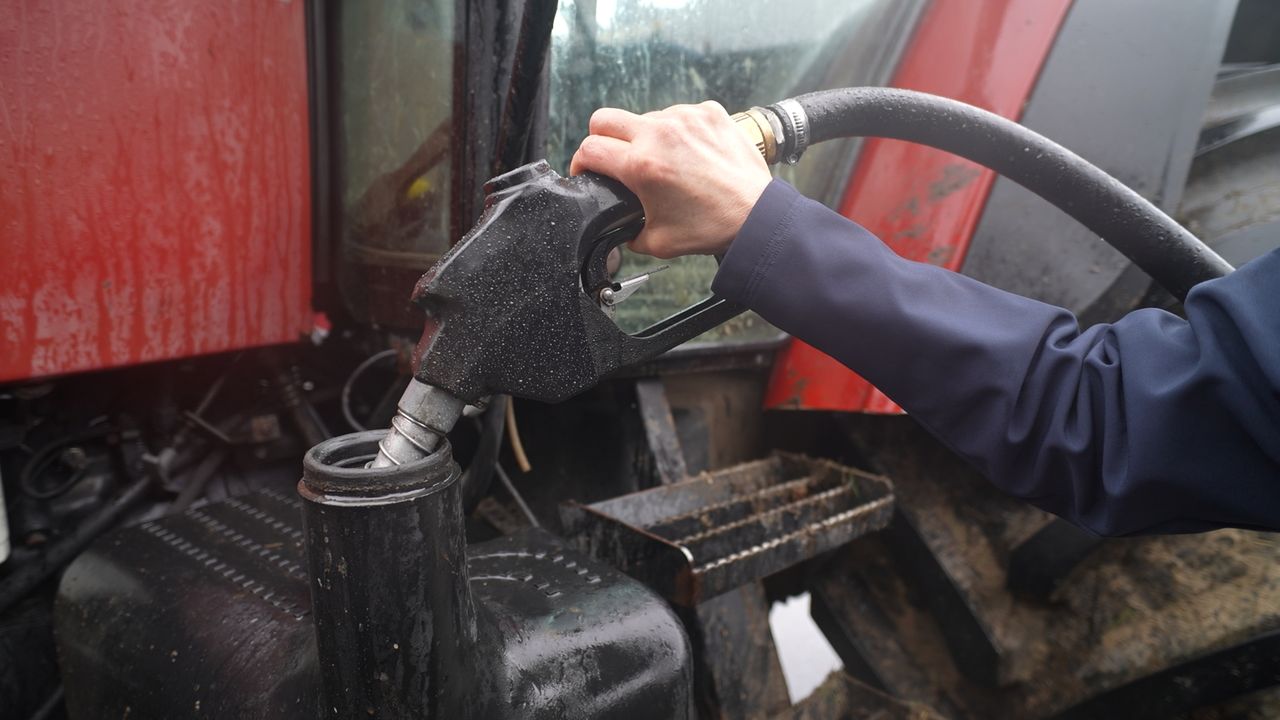
"The government recognises the exceptional pressure that rising fuel costs are placing on our farmers, contractors and fishers.
"A substantial support package for green diesel has been put in place, with the full removal of all non-carbon excise of 7.4c/L, and a further payment worth up to 20c/L through a €100 million Fuel Support Scheme."
Minister Heydon said his department will "continue to remain vigilant" of input price trends and will "engage across government on the evolving situation".
Irish food production
TD Michael Collins also asked the minister if, given that the spring growing season is already underway, he will introduce immediate measures to incentivise expanded domestic planting of staple crops in 2026.
He also asked Minister Heydon his views on "whether increased investment in Irish food production should be treated as a strategic national priority to improve resilience, reduce import dependence and support rural employment".
Minister Heydon said that government "recognises the exceptional pressure that rising input costs are placing on tillage and horticulture producers" and has put in place numerous supports for growers.
Import substitution
According to the Central Statistics Office (CSO), since 2016, imports of vegetables have increased by 12%, from 354,638 tonnes in 2016, to 467,045 tonnes (provisional data and subject to revision) in 2025, an increase of 112,407 tonnes.
At the same time, population estimates from the CSO show an increase in the overall population by 13% in the same period, Minister Heydon said.
The minister said that Teagasc is leading, with the support of DAFM, on "identifying import substitution opportunities for the Irish edible horticulture industry".
Ireland continues to produce potatoes at scale, with "sufficient supplies in some market segments and deficits in others", Minister Heydon also said.
"Irish growers still have quantities of rooster potatoes in store from last season. Potato imports for 2025 were mainly chipping potatoes in which Ireland is not self-sufficient," he said.
"Bord Bia has invested significant efforts to stabilise a trend of declining potato consumption with EU-funded and exchequer-funded campaigns, including the annual National Potato Day celebration in October.
"Furthermore, since the early 2020s, Bord Bia has been working to grow awareness of and the market for the Irish chipping potato."
He said the department has provided support to the potato sector to diversify into growing chipping potatoes, in part through the Schemes of Investment Aid for the Seed Potato Sector and Chipping Potato Sectors in 2022 and 2023.
"More recently further supports have also been provided through the Scheme of Investment Aid for Innovation and Diversification in Horticulture Capital Investments to enable growers to diversify into salad and baby potatoes where consumer demand is also growing," Minister Heydon added.