Knitting tutor warns that Irish wool 'is at a crossroads'

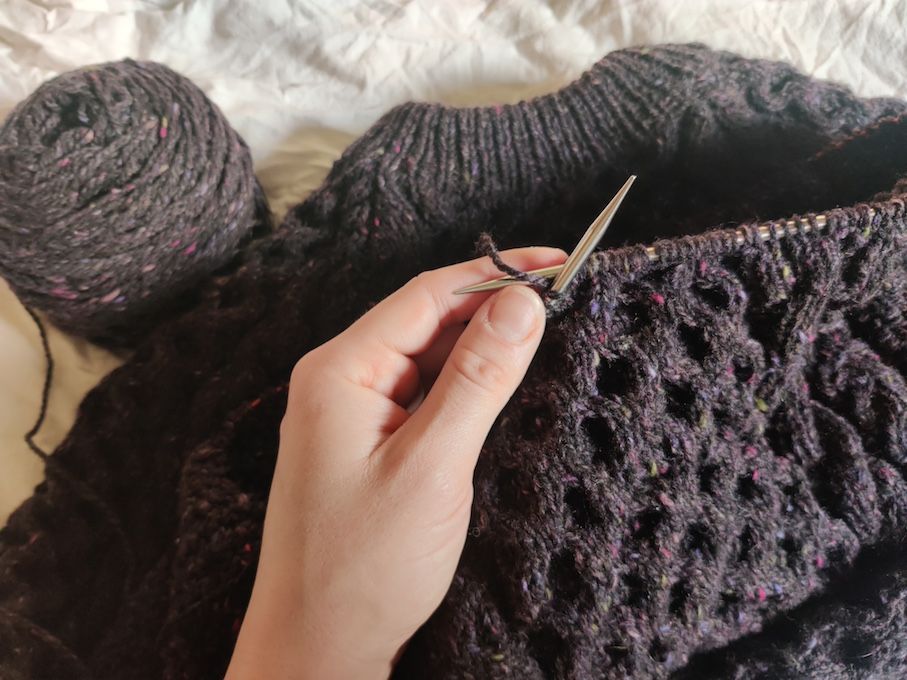
Right now, Irish wool is at a crossroads, according to Eimear O'Neill, tutor of a new course on knitting at the Organic Centre in Leitrim.
The decline of the Irish woollen industry and loss of wool as a valuable income for hard pressed farmers is a real issue, she said.
"Shearing costs more than farmers get from selling the wool so many of them end up with bags of fleece sitting in storage without a purpose," Eimear contended.
"New breeds of sheep that naturally shed their wool are becoming increasingly popular. Wool is on its way to becoming obsolete.
"This is one of the few areas where we as individuals can really make a difference. In fact, I believe the wool industry can only be saved at a grassroots level, by local people using local wool.
"We need to take action. We need to start valuing Irish wool, and using it. We need to spin it, knit it, and wear it," Eimear said.
The new course at the Organic Centre could open up minds to knitting and the need to support the woollen industry, she said.
A passionate knitter of 15 years, she sees knitting as having a role in dealing with a host of current problems in Ireland today from the cost of living crisis, poor mental health, and the climate emergency.
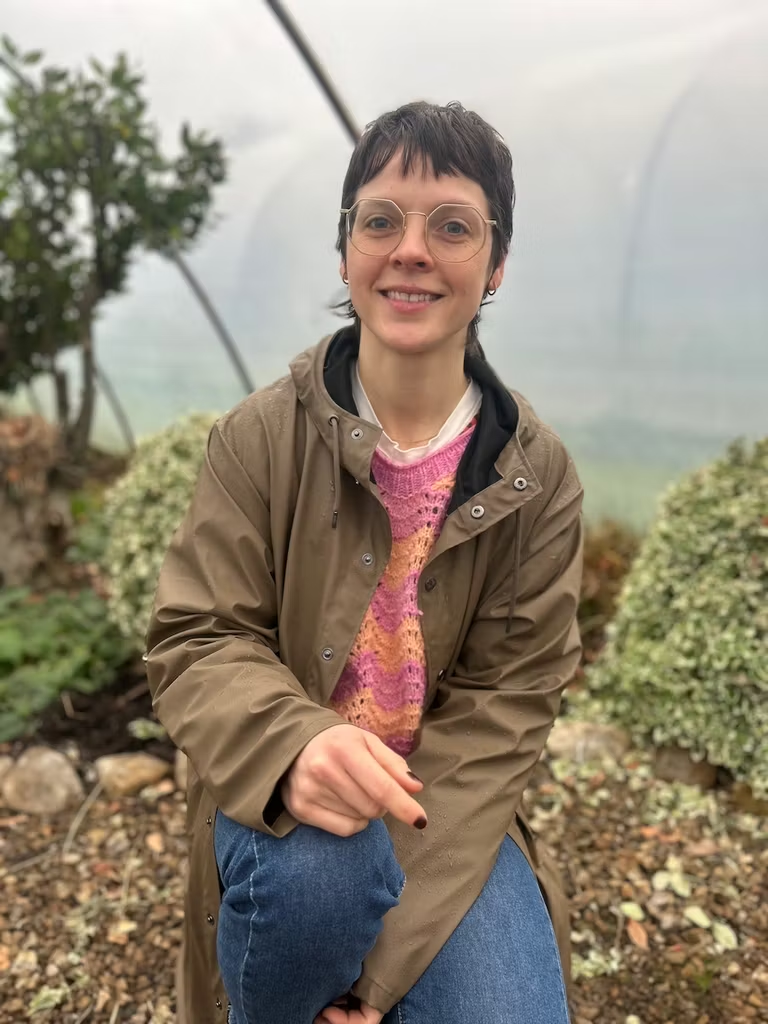
"In 2026, we are dealing with increased heating costs, shorter attention spans, mental health challenges, exploitative fast fashion and an Irish wool industry that has completely collapsed. Knitting touches all of these problems," Eimear said.
"Knitting has always been part of our heritage.
"From the iconic Aran jumper, the water resistant nature of the wool - a big advantage for fishermen - to women's traditional hand crafts, such as spinning, weaving, knitting, embroidery and crochet that were commonplace in most households and a crucial part of rural family life," she said.
Using wool from sheep, weaving and knitting socks, sweaters and blankets was a cost-effective and sustainable way to keep the family warm, according to Deirdre Foley of Trinity College Dublin.
Often rural women drew on domestic production to bring extra cash into the home, but these practices started to decline at the turn of the 20th century, said Deirdre.
Eimear despairs at the movement away from the quality woollen products that were so familiar in Irish homes.
"Today, most of the knitwear available in shops is made of plastic, and many Irish people don't own a single woollen item of clothing.
"In the past, this would have been unheard of. Our ancestors wouldn't have survived without wool.
"Plastic knitwear doesn't maintain warmth like wool. That's why so many people feel like the cold goes through them on a winter's day.
"They've forgotten or maybe never experienced the toastiness of being wrapped in wool," Eimear said.
In an era of consumerism and resulting impact on the climate she also notes that so much of the inherent value of clothing is lost due to the frenzied turnover of clothes on the shelves."Nowadays, fast fashion has become so accessible that we've given up this skill of providing for ourselves," she said.
"And while shopping for clothes is convenient, manufacturers have been working to make clothes cheaper and cheaper, so that in the end, the options available to us are lower quality than ever.
"Many of us want to go back to wearing high quality, natural materials, and find that knitting gives us a more affordable way to do that'," Eimear added.
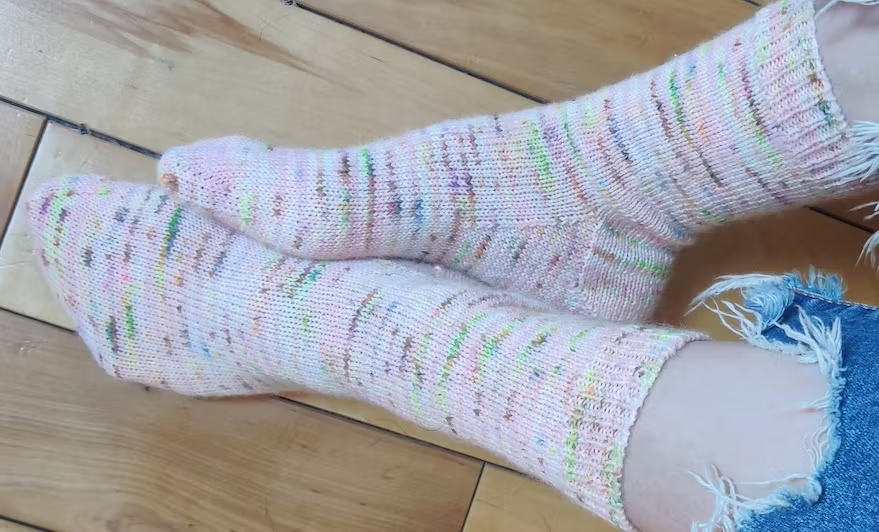
She also is a firm believer of the value of knitting to protect mental health.
"Knitting is good for our minds. It's a meditative, rhythmic, sensory pleasure to spend time fidgeting with soft and squishy yarn.
"The repetitive motions help us slow down and focus on the here and now.
"People have quit smoking, drinking and scrolling on their phones by keeping their hands occupied with a pair of knitting needles.
"Their new knitting habit results in something useful they can wear, and that is a great accomplishment and a real boost to their self esteem," she said.
She noted that people often tell her they do not have the patience for knitting, or cannot find the time for it.
"But any knitter will tell you that knitting doesn't take patience, it gives you patience.
"Delays and waiting rooms can be our favourite part of the day if it gives us a chance to knit a few more rows on our latest project," she explained.
Eimear's 'Knitting for beginners' course will start on Saturday, May 2, and can be booked on the Organic Centre's website.
She will also facilitate a wool hand spinning course at the Organic Centre in October.