Irish beef loses UK market share to Australian and Brazilian imports

Stark warnings were issued today (Wednesday, May 27) that the UK beef market has shifted dramatically, undermining Ireland’s once-dominant position as the supplier of almost 80% of all UK beef imports.
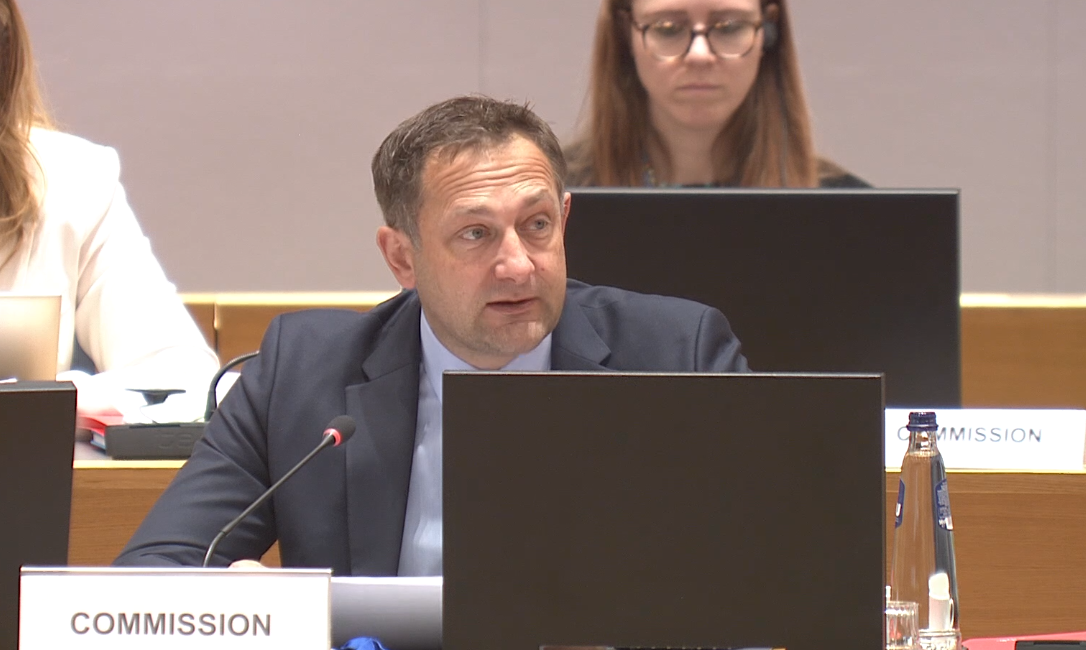
Philip Carroll, chair of Meat Industry Ireland (MII), the sector association which represents primary beef, pork and lamb processors, today highlighted that Ireland's share of the UK market fell to 67% in 2025.
Carroll told the Oireachtas Joint Committee on Agriculture and Food that Ireland is "more vulnerable" to lower cost product coming into the UK market.
The UK’s post-Brexit free trade deals with Australia and New Zealand - combined with rising Brazilian imports - have significantly changed the landscape for Irish beef exports.
Carroll said: "Australian beef imports into the UK have surged by over 400%, offering a significantly lower-cost alternative to Irish grass-fed beef.
"There is little scope for us to price ourselves out of this market, nor can we diversify to greener fields where none exist".
He also highlighted that in relation to the UK market, exports rose in value by 25% to €1.6 billion last year - which represented 47% of total market value, despite a decline in UK beef imports.
However, according to the MII chair as UK retail prices rose last year, demand in turn fell - volumes were down 7.2% towards the end of the year, according to Carroll.
"High prices effectively stalled beef demand across retail and food service.
"Meanwhile, imported beef from Australia, New Zealand, and Brazil gained market share," he added.
According to the MII chair, in relation to the UK, the beef industry is "facing a carcass imbalance driven by consumer behaviour".
Beef exports
Committee members were told today that the Irish beef sector is export-led, with 90% of production sold in international markets.
According to the MII chair, overall exports last year soared to €3.5 billion - up 23% on 2024, although volumes were 40,000 tonnes below the average of the past decade.
Carroll said this increase was driven by "short-term inflationary market conditions".
He detailed that exports to EU markets rose by 28% which delivered a further €1.6 billion last year with demand greatest for for forequarter, mince, and manufacturing beef, while higher-value primal cuts declined.
However exports to other international markets fell to €135 million as Carroll said "buyers focused on sourcing closer to home".
He added: "This reflected a widening price gap between Ireland and the EU compared with international suppliers".
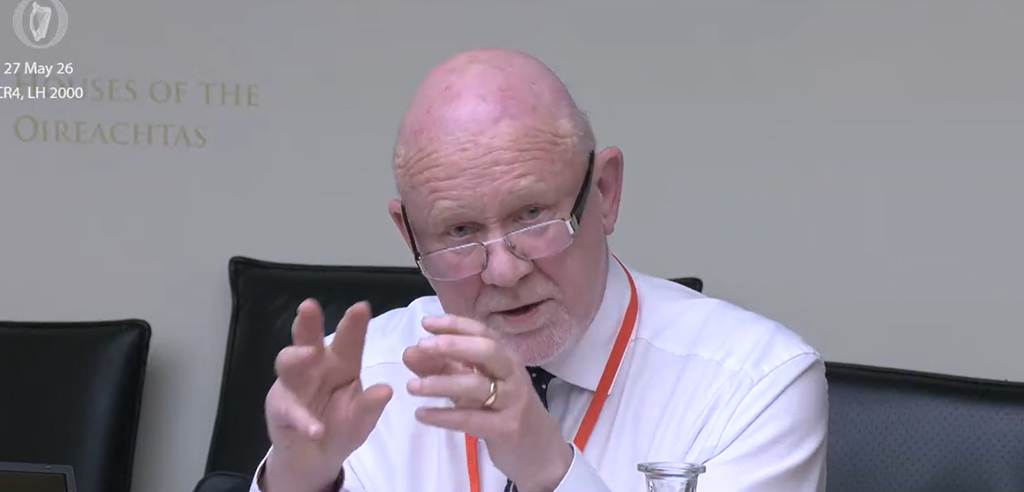
Committee members voiced concerns to the MII chair and its director Dale Crammond and Síle Sweeney, senior executive with the industry group, about cattle kill numbers and the prices farmers are getting paid.
Carroll told senators and TDs that farmers "deserve to be fairly rewarded" and that this was "reflected in the historically strong cattle prices seen in recent years, especially in 2025".
But he also told the committee that "beef processing is a high-volume, low-margin business".
"When throughput drops by 19%, fixed costs per unit, including labour, energy, refrigeration, transport, and regulatory compliance, increase sharply.
"Running a plant at 80% capacity is significantly less efficient and more costly than running at 100%.
"Despite these pressures, the Prime Irish Composite Beef Price closely tracks the Export Benchmark Price.
"This demonstrates that Irish cattle prices are on a par with our European competitors despite the additional cost of exporting 90% of our beef output internationally," he added.
The MII chair warned that cattle prices are now "under intense pressure from shifts in consumer spending and aggressive new trade competitors".