Ireland saw second highest EU spike in fertiliser prices in Q4 2025

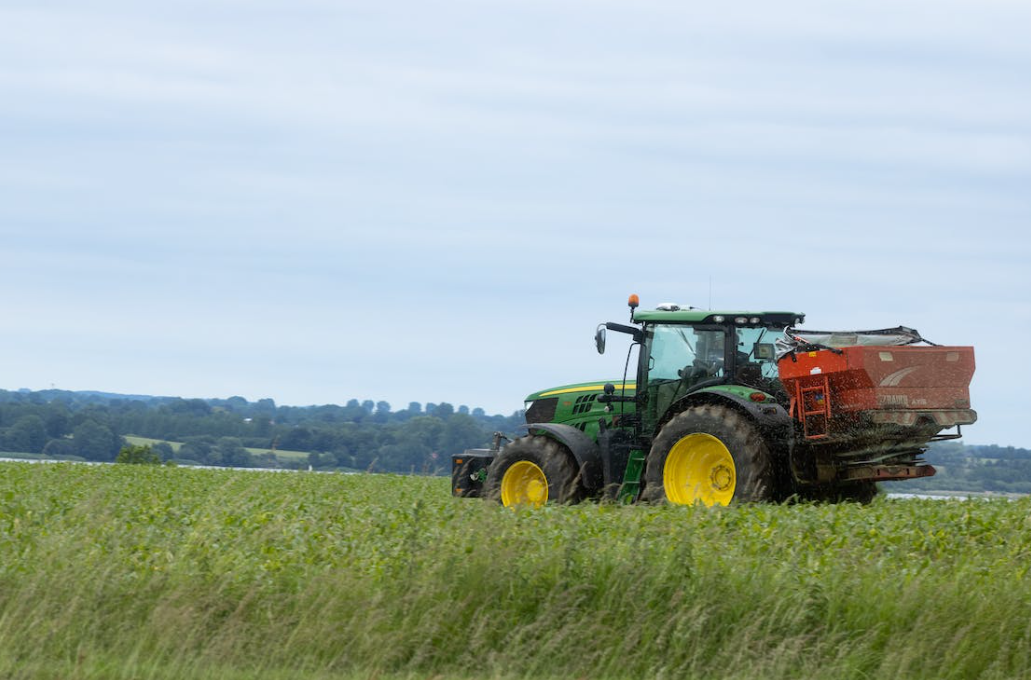
The average price of fertilisers and soil improvers in the EU rose by 8% in the fourth quarter (Q4) of 2025, compared with the same period in 2024.
That is according to the latest data published today (Tuesday, May 19) by Eurostat.
The statistical office of the European Union noted that fertiliser prices surged in 2021 and 2022 before declining in 2023 and 2024.
In 2025, Eurostat said prices increased again for four consecutive quarters.
Fertiliser
The data shows that during the final quarter of 2025, increases in fertiliser and soil improver prices were recorded in 24 of the 27 EU countries.
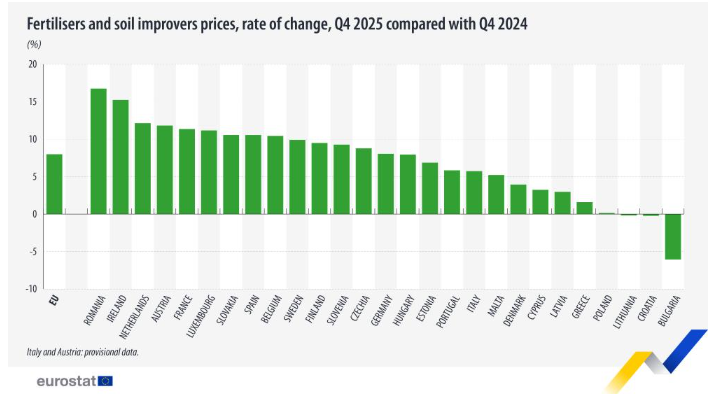
The sharpest increases were registered in Romania, where prices jumped by 17% in the year since Q4 2024.
Ireland recorded the second highest price increase in the EU in Q4 2025, with the cost of fertiliser up 15.3% compared to a year previously.
In the Netherlands, the cost of fertiliser and soil improvers rose by 12.1%.
Eurostat noted that prices fell in Bulgaria by 6.1%, while there was a more marginal decrease in Croatia and Lithuania (both -0.2%).
EU Commission
The data comes as the European Commission will today unveil its plan to address the soaring fertiliser prices driven by the war in the Middle East.
According to the commission, overall EU nitrogen (N) fertiliser prices in April 2026 were around 70% above the 2024 average and up around 40% compared to February 2026.
The Middle East, and in particular the Strait of Hormuz which has been closed as a result of the conflict, accounts for up to 20-30% of global exports for ammonia and urea.
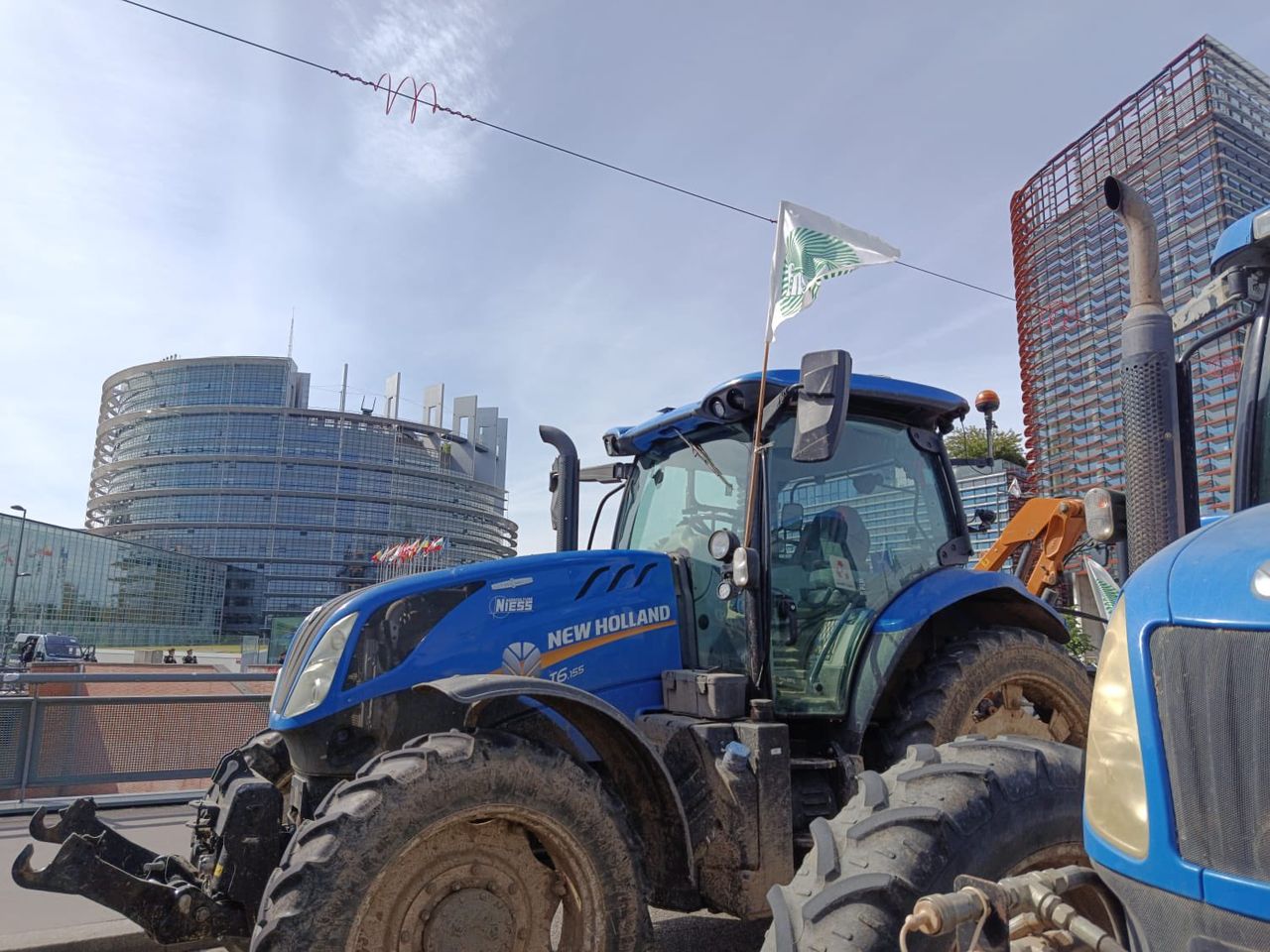
However, European farmers have expressed scepticism ahead of the launch of the plan.
Copa Cogeca, which is holding a 'flash action' in Strasbourg today, said the EU Fertiliser Action Plan is "unlikely to meet the expectations of the European farming community".