Immediate management priorities for wheat and winter oats

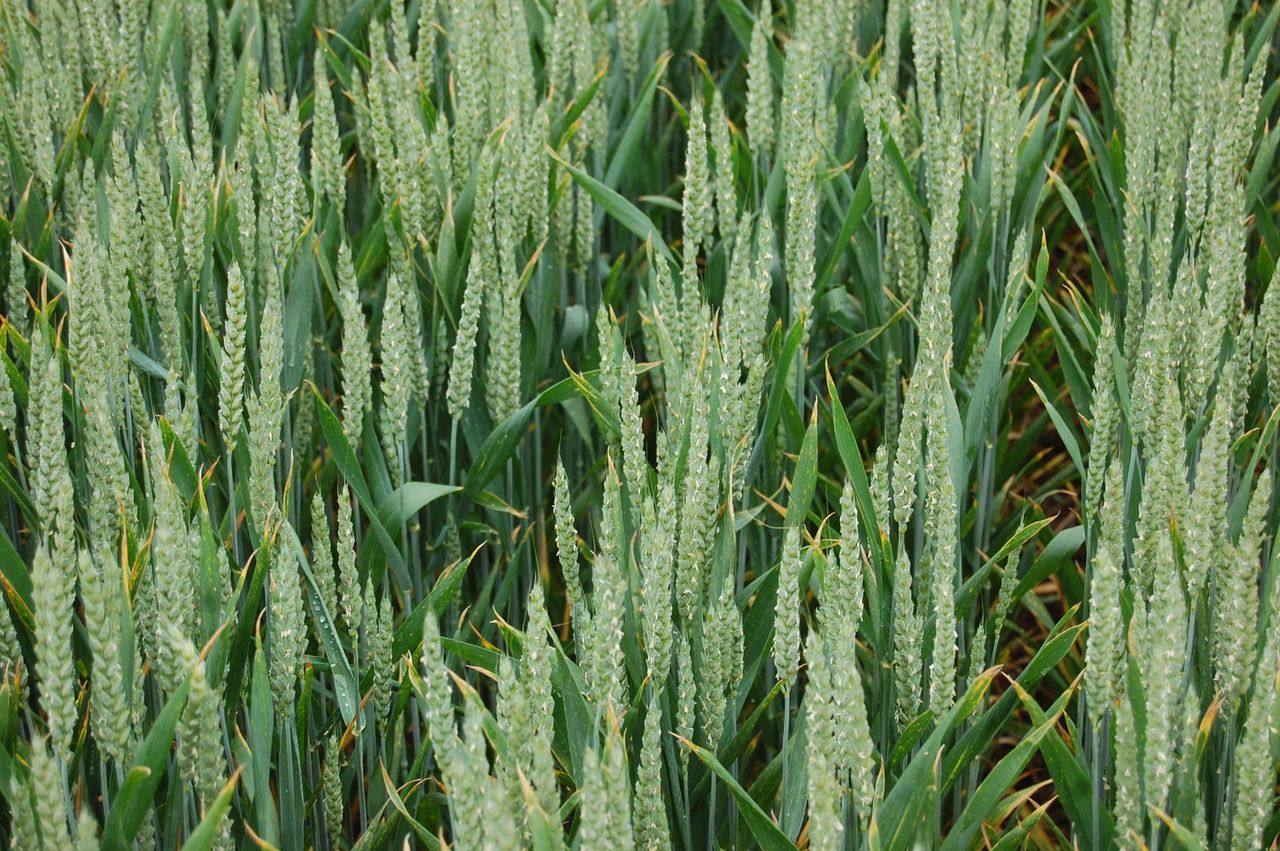
Teagasc tillage specialists are confirming that winter wheat and oats will need a lot of attention over the coming days as crops try to build a big and disease-free canopy to catch as much light as possible.
Worthy of particular note is the fact that 75% of wheat varieties planted last autumn are susceptible to yellow rust, so this will need to be watched.
Where fertiliser nitrogen (N) is concerned, growers should apply the main application now before growth stage (GS) 32 is reached.
This generally equates to half the total amount of N for the crop if a three-split programme is being used and is typically in the range of 100-125kg/ha (80-100 units/ac).
The third split should be applied at the flag leaf stage.
A plant growth regulator (PGR) should be applied by first node (GS 31).
Options here include CCC 75% (2L/ha) plus the adjuvant, K2 (1.8L/ha), CCC (1L/ha) + Moddus (0.2L/ha) or Meddax Max (0.2kg/ha).
Initial fungicide applications on wheat should have a strong yellow rust focus.
Given this backdrop a T0 (Leaf 4) application is strongly recommended.
Despite the wet weather, there have been reports of yellow rust already in Champion mainly, but also in some of the other susceptible varieties.
Options include tebuconazole and pyraclostrobin.
The Leaf 3 or T1 spray should be applied when the third last leaf is fully emerged.
Growth stage may not be an accurate indicator of the actual leaves present in the crop so dissecting plants and identifying the correct leaf to apply the fungicide is critical for optimum septoria control.
In many crops this could still be very late April or early May before the timing is correct even after the mild spring.
Fungice spray chemistry options here include: Folpet 1.5L/ha or Sulphur e.g., thiopron and revystar XL, Univoq, Jessico One, Ascra Xpro.
Winter oats
Winter oats have progressed reasonably well given the weather with most crops around GS 30 by the first of April.
Disease levels, especially mildew, are relatively low, but as usual include a fungicide that will control mildew.
All crops should receive their full N application by first node.

Growers should not apply more than 150kg/ha as this will increase lodging pressure and trials from Teagasc Oak Park, Carlow also indicate that it will reduce yield and quality.
Best growth regulation in winter oats is achieved when crops are at second node (GS 32-33).
Options include of CCC 75% (2L/ha) or Ceraide (1.4L/ha) or CCC (1L/ha) and Moddus (0.2L/ha) or Meddax Max (0.2kg/ha).
Disease control should start early with the first signs of mildew with the first two applications generally coinciding with the use of a PGR.
Options include: Talius (0.2L/ha) +/- proline (0.5L/ha), Fezan (0.5L/ha) + Midas (0.25L/ha).