How to get best use out of liquid fertilisers

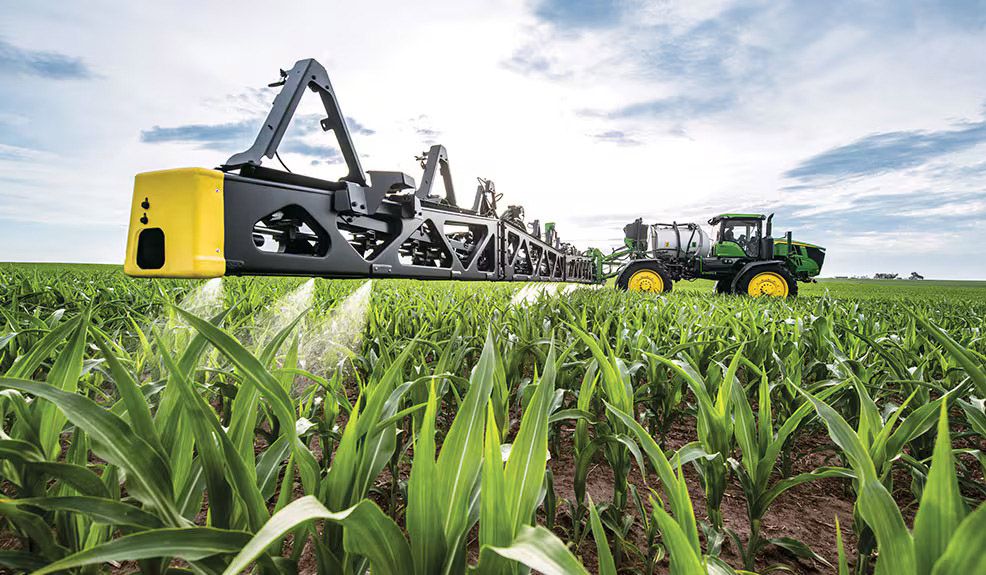
According to Teagasc, liquid fertilisers represent a highly efficient way to drive crop performance under Irish growing conditions.
As a consequence, their use within the tillage sector continues to grow.
When applied in the correct conditions, they represent an effective alternative to granular nitrogen sources and can offer a lower nitrous oxide emission factor compared to Calcium Ammonium Nitrate (CAN) in certain systems.
However, poor application practice can lead to leaf scorch, particularly where nitrogen sits and concentrates on the leaf. Paying attention to conditions and technique is essential.
Application practice
Application can be more flexible than often assumed, Teagasc said.
Liquid fertiliser can be applied when the crop is wet or in light rain, or even in dry conditions, provided other risks are managed.
Avoid situations where the crop is just damp and drying or is frosted, as this can leave a smear of nitrogen on the leaf, increasing uptake and scorch risk.
Spraying in wind is not a problem where streams are not being deflected. However, once fine droplets begin to feather or drift, application quality drops and the risk of uneven coverage rises.
Meanwhile, keeping forward speed slow and pressure low helps maintain larger droplets and even distribution.

Early morning or evening applications are safest to avoid the heat of the day.
Where large temperature swings of 20°C are expected, applications should also be avoided. Weather conditions of this type are quite common during the April/May period
For cereals, growers should aim to complete applications by Growth Stage 32 and avoid applying to the flag leaf or leaf two, where scorch can directly impact yield.
In terms of sequencing, apply the liquid nitrogen first, followed by agrochemicals, leaving at least a two-day gap.
Applying fungicides first can soften or de-wax the leaf surface and increase nitrogen uptake, raising scorch risk. Where agrochemicals are applied first, leave at least five days to allow the leaf recover.
Fertiliser phosphate
Fertiliser phosphate can also be added to crops in liquid form.
Trials in the UK have shown that the nutrient can be applied to newly established winter cereal crops at the three to four-leaf stage using a conventional sprayer
Significantly, the product can be mixed with the insecticide used to keep Barley Yellow Dwarf Virus at bay.
There will be an opportunity to apply a second liquid phosphate application in the spring, as air and ground temperatures start to rise.