How much fertiliser is needed on second-cut silage ground?

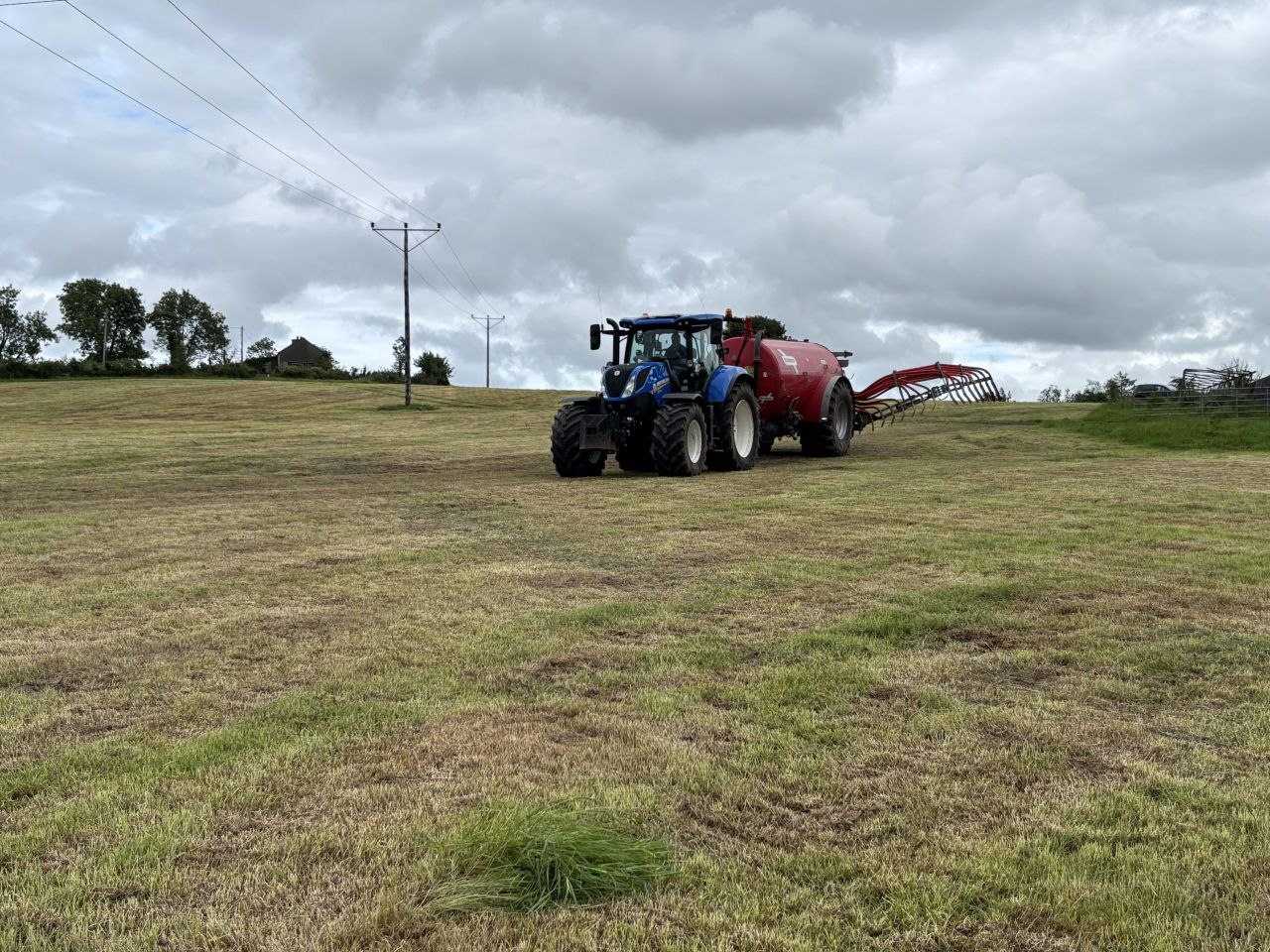
Farmers who managed to secure a cut of silage last week will now be turning their attention to second-cut silage and ensuring sufficient nutrients are applied to the ground.
The final week of May offered a good weather window for farmers to secure a crop of first-cut silage.
Despite this, the late spring this year delayed fertiliser applications on many farms, resulting in some farmers being unable to cut their first-cut silage as the grass was still high in nitrates.
Anecdotal reports from around the country suggest silage crops secured last week were heavier than expected in many cases.
Heavy cuts of silage remove significant volumes of phosphorus (P) and potassium (K) from the ground, and it is important this is replaced to restore soil P and K levels.
According to Teagasc, a crop of grass silage removes anywhere from 8-16kg P/ha (6-13 units/ac) and 50-100kg K/ha (40-80 units/ac) depending on yield, with higher grass yields naturally enough removing more P and K.
Chemical fertiliser prices are high this year and the most cost-effective way of restoring soil P and K levels is through slurry, if available.
According to Teagasc, 1,000 gallons of cattle slurry is worth €33 at 6% dry matter (DM).
The table below details the available N, P and K values for cattle and pig slurry in units per 1,000 gallons:
| Manure Type | Application Method | N (units/1,000 gals) | P (units/1,000 gals) | K (units/1,000 gals) |
|---|---|---|---|---|
| Cattle Slurry (6% DM) | Low Emission | 6 | 5 | 32 |
| Pig Slurry (4% DM) | Low Emission | 19 | 7 | 20 |
Slurry nutrient content will vary significantly depending on a range of factors, so the values in the above table are guides.
Farmers who wish to get an clearer picture of the nutrient value of the slurry on their farm should get a sample of it tested.
The Teagasc advice is to apply anywhere from 50–100kg N/ha (40-80 units/ac) depending on the target yield and cutting date for second-cut silage. This can be applied through chemical fertiliser, slurry or a mix of both.
Where farmers are applying slurry and chemical fertiliser to silage round, the advice is to apply slurry first followed by chemical fertiliser 7-10 days later.
Farmers should be aware of their fertiliser allowances before spreading fertiliser.
As always, think safety when working with machinery during this busy time of the year on farms.